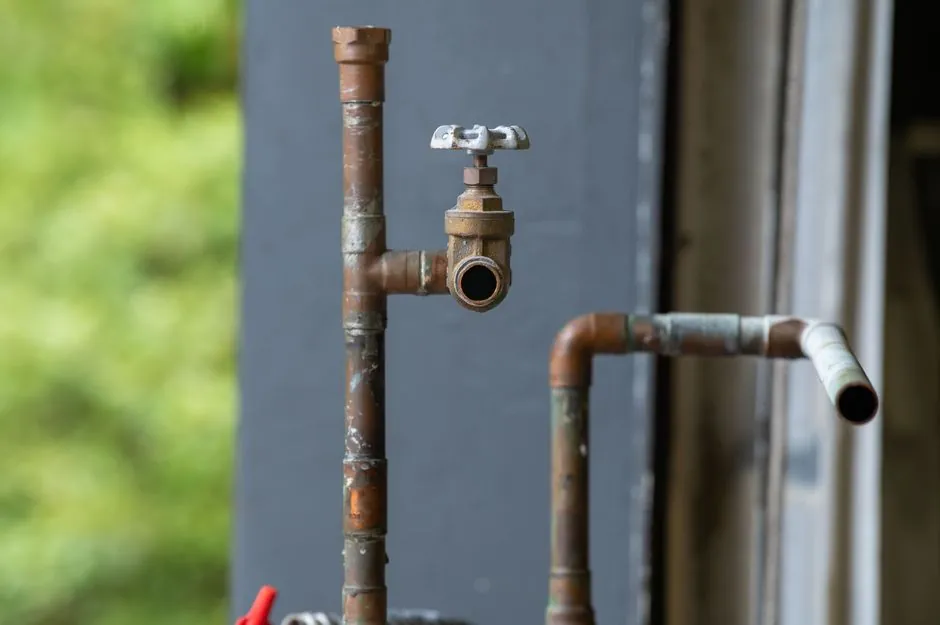
At 150 psig saturated steam, the disc sees 366°F (185°C) and bubble-tight shutoff is expected, which immediately removes concentric resilient-seat designs from contention for most duties [S2][S5].
Engineers writing MTOs for steam isolation in this range typically narrow the choice to a double-offset high-performance butterfly (HPBV) with a reinforced-PTFE or metal seat, or move up to a triple-offset metal-seated valve for cycling or superheated service [S3][S4].
Why 150 psi Saturated Steam Rules Out a Concentric (Resilient-Seat) Valve
Saturated steam at 150 psig sits at 365.9°F (185°C) on the steam table, well above the continuous service ceiling of EPDM (~250°F / 121°C), NBR (~212°F / 100°C), and standard FKM (~300°F / 149°C), which is why resilient-seat concentric valves are normally cut off near 150 psi steam by manufacturer data sheets [S5][S7]. Concentric designs also keep the disc edge in full 360° rubbing contact with an elastomer seat through every cycle, so thermal cycling on a steam line chews the seal and accelerates leak-by [S3].
Specifying a concentric butterfly for steam isolation is a false economy: the body is cheap, but seat replacement on a hot line is not, and resilient-seated valves are commonly derated in dead-end service, with some lug patterns capped at 150 PSI maximum in unsupported configurations [S7]. The practical rule of thumb most MTO reviewers apply: if the line carries steam, do not anchor the seat material to an elastomer unless the OEM data sheet explicitly lists the pressure and temperature pair.
Double-Offset High-Performance Butterfly: The Workhorse at 150 psi
Siemens' August 31, 2026 submittal sheet for its high-performance butterfly line caps steam at 150 PSI for on/off service and 50 PSI for modulating, and the design is a double-offset stem/disc with 316 stainless steel disc, 17-4 stainless stem, and an RPTFE seat in a carbon-steel body rated 285 PSI cold working pressure (ANSI 150) [S2]. That combination is the canonical HPBV spec: 150 psig steam on/off at 366°F fits cleanly inside both the steam ceiling and the body rating.
Johnson Controls' VF Series application note plots the same envelope on the saturated-steam curve, recommending its ANSI Class 150/300 high-pressure, high-temperature butterfly for two-position service up to 150 psig (1,034 kPa) saturated steam at 366°F (185°C) and derating it for modulating/throttling service as you move up the curve [S5]. The double offset moves the disc axis off the seat centerline and the stem centerline, so the disc unseats with a cam-like motion rather than sliding through the seal, which cuts seat wear and torque and is what allows the RPTFE seat to survive 366°F continuous duty [S2][S9].
Hayward Flow Control's July 2025 write-up puts the high-performance class at 150-250 PSI with a double-offset disc, noting that these valves handle steam, hydrocarbons, and hot gases in the same envelope [S8]. For an isolation valve on a 150 psig saturated-steam header that opens once per shift or once per day, the double-offset HPBV is the lowest-cost qualified option and the one most commonly accepted by plant piping specs under API 609 Category B [S2][S3].
Triple-Offset Metal-Seated Valve: When Cycling, Superheat, or Zero Leak-by Matter
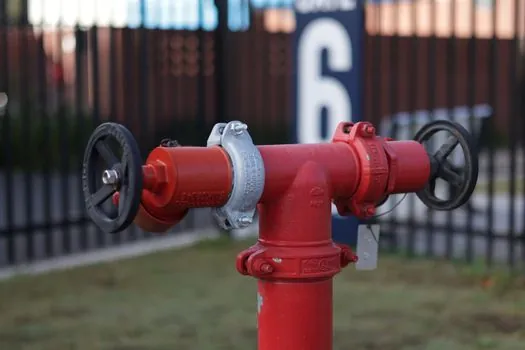
A triple-offset butterfly adds a third angled offset on the seat cone, which produces a metal-to-metal seal with no rubbing during the last few degrees of closure and a torque-seated rather than friction-seated shutoff [S6][S9]. The disc never touches the seat in the open or mid-travel position, so thermal cycling and the wet-steam "flashing hot water" failure mode flagged in the VF Series note do not erode the sealing surfaces the way they do on a double offset [S5][S6].
CGIS describes the triple-offset metal-seated design as the optimum for high-temperature service and for liquids that flash across the valve, because there is no internal trapped cavity to accumulate condensate that would then flash and destroy a soft seat [S6]. For 150 psig saturated steam with frequent cycling, superheat margin, or a documented zero-leakage requirement, a triple-offset ANSI 150 (285 psi body) valve is the conservative choice, and the same body rating comfortably covers the 150 psig operating point with full pressure-temperature rating headroom [S3][S6][S9].
The trade-off is actuation torque and cost: a metal-to-metal seat requires more breakaway force than an RPTFE seat, so actuator sizing and price both step up, and installation must respect the flow direction arrow since the geometry is no longer symmetric [S3][S9]. On a 150 psig saturated-steam line that cycles daily, a triple-offset is also the design most often called out for buried-service or fire-safe duty, where elastomer seats would not survive.
Selection Criteria Compared Across the Three Offset Designs
The decision at 150 psig saturated steam is driven by four criteria: continuous seat temperature, cycle frequency, leakage class, and modulating versus on/off duty. Lined up side by side, the trade-off is clear [S2][S3][S5][S7][S8]:
Concentric (resilient seat): continuous steam temperature ceiling roughly 250°F (121°C) on EPDM and lower on NBR, full rubbing seat contact, on/off only, generally not used above ~150 psi steam by most data sheets, lowest cost.
Double-offset HPBV: continuous seat temperature up to about 500°F (260°C) with RPTFE or metal auxiliary seat, reduced rubbing via cam action, qualified for 150 psi on/off steam and 50 psi modulating steam per the Siemens 2026 submittal [S2], bubble-tight shutoff up to 285 psi body rating, mid-range cost.
Triple-offset metal-seated: continuous service above 500°F, metal-to-metal seal with zero contact through the open/mid travel, qualified for on/off and modulating service on steam including superheated, dead-end and fire-safe capability, highest torque and cost [S6][S9].
For an ANSI 150 steam line that is strictly on/off and cycles a few times per day, a double-offset HPBV with RPTFE seat is the right default at 150 psig saturated steam; for frequent cycling, superheat margin, or zero-leakage specs, step up to a triple-offset metal-seated valve in the same ANSI 150 body [S2][S5][S6].
Operating Limits and Failure Modes to Lock Into the Spec
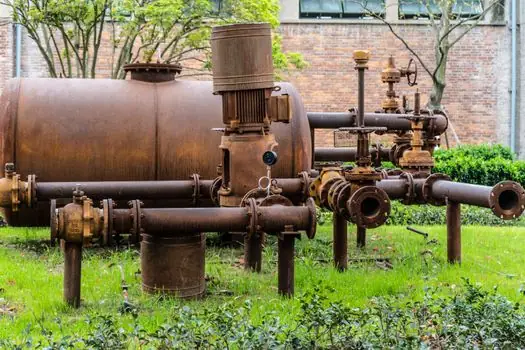
Steam systems punish valves on three predictable axes: thermal cycling, condensate flashing, and water-hammer, and the failure modes for an offset butterfly are well documented in the VF Series note [S5]. The cam-style unseating of a double or triple offset keeps the "just-open" position brief, which is exactly what protects the seat when wet steam is forcing droplets through the gap between disc and seat, but it does not eliminate erosion on a modulating duty, which is why Siemens caps modulating steam at 50 psi even on a 150 psi-rated body [S2][S5].
Two further limits are easy to miss in MTO review. First, the seat pressure-temperature rating is often lower than the body cold working pressure rating, and a Category B valve per API 609 is rated by ASME Class across pressure and temperature while a Category A concentric valve is rated only by manufacturer CWP, so spec-by-body-class alone can over-state capability [S3]. Second, dead-end service requires the seat retainer on the upstream side, and the valve must be installed with the correct flow direction, particularly on a triple offset where the cone geometry is directional [S2][S3].
Material picks matter as well: a 316 stainless disc and 17-4 PH stem in a carbon-steel body is the typical HPBV stack, and RPTFE seats are the typical soft-seat choice up to about 500°F (260°C); above that, a metal seat in a triple-offset body is required [S2][S3]. Pair this with an butterfly valve specification that captures seat material, body rating, steam envelope, and modulating versus on/off duty in the same sheet so procurement does not substitute a Category A resilient-seat valve into a 150 psi steam MTO.
Standards, Sourcing, and Adjacent Spec Calls
API 609 is the governing butterfly-valve design and testing standard, and it splits the category along the lines that drive this whole decision: Category A (concentric, manufacturer CWP) versus Category B (ASME Class, pressure-temperature rated, offset seat) [S3]. The ASME B16.34 pressure-temperature curve for the body class is what actually defines the steam envelope, and on a 150 psig saturated-steam application the 366°F point sits well inside the ANSI 150 envelope but must be checked for the specific seat material [S2][S5].
For dead-end and reverse-flow considerations, the valve data sheet must state the maximum differential pressure and confirm the seat retainer orientation; on a ball valve the same requirement is normally handled by a bidirectional seat, but on a butterfly it is a retainer-and-flow-direction question that the installer has to honor. For steam-trap stations and separator drops upstream of the valve, steam trap and steam separator selection matter because wet steam is the principal seat-erosion driver on double-offset HPBVs at 150 psig [S5].
Sourcing in late 2026: Siemens, Johnson Controls, and several other majors publish the 150 psi on/off / 50 psi modulating envelope as a stocked HPBV line, and flowserve and other majors offer 150 psi double-offset and triple-offset patterns with metal seats for the more demanding duty, with Hayward and Twinco publishing clear selection guidance for steam-isolation MTOs [S2][S3][S5][S7][S8]. Before placing the PO, the reviewer should ask the supplier for a pressure-temperature certificate for the specific seat material at 150 psig saturated steam, not just the body class rating, because the gap between body and seat rating is the most common over-spec error on this exact duty [S2][S3][S5].
Trackable signals to watch in the next sourcing cycle: whether any major OEM extends modulating steam ratings on double-offset HPBVs above 50 psi, which would shift the default selection at 150 psig, and whether RPTFE seat formulations get published continuous-temperature ratings above 500°F that would let a double-offset cover higher-pressure saturated steam without stepping to metal-seated triple-offset [S2][S5][S8]. Spec writers should also confirm in 2026 submittals that the seat retainer orientation, flow-direction arrow, and API 609 Category B marking are all explicit on the data sheet for any ball valve or butterfly valve shipped into a 150 psig steam MTO [S3].
Related analysis: Digital Twin for Plant Layout Review Before CAPEX Commitment.