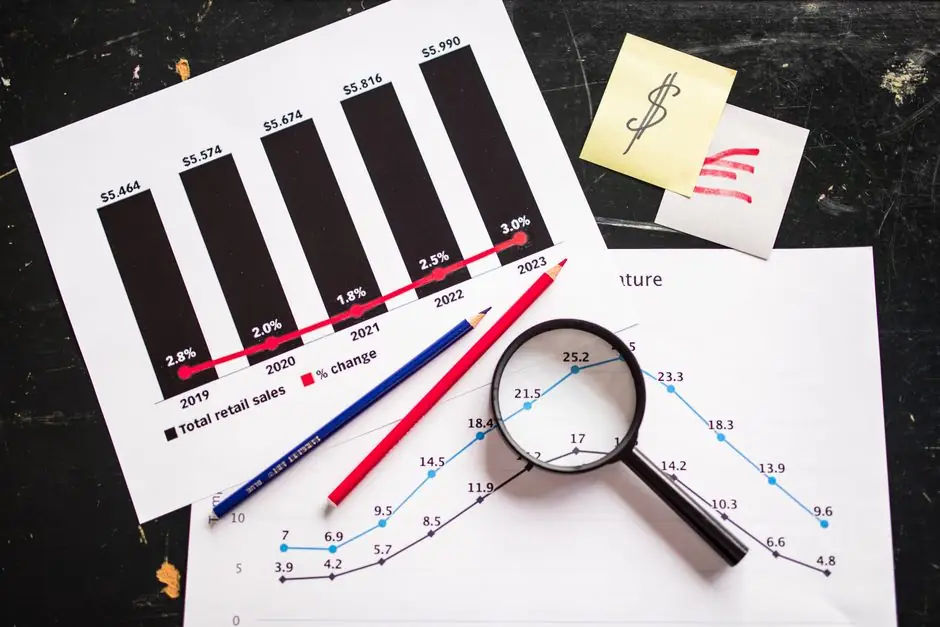
Electricity demand is forecast to grow at an average 3.6% per year across 2026-2030, reshaping cell-level procurement for utilities, EV OEMs, and stationary storage developers [S1].
The same report frames storage as a structural, not cyclical, requirement: every incremental GW of variable renewable capacity lifts the call for flexible balancing assets, and grid operators now identify storage as critical for system security across modelled scenarios [S2].
Global demand backdrop and capacity mix
Global electricity demand growth at 3.6% per year through 2030 is the demand floor that battery cell makers must serve, and the IEA's Electricity 2026 explicitly links this trajectory to electrification of transport, heating, and data centres [S1]. Negative-pricing events in Central European power markets are now routine enough that front-of-meter storage earns a non-trivial share of revenue purely from arbitrage and ancillary services, which is why EU battery storage capacity is projected to reach ~112 GWh cumulative by year-end 2026 [S2].
Cell-level volume follows a different curve from demand. Lithium-ion pack prices are still declining, which compresses payback periods and widens addressable use-cases for domestic cell suppliers in markets like India, where the value pool grows from USD 14.01 billion (2026) to USD 23.30 billion (2031) at 10.71% CAGR [S3]. The demand profile by chemistry is no longer NMC-dominant: solid-state is forecast to expand at 33.5% CAGR to 2031, while LFP and sodium-ion lines are moving from pilot to commercial scale to reduce critical-mineral exposure [S3].
European BESS: country-level cell pull
Utility-scale European BESS additions are expected to reach ~35 GWh in 2026, lifting the cumulative EU battery fleet to ~112 GWh, with the UK and Germany together accounting for more than 50% of installed capacity [S2]. Italy and Ireland are the fastest-growing secondary markets, with Italy's pipeline at 10+ GW on Terna capacity-market auctions and Ireland's 4+ GW pipeline driven by DS3 grid services and high system non-synchronous penetration limits [S2].
Cell specification follows the service stack. UK and German projects lean on FCR, aFRR, and capacity-market revenues, so round-trip efficiency and cycle life dominate tender scoring. Iberian and Greek projects target solar curtailment and island-grid balancing, pushing higher C-rate cells and active thermal management. Behind-the-meter growth is also weighted by country: residential solar+storage remains the primary BESS use-case in Germany, where the +18% residential growth signal in 2026 ties directly to rooftop PV penetration [S2].
India: chemistry, gigafactory, and EV-led cell demand
India's battery market is projected at USD 14.01 billion in 2026, expanding to USD 23.30 billion by 2031 at a 10.71% CAGR, with secondary batteries holding 65.5% revenue share in 2025 and growing at 15.9% CAGR through 2031 [S3]. Lead-acid still retains 53.2% share of the 2025 base, but the growth vector sits with lithium-ion, sodium-ion, and solid-state lines, the last of which is forecast at 33.5% CAGR to 2031 [S3].
Three drivers carry the cell demand curve: rapid EV adoption in two- and three-wheelers, the PLI-ACC scheme catalysing domestic gigafactories, and a +1.5% CAGR uplift from expanding telecom and data-centre backup needs [S3]. Federal policy anchors include the PM E-DRIVE scheme (Rs 10,900 crore / USD 1.3 billion corpus) extending demand incentives to e-ambulances and e-trucks, and state-level capital subsidies such as Maharashtra's Rs 10 lakh per charging-station incentive layered on top of the federal stack [S3]. Cell-format decisions are tilting toward vertical integration, with Ola Electric operationalising in-house 4680 cylindrical-cell production and incumbents Exide Industries and Amara Raja redirecting capex toward lithium-ion lines [S3].
Chemistry comparison: LFP vs NMC vs sodium-ion vs solid-state
For stationary BESS in Europe, the dominant cell spec is LFP on cycle-life and thermal-runaway grounds, with the SEIA outlook noting that sodium-ion and other novel chemistries will progressively widen the mix through 2030 as alternatives to lithium-only stacks [S4]. In India, lead-acid still anchors 53.2% of the 2025 revenue base, but solid-state is the fastest-growing chemistry at 33.5% CAGR to 2031, while lithium-ion (LFP and NMC) absorbs the bulk of incremental EV and stationary demand from gigafactories [S3].
The decision criteria are straightforward. LFP wins on cost-per-kWh, cycle life, and thermal safety, making it the default for utility-scale BESS and most Indian two-wheeler packs. NMC retains an energy-density edge relevant where pack volume is constrained, typically premium EV and high-density commercial vehicles. Sodium-ion targets cost-sensitive and cold-climate stationary use-cases with reduced lithium exposure. Solid-state is the watch-list item at 33.5% CAGR to 2031 in India, with pilot lines moving to commercial scale in Gujarat and Tamil Nadu clusters [S3].
Standards, sourcing, and supply-side constraints
Cell sourcing remains the binding constraint, not cell technology. The SEIA outlook flags a broader chemistry mix as the structural response to lithium supply risk, with sodium-ion and other novel forms entering the procurement pipeline through 2030 [S4]. For utility developers, this translates into dual-qualification tracks: a primary LFP line of supply and a secondary chemistry slot for hedging.
On the instrument side, cell production lines and BESS integrators are specifying higher-accuracy pressure sensors and flow meters for electrolyte dosing and thermal-loop balancing, while pack-level load cells are now standard for compression-frame monitoring on large-format prismatic cells. BESS integrators building 1-2 hour duration systems should also expect tighter ENTSO-E adequacy assessments to push procurement toward cells with documented cycle-life certification under relevant IEC 62933 series storage standards, with the exact clause-by-clause mapping to be confirmed at the project EPC stage.
Forecast sensitivities and watch-list signals
Three near-term signals will determine whether the 2026-2030 cell-demand base case holds. First, the European BESS pipeline: ~43 GW expected utility-scale capacity by end-2026 against a project pipeline where the UK alone lists 20+ GW of grid-connection-agreed projects [S2]. Second, India's gigafactory commissioning cadence under PLI-ACC, where the +2.1% CAGR impact attaches to long-term (>=4 year) execution [S3]. Third, the actual share of solid-state and sodium-ion reaching commercial-offtake by 2027-2028, since chemistry-mix share will set the marginal cell price for the second half of the forecast window [S3][S4].
Trackable next nodes: cumulative EU BESS capacity crossing the 112 GWh line at the end of 2026 [S2], India battery market revenue at the 2027 mid-year interim forecast point [S3], and any 4680 cylindrical-cell capacity additions from Ola Electric and the Exide/Amara Raja lithium-ion capex programme through year-end 2026. For related industrial-spec context on capacity buildouts, see the nuclear power OEM and regional capacity map and the industrial pump manufacturing cost spec-to-cost map for parallel capex drivers feeding the same electricity-demand forecast [S1].