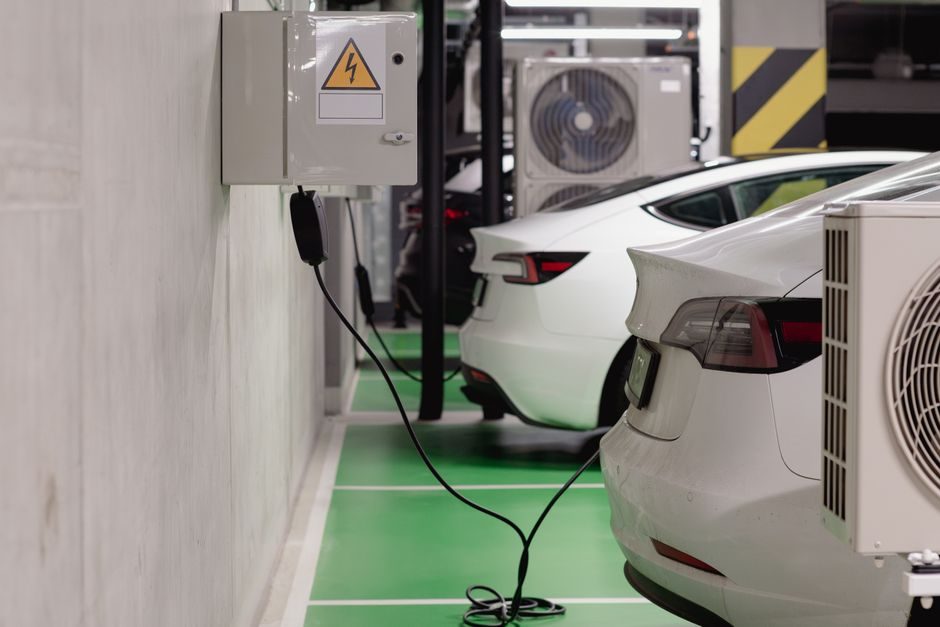
The 2026 cell-supply picture for industrial buyers is constrained rather than collapsed: the UK is pouring "record government and private investment" into gigafactories [S2], while specialty cell vendors are still selling into custom, non-standard applications where lead-time and chemistry selection drive the spec risk more than headline capacity does [S1].
For purchasing engineers, the practical question is not "will cells exist" but "which cell, pack and BMS combination can be delivered, certified and serviced for a 5–10 year industrial duty cycle". The supply map below addresses that question with the only public signals available in the July 2026 window [S1][S2].
Where the 2026 supply pressure actually sits
Industrial cell supply pressure in 2026 concentrates on three layers: cell chemistry selection (NMC, LFP, LiFePO4, LiPo, sodium-ion for new builds), pack-level integration with BMS design and validation cycles, and certification/transport logistics for special-environment cells (low-temperature, explosion-proof) [S1]. The UK Battery Cells & Systems Expo at the NEC Birmingham, scheduled 16–17 June 2027 with a 2026 edition on 8–9 July 2026, explicitly frames the sector as being in a "breakout phase" anchored by gigafactory commissioning rather than incremental growth [S2].
For specifiers outside the automotive space, that framing matters because gigafactory output is dominated by automotive-format cylindrical and prismatic cells. Industrial buyers needing 18650 form factors, low-temperature cells (−40 °C class), explosion-proof variants, or fully custom packs effectively compete for a much smaller pool of specialty capacity [S1].
Cell-chemistry decision matrix for 2026 industrial builds
Buying engineers should treat chemistry as a four-axis decision — energy density, cycle life, thermal tolerance, and cost per kWh — rather than a single performance number. The reference vendor LARGE publicly lists a chemistry menu spanning 3.7 V/7.4 V/11.1 V/14.8 V/18.5 V/22.2 V/25.9 V Li-ion, 3.2 V/6.4 V/9.6 V/12 V/16 V/24 V/36 V/48 V LiFePO4, lithium power 5–72 V, LiPo, 18650, plus low-temperature and explosion-proof specials [S1]. For background on how cell stacks feed into a regulated DC bus, see the DC power supply reference page.
Comparing the realistic 2026 options against typical industrial criteria: (1) LiFePO4 — 3.2 V nominal cells, longest cycle life, weakest low-temperature performance, lowest thermal-runaway risk, dominant for stationary and industrial energy storage; (2) NMC Li-ion — 3.6–3.7 V nominal, higher energy density, more sensitive to thermal management, common in mobile robotics and inspection fleets; (3) LiPo/pouch — flexible form factor, higher packaging cost per Wh, used in size-constrained medical and security electronics; (4) sodium-ion — emerging for stationary and low-cost applications, with the top sodium-ion battery companies ranked for 2026 mapping the credible supplier set. Use this matrix before negotiating with any pack integrator.
Special-environment cells: where lead-times blow out
Special-environment cells — low-temperature (−40 °C charge/discharge) and explosion-proof (ATEX/IECEx-style) variants — are explicitly advertised as separate product lines by industrial cell vendors, not options on a standard cell [S1]. That separation is the structural reason their lead-times run materially longer than commercial 18650 or prismatic cells.
Practical spec lever: a buyer who can move the operating envelope (e.g. accept −20 °C with heater pad rather than −40 °C native) can drop back into the standard-cell pool. A buyer who cannot — cold-chain logistics, outdoor security cabinets, oil & gas instrumentation — should plan on a 12–20 week cell window plus 4–8 weeks of pack integration and load-cell-style mechanical validation before the first ship-set [S1]. For pack-level lead-time mechanics, the 2026 battery pack supply shortage breakdown covers the second half of this risk chain in detail.
BMS, certification and the 2026 compliance stack
For industrial buyers the binding constraint is rarely the cell itself; it is the BMS and the certification matrix that has to wrap it. A specialty cell vendor typically groups its offering around four engineering disciplines: electrical performance, structural design, thermal management, and BMS design, with safety engineering spanning all four [S1]. On the compliance side, the same vendors aggregate UN 38.3 transport testing, IEC 62133 safety, and customer-specific marks as a separate competence track rather than a checkbox at ship time [S1].
Buyers should require, in writing, the certification list (UN 38.3, IEC 62133, UL 1973 where stationary storage applies, and ATEX/IECEx 60079 series for explosion-proof variants) and the cycle-life test report at the project's actual DoD and operating temperature, not the cell-maker's room-temperature 1C/1C marketing curve. For sodium-ion specifics and standards alignment, the sodium-ion battery industry 2026 sourcing signals piece is a useful cross-check.
Second-source strategy that survives 2026
A defensible second-source plan in 2026 looks like three things: identical cell-format qualification (18650 with matched capacity, C-rate and voltage curve, not just "an 18650"), pre-validated BMS firmware against both vendors' cells, and a contractually retained pack-assembly line that can swap cell suppliers without re-running safety testing from zero [S1]. The custom-pack houses that publish their engineering workflow openly are the ones most likely to honour a swap clause [S1].
Watch the Battery Cells & Systems Expo floor for cells qualified at the pack integrator, not the cell-maker — pack-level qualification is what decouples a buyer from any single gigafactory's allocation decisions [S2]. Plan the second-source qualification in parallel with the first-source trial, not after the first production shortfall.
Trackable signals to monitor through 2026
Three public signals are worth watching over the rest of 2026: (1) UK gigafactory commissioning announcements out of the Battery Cells & Systems Expo 2026 (8–9 July 2026) and the 2027 follow-on (16–17 June 2027, NEC Birmingham) [S2]; (2) expansion of specialty-cell product lines (low-temperature and explosion-proof) by industrial cell vendors, which is a direct read on lead-time pressure [S1]; (3) sodium-ion cell commercial availability at pack-integration houses, which is the most likely 2026–2027 substitution lever for LFP-constrained buyers. Pair these with your own vendor quarterly scorecard and a minimum 16-week safety stock for any non-automotive-grade cell.