
Lithium-ion pack buyers in July 2026 face a multi-axis supply squeeze: cobalt and nickel remain geographically concentrated, LFP is re-entering the mix, and pack-level integration — not cell chemistry alone — now dictates whether a project hits its delivery date or its safety case [S2].
The reference Mathworks/Simscape thermal-management model published 2026-07-09 confirms the engineering reality that drives every shortage decision: a pack is four modules in series, each combining series- and parallel-connected cells (modules A/B/C: 5s2p; module D: 6s2p), and cooling flow rate is a controlled variable rather than a passive property [S1].
Why a 2026 buyer should not treat "battery pack" as one risk line
Pack supply risk is actually three separate risks stacked: cell chemistry, pack integration materials, and thermal/control integration — and each behaves differently under shortage conditions. The IDTechEx 2021-2031 materials dataset breaks pack demand into 20+ categories (aluminium, copper, graphite, lithium, nickel, cobalt, manganese, silicon, PVDF, thermal interface materials, composite enclosures, fire-retardant materials), and shows pack-level energy density improving faster than cell-level alone because the mass of "everything around the cell" is being trimmed [S2].
For a process-engineer buyer, that means the same headline "battery pack lead time" hides a 12–16 week cell lead time and a separate 20–40 week pack-assembly lead time for tooling, BMS sourcing and thermal-loop validation. A procurement officer who quotes only the cell lead time is, in effect, mis-pricing the schedule by a factor of two.
Cell-chemistry risk: cobalt, nickel and the LFP re-entry
Cobalt supply and mining are concentrated in the Democratic Republic of Congo and China, which is why OEMs have been moving toward higher-nickel cathode chemistries such as NMC 622 and NMC 811 in new EV models [S2]. That move reduces cobalt exposure per kWh, but it concentrates the residual supply risk onto Class-1 nickel sulphate, which remains a small set of refineries globally.
The LFP data point is the under-reported lever: up to 2018 the Chinese electric car market was predominantly LFP, then by 2019 only 3% of cars used LFP, before the Tesla China-made LFP Model 3 reversed the trend and LFP took a large share of Chinese electric buses [S2]. For 2026 stationary and light-EV buyers, LFP is now the chemistry that absorbs the cobalt/nickel shortage by substitution rather than by waiting it out.
Pack-material risk: copper, aluminium, thermal interface and composite enclosures
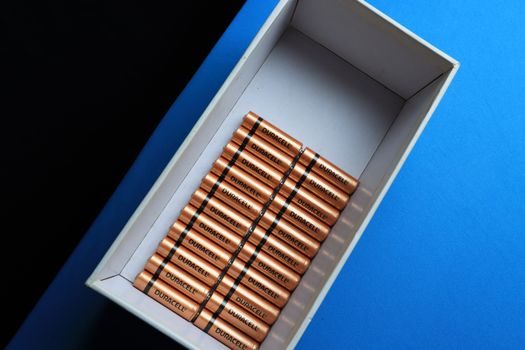
Pack-level supply risk lives in the busbars, the enclosure, and the thermal interface layer, not in the cell. IDTechEx identifies the four pack-level engineering trends as composite enclosures for lightweighting, fire-retardant materials, thermal interface materials, and structural pack designs that are themselves a thermal-management strategy [S2]. A buyer who locks cell chemistry but leaves the enclosure, TIM and BMS sourcing to the integrator inherits the integrator's allocation queue.
Copper is the busbar-and-connector floor: every kWh of pack carries a fixed copper mass set by the current rating, so copper allocation queues convert directly into pack allocation queues. Aluminium is the enclosure floor: extruded aluminium tray tooling is a 20–30 week item that cannot be expedited by paying a 10% premium. Both are visible, citable line items in the IDTechEx material demand tables [S2].
Thermal and control integration: the Simscape reference pack as a design template
The Mathworks reference pack models the four-module architecture (three modules identical, one deliberately different to study imbalance) and initialises every cell at the same state of charge and at 25 °C ambient — the standard Simscape Battery (Table-Based) initial condition [S1]. Cell-type choices in the model are Pouch, Can, Compact cylindrical, and Regular cylindrical, and the thermal port Amb is exposed separately from the electrical ports pos/neg, so the same model can be re-used across chemistries by re-tabulating V0, R0, polarization resistance and the time constant across SOC and temperature vectors [S1].
The operational implication for a 2026 buyer: specify the thermal-management interface (coolant flow rate control FlwR, inlet temperature FlwT, ambient Amb) as first-class contractual requirements, not as integrator-side details. The reference model treats coolant flow rate as a controlled variable with a lookup table across multiple flow points — that is the same architecture every automotive-tier integrator uses, and the same architecture that a stationary-storage buyer should require to be documented before signing a pack supply contract [S1].
Failure modes and constraints buyers are quietly absorbing
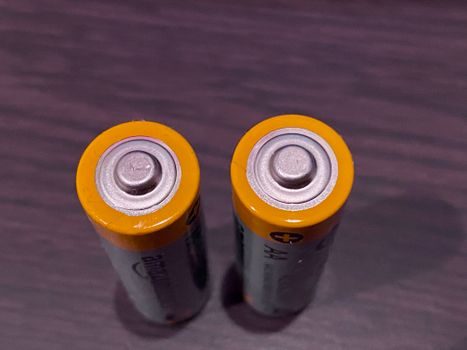
Three failure modes are common across the 2026 pack supply market and all are downstream of the same root cause — a thin market for qualified pack integrators. First, cell-to-pack imbalance: if module D (6s2p) is sourced from a different cell lot than modules A/B/C (5s2p), the pack's SOC window collapses faster than the datasheet claims and the integrator has to compensate via the BMS — a hidden cost the buyer does not see on the quote. Second, thermal runaway propagation: composite enclosures and fire-retardant materials are pack-level mitigations, and any substitution at this layer invalidates the cell-maker's propagation test certificate. Third, BMS allocation: the same BMS chip shortage that hit industrial PLCs in 2024–2025 is now visible in pack lead times, and the visible market signals track the solid-state battery upstream and downstream story rather than the cell story. [S1]
Selection criteria: a four-axis check for a 2026 pack PO
A pragmatic 2026 selection check has four axes, and any pack quote that fails on more than one is a contract risk. Axis 1 — cell chemistry concentration: what share of cathode active material is sourced from CR Congo + China combined, and is there a qualified LFP alternative on the same delivery date. Axis 2 — pack integration depth: does the quote include enclosure, TIM, BMS, coolant-loop hardware, or only the cell-to-module assembly. Axis 3 — thermal interface contractually specified: are FlwR (coolant flow rate), FlwT (inlet temperature) and Amb (ambient) in the contract, with a documented lookup-table profile, matching the architecture the reference Simscape pack uses [S1]. Axis 4 — second-source path: is the BMS, the cell, and the enclosure each independently second-sourceable within 12 weeks, or is the integrator the single point of failure. Buyers in the China Battery Pack Market pricing tier in 2026 typically pass axis 4 only after a parallel-qualification sprint of 8–14 weeks.
What this means for an engineer signing a pack PO in July 2026

The defensive specification has three lines: (1) lock the cell chemistry and the cell supplier name in the contract, not just "NMC" or "LFP"; (2) require the pack integrator to expose the four-module series architecture and the per-module series/parallel cell count (e.g. 5s2p / 6s2p) so that thermal modelling is reproducible against a reference model such as the Simscape Battery (Table-Based) block, with parameters V0, R0, polarization resistance and time constant tabulated across SOC and temperature [S1]; (3) require the pack designer to publish the 20-material demand breakdown — at minimum aluminium, copper, graphite, lithium, nickel, cobalt, manganese, silicon, PVDF, thermal interface material, composite enclosure and fire-retardant material — so that any future allocation shock can be mapped to a specific row in the IDTechEx EV battery materials framework [S2]. A buyer who has those three lines in the contract can read a shortage announcement in 12 weeks and tell, in 48 hours, which line items are exposed.
Trackable signals for the next 60–90 days: cobalt and nickel sulphate spot price differentials against LFP cathode equivalents, the number of new LFP-cell gigawatt-hour capacity announcements tied to non-automotive storage offtake, and the second-source BMS pipeline for the integrator on the buyer's shortlist. None of these is a "future battery breakthrough" story — they are the same operating levers that have moved the cell-and-pack supply curve since 2019 [S2].
For component-level specifications, see dc power supply, and switching power supply.