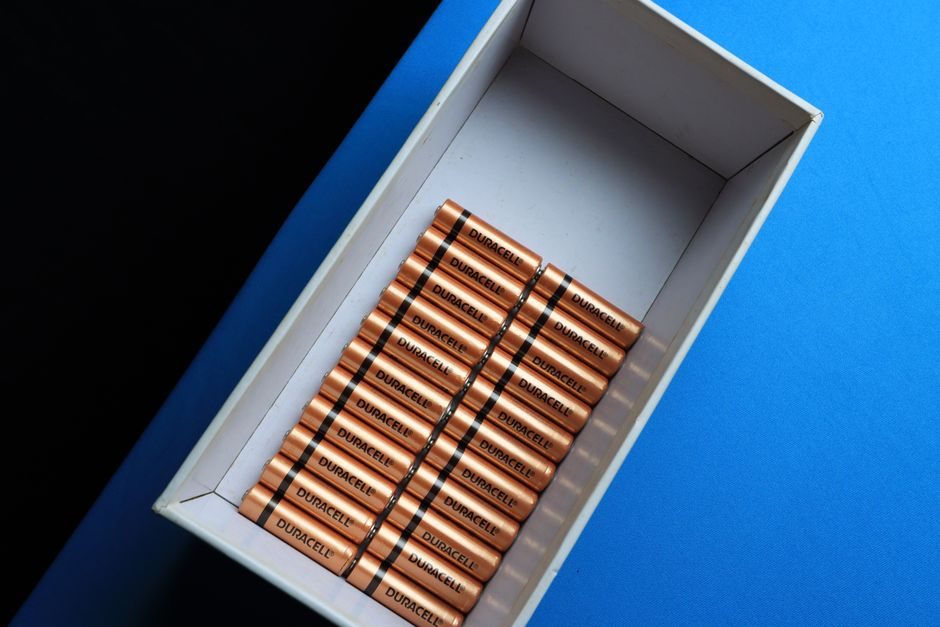
UK battery cell demand is in a breakout investment cycle as of July 2026, with the Battery Cells & Systems Expo running 8-9 July 2026 at NEC Birmingham alongside the Vehicle Electrification Expo, Advanced Materials Show and Advanced Ceramics Show, drawing automotive OEM, energy storage and defence integrators into a single free, CPD-accredited venue [S1].
The cell-level pinch point remains cylindrical format: 18650 and 21700 lithium-ion cells, the same SKUs that fed a documented supply-demand gap of up to 100% during the 2021 two-wheeler squeeze, are still the mainstream pack-build input for e-bikes, e-motorcycles, hand tools and a growing share of four-wheel EV programs [S2]. Batteries now sit above 30% of finished EV production cost, which makes any cell allocation decision a board-level variable, not a purchasing footnote [S2].
Cell Format Hierarchy and What 18650 / 21700 / Pouch Each Cost the Buyer
Cylindrical cells remain the dominant SKU across both four-wheel and two-wheel EV programs and cordless hand tools, while polymer (pouch) cells serve the consumer-electronics tier; the shortage that surfaced in mid-2021 was concentrated entirely in 18650 and 21700, not in polymer [S2]. For a 21700 cell line, the practical buyer-side differences against 18650 are higher individual energy per cell, lower pack-level part count, and tighter forming/cycling tolerance — three variables that shift the cell-to-module yield curve more than the cell unit price does.
The supply map behind those SKUs is now tri-regional: Korean makers (Samsung SDI, LG Energy Solution / LG Chem) expanding cylindrical capacity in Korea and China; Japan’s Panasonic adding 21700 lines in Nevada for Tesla; and China-based Bak Power Battery, Lishen Battery and EVE Energy serving as the third tier, though Taiwanese pack makers historically prefer long-term orders with Korean and Japanese vendors at the request of downstream clients [S2]. This tiering matters because cell allocation visibility — bookable to mid-2022 in the 2021 squeeze — is still the binding constraint for small and mid-tier pack builders, even with new gigawatt-hours coming online [S1][S2].
Chemistry Choice: Why Lithium Manganate (LiMn2O4) Re-Enters Two-Wheel Sourcing
Lithium manganate cells deliver a nominal 2.5–4.2 V working window, with the 2018 electric-bicycle inflection point still defining demand growth in 2026; the chemistry’s lower material cost and stronger abuse tolerance versus NMC keep it specified for entry-level e-bikes and lower-power two-wheelers [S3]. For engineers sizing a pack, LiMn2O4 trades energy density for cost and thermal margin — a deliberate downgrade, not a compromise, when the duty cycle is stop-and-go urban duty at 250–500 W peak per wheel.
The certification chain that gates any of these chemistries into regulated markets — UN38.3 for transport, EN/IEC 62133 for portable cell safety, UL 2271 for light-electric-vehicle battery systems, plus GB 31241 for China-domestic portable packs — runs alongside the chemistry decision, and the same test programs (overcharge, short-circuit, thermal abuse, altitude simulation, vibration, shock) apply whether the cell format is cylindrical 18650/21700 or prismatic [S3]. The practical consequence: a sourcing switch from NMC to LiMn2O4 does not relax the certification work; it only changes which characterisation data the lab has to regenerate.
Selection Criteria: Matching Cell Format to Pack Use Case
For four-wheel traction packs and high-format e-motorcycles, 21700 cylindrical is the mainstream 2026 default; for lower-power e-bicycles, e-mopeds and entry-level e-scooters, 18650 in LiMn2O4 or NMC remains common; for hand tools, 18650 continues to dominate; for consumer-electronics-class devices, polymer/pouch remains the volume pick [S2][S3]. Four decision criteria separate these routes: (1) energy per cell vs pack part-count tradeoff, (2) thermal-abuse margin (LiMn2O4 is wider than NMC), (3) allocation priority from tier-1 Korean/Japanese makers, and (4) certification overhead against the destination market (UL 2271, EN 62133, UN38.3, GB 31241) [S3].
On cost-vs-tolerance, 21700 NMC wins on energy density and pack-level assembly labour, 18650 LiMn2O4 wins on cell unit cost and abuse margin, and polymer cells win on form-factor flexibility for shaped enclosures but lose on cylindrical allocation access; the buyer-side question is whether your pack is form-factor-constrained (polymer), allocation-constrained (cylindrical from tier-1), or cost-constrained at low energy density (LiMn2O4 cylindrical) [S2][S3].
Failure Modes and Supply Constraints Buyers Should Pre-empt
Three binding constraints repeat across the 2021 and 2026 data: first, cylindrical cell allocation out of tier-1 Korean and Japanese makers flows preferentially to four-wheel EV programs, leaving two-wheel, hand-tool and energy-storage customers with reduced visibility — a pattern explicitly documented when Taiwanese pack suppliers Simplo, DynaPack and Celexpert Energy could only secure smaller capacity support from leading cell vendors [S2]; second, batteries now exceed 30% of finished EV production cost, so a six-month cell delivery slip cascades directly into vehicle margin, not just into a procurement buffer [S2]; third, LiMn2O4 cells carry a 2.5–4.2 V window that, if the BMS under-voltage cutoff is set for NMC, will over-discharge the chemistry and shorten cycle life, an integration failure mode specific to mixed-chemistry packs [S3].
Standards and Certification Stack Driving the 2026 Sourcing Decision

The mandatory test set for any cell entering regulated markets includes UN38.3 (transport), EN/IEC 62133 (portable cell safety), UL 2271 (light-electric-vehicle battery systems, including the twisty-car / e-mobility category), and GB 31241 (China-domestic portable lithium-ion cells and batteries for portable electronics), with CB, PSE, KC and CCC schemes layered on top for destination-market access [S3]. Buyers working across the UK, EU, China, US, South Korea and Brazil should plan certification in parallel with cell qualification, because lithium-manganate or NMC cell characterisation data does not transfer between certification bodies without retest on the destination lab list.
UK Gigafactory Build-Out and Where Cell Capacity Is Actually Landing
Record UK government and private investment is bringing gigafactories online, with the supply chain of the future taking shape through 2026–2027, and the Battery Cells & Systems Expo on 8-9 July 2026 at NEC Birmingham is the proximate venue where the new UK cell capacity intersects with automotive OEM, energy storage and defence procurement teams [S1]. The four co-located shows — Battery Cells & Systems, Vehicle Electrification, Advanced Materials, Advanced Ceramics — give a cell buyer a single trip to qualify both cell vendors and the upstream materials and ceramic-component vendors that feed them.
The 2026 conference programme at NEC Birmingham carries up to 14.5 CPD points and is free to attend, with a Scale-Up Accelerator track for gigafactory-adjacent suppliers and a full conference agenda of global experts covering the four connected industries [S1]. For a working engineer, the 8-9 July window is the cleanest point in the calendar to lock cell-format and chemistry decisions against current UK gigafactory ramp curves, and the natural follow-on sits 12 months out at the 2027 edition on 16-17 June 2027 at the same NEC venue [S1].
The near-term signals worth tracking: (1) tier-1 cylindrical cell allocation visibility into H2 2026 and H1 2027, particularly for 21700 lines out of Korea, China and Nevada; (2) LiMn2O4 pricing versus LFP and NMC for the two-wheeler and low-speed-EV segment, where cost per kWh still sets the spec; (3) UK gigafactory commissioning milestones and how much of the announced annual capacity has converted into firm off-take rather than MOU-stage commitments, with the next disclosure window tied to the NEC Birmingham events. The supply chain story for July 2026 is not a single decision but a sequence of allocation, chemistry and certification gates — each of which now has a named venue, a named test programme and a dated conference where the next round will close.
For component-level specifications, see load cell, dc power supply, and load cell module.
For related coverage, see Cobalt Competitive Landscape 2026: Supply Concentration, Downstream Offtake and Capacity.