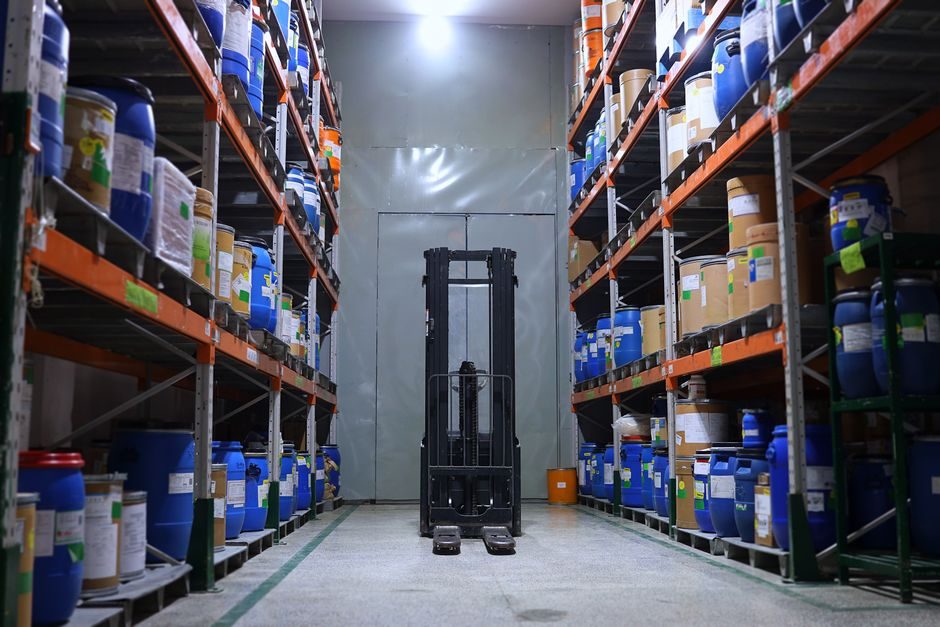
Battery electrolyte demand tracks the lithium-ion cell build-out, with the global market sized at USD 15.06 billion in 2025 and forecast to reach USD 27.99 billion by 2030 at a 13.2% CAGR (2025–2030), per MarketsandMarkets segmentation by battery type, electrolyte form, end use and material [S2]. Liquid electrolyte is projected to register the highest CAGR among the three forms (liquid, gel, solid), and lithium-ion is the fastest-growing battery family on the back of EV and stationary storage pull [S2].
Supply is heavily concentrated: China hosted about 75% of global battery cell manufacturing capacity and roughly 90% of anode and electrolyte production as of the 2022 BloombergNEF ranking, with the country expected to keep the top spot through at least 2027 [S5]. The leading electrolyte suppliers identified in MarketsandMarkets competitive mapping are Mitsubishi Chemical Group (Japan), CAPCHEM (China), Guangzhou Tinci Materials (China), Enchem (South Korea), and Shenzhen Capchem Technology subsidiary Materials Co., Ltd. (China) [S2].
Electrolyte Chemistry Stack: LiPF6 Salt, Carbonate Solvents and the SEI Constraint
The working fluid in a commercial lithium-ion cell is a roughly 1 M LiPF6 solution in a blend of cyclic carbonates (ethylene carbonate, EC) and linear carbonates (ethyl methyl carbonate, propylene carbonate), chosen to balance ionic conductivity, viscosity and SEI-forming ability on the graphite anode [S1]. On silicon and other high-capacity alloy anodes — which deliver >700 mAh g–1 versus graphite's 372 mAh g–1 — unstable solid-electrolyte interphase (SEI) growth on the enlarged nanowire surface is the main cause of capacity fade, and potential engineering is one route to suppress it [S1].
Materials and Markets segmentation breaks the input side into sulfuric acid (lead-acid), lithium salts (LiPF6, LiFSI, LiTFSI) and carbonate solvents, which maps directly to the bill of materials a procurement team must hedge [S2]. The lithium salt step is the single most concentrated node: a small number of Chinese and Japanese producers dominate LiPF6 capacity, and that is the pinch point buyers monitor in any 2026 supply-chain review.
Upstream Lithium and Zinc: From Oversupply to Tightness
Lithium pricing dynamics set the floor for LiPF6 cost. Lithium prices fell through 2023 on relaxed battery demand and an oversupply situation, then began to re-tighten as EV and storage orders recovered, a swing that directly compressed electrolyte-maker margins in 2024–2025 and is now feeding pass-through price lists in 2026 [S4]. A 2024 Nature Communications assessment reviewed both lithium and zinc availability for batteries, noting zinc production of 13,000 kt/year and the persistent supply/demand imbalance that battery-grade zinc faces against galvanizing demand [S4].
For procurement, the practical reading is that lithium carbonate and lithium hydroxide equivalent (LCE) spot prices remain the leading indicator for LiPF6 contract renegotiations, while zinc (used in Zn-air and Ni-Zn architectures) is a parallel watch item for any producer diversifying away from Li-ion [S4]. Solvent supply — ethylene and propylene carbonate, plus dimethyl carbonate — is petrochemically anchored and tracks propylene oxide and ethylene oxide contracts rather than battery demand.
Manufacturing Concentration: Asia Pacific Dominance and the Localization Push
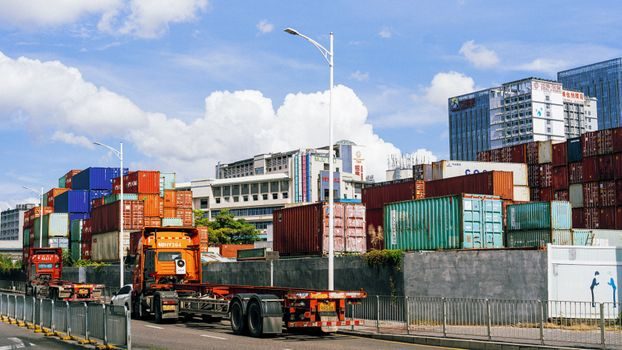
Asia Pacific is the largest regional market for battery electrolytes and remains so through the 2030 forecast window, with the Middle East & Africa region projected to register the highest regional CAGR [S2]. The 2022 BloombergNEF supply-chain ranking placed China first for the third consecutive year, with 75% of cell capacity and 90% of anode/electrolyte production, and the same ranking projected China to keep the lead through 2027 [S5].
That concentration is the structural risk: any disruption to a single LiPF6 plant in Jiangsu or Zhejiang cascades into global cell output, and qualification cycles for alternative salt suppliers run 12–18 months. North American and European cell makers responding to IRA and EU Battery Regulation sourcing rules are pushing for ex-China LiPF6 and solvent offtake, but the 2026 reality is still that 90% of electrolyte output sits behind a small number of Chinese factory gates [S5]. For context on how that upstream squeeze plays into the separator side of the stack, see the battery separator upstream and downstream industry map, which covers the parallel material, process and qualification chain for separators.
Solid-State and Gel Electrolytes: Where the 13.2% CAGR Comes From
Liquid electrolyte is forecast to be the highest-CAGR form through 2030, but solid and gel electrolytes are the strategic R&D line item, driven by dendrite suppression, wider temperature windows and the elimination of flammable carbonate solvents [S2]. Academic work on suppressing SEI on silicide nanowire anodes has demonstrated >700 mAh g–1 with 84% retention over 2000 cycles at 20C by controlling the potential across the electrochemical interface, a route that pairs with — rather than replaces — engineered solid or gel interlayers [S1].
The procurement-side takeaway: solid-state cells using sulfide or oxide ion conductors (e.g., Li6PS5Cl argyrodite, Li7La3Zr2O12 garnet) remain pre-commercial for most auto programs, while gel polymer electrolytes (PVDF-HFP soaked in carbonate/LiPF6) are shipping in small-format consumer and stationary cells. Anyone writing a 2026 spec should treat solid-state as a 2028+ volume line and keep liquid LiPF6 blends as the default bill of materials.
Selection Criteria: Choosing an Electrolyte Supplier in 2026
Four criteria dominate a defensible 2026 supplier shortlist. (1) LiPF6 salt source — captive vs merchant, and country of origin, because a single-source salt node is the most common failure mode. (2) Water content spec — Karl Fischer ≤20 ppm for Li-ion grade, because HF generation from LiPF6 hydrolysis kills cycle life. (3) Qualified cell platform — supplier's reference cells at 4.2 V and 4.35 V, plus cycle data at 1C/2C/45 °C storage. (4) Geographic redundancy — second-source plant outside the dominant China cluster, often in Korea, Japan or, increasingly, the U.S. Gulf Coast and EU [S2].
Comparison against these criteria for the main supplier archetypes:
Chinese majors (CAPCHEM, Tinci, Capchem Materials): lowest unit cost, largest LiPF6 captive capacity, but concentration risk and long qualification for non-China cell lines. Japanese incumbent (Mitsubishi Chemical): higher cost, established quality systems, dual-source solvent options. Korean specialist (Enchem): strong on high-voltage (4.35 V) and silicon-anode formulations, smaller absolute capacity. This three-way trade-off — cost vs concentration vs formulation — is the actual decision matrix; the published Battery Electrolyte Market 2025–2030 forecast gives the dollar size behind each of these archetypes but does not resolve the concentration question on its own.
Failure Modes and Spec Gates Buyers Should Write Into 2026 POs
The three spec gates that catch the most field failures: moisture ≤20 ppm by Karl Fischer; HF content ≤50 ppm after accelerated storage (60 °C / 7 days); and a cycle-life delta ≤10% versus reference cell at 1C/25 °C over 500 cycles. LiPF6 hydrolyzes to HF in the presence of trace water, and HF attacks both the SEI on the anode and the aluminum current collector at high state-of-charge, which is the failure mode that drives most warranty returns in the field [S1].
A second failure mode is salt precipitation at low temperature: LiPF6 solubility in EC/EMC blends drops sharply below −20 °C, and cells specified for cold-climate EVs need a reformulated solvent ratio plus additives such as vinylene carbonate (VC) and fluoroethylene carbonate (FEC). The silicide-nanowire potential-control work is one route to relax the SEI constraint on silicon anodes, but it does not remove the need for FEC-type additives on the graphite baseline [S1].
Standards, Pricing and Trackable 2026 Signals
No single IEC standard covers the electrolyte itself; the relevant compliance chain sits downstream at the cell and pack level (IEC 62660 for performance, IEC 62133 for safety, UN 38.3 for transport). Procurement teams should anchor electrolyte COA templates to internal spec sheets that mirror those cell-level tests, since LiPF6 quality shows up as a cycle-life shift at the cell, not as an in-bottle failure. [S1]
Two current data points worth noting: BloombergNEF's supply-chain ranking reports China hosting 75 percent of global battery cell manufacturing capacity and 90 percent of anode and electrolyte production, with Chinese dominance projected to continue through 2027 [S5]; and MarketsandMarkets forecasts the global battery electrolyte market to grow from USD 15.06 billion in 2025 to USD 27.99 billion by 2030, at a 13.2% CAGR [S2]. For the parallel upstream chain that feeds this market, the manganese ore to battery-grade EMD manufacturing flow is the adjacent node worth tracking.
For component-level specifications, see switching power supply, and chain conveyor.