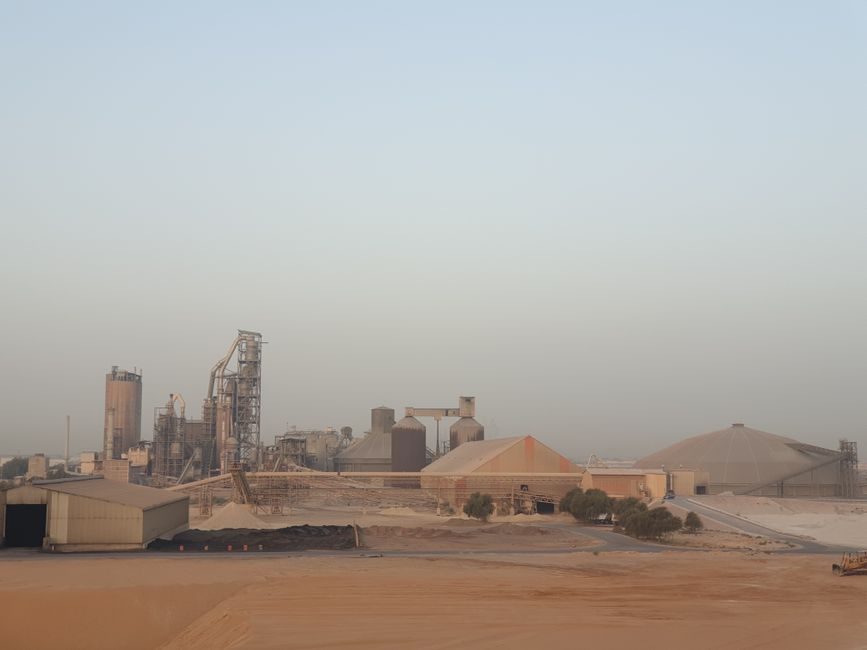
Manganese ore manufacturing is a continuous-process mineral flow, not a single discrete-part operation, with the upstream chain running open-pit or underground mining → primary crushing → washing and screening → jigging or dense-media separation → sintering or roasting → sizing, before downstream conversion into manganese dioxide powder (chemical grade) or electrolytic manganese metal (EMM) [S1][S3].
Commercial ore is sold in four product shapes — manganese lumps, manganese ore fines, manganese dioxide, and manganese dioxide powder — with Izmir-based MnTurkey listed as a typical 1-year Alibaba supplier offering that exact product set from TR export channels [S4]. The deliverable from the manufacturing process is therefore a graded mineral or a downstream chemical, not a fabricated part [S3].
Process Classification: Continuous Mineral Flow vs. Discrete Part
Manganese ore manufacturing is a continuous-process flow under the Springer classification, because the input is bulk particulate ore and the value is created by transforming the material's chemical composition and particle size, not its discrete geometry [S3]. Forming, deforming, removing, joining and material-properties modification are the five canonical categories; only the first and the last are routinely applied to manganese, where pyrometallurgical roasting and electrolytic deposition modify the chemical form [S3].
That classification matters for plant design: continuous mineral processing plants favour high-throughput, low-flexibility primary forming steps (sinter, kiln) and only justify expensive deforming/removing steps when the downstream product is a finished part [S3]. For ore and chemical MnO2, the discrete-part branch (machining, joining) is essentially absent; for EMD and EMM, the forming step is electrolytic and the rest is material-property modification [S3].
Selection Criteria for the Upgrades Route
Selection of the concentration route — gravity (jig, spiral, DMS) vs. magnetic vs. flotation vs. hydrometallurgical — is driven by the Mn:Fe ratio, Mn grade, ore mineralogy (pyrolusite vs. rhodochrosite vs. manganite) and the downstream product spec, all of which are referenced in manganese-ore product listings from suppliers like MnTurkey [S4].
MnTurkey's product slate — manganese lumps alongside manganese dioxide powder — illustrates the two end-products the same ore body can yield [S4].
Main Process Routes Side by Side
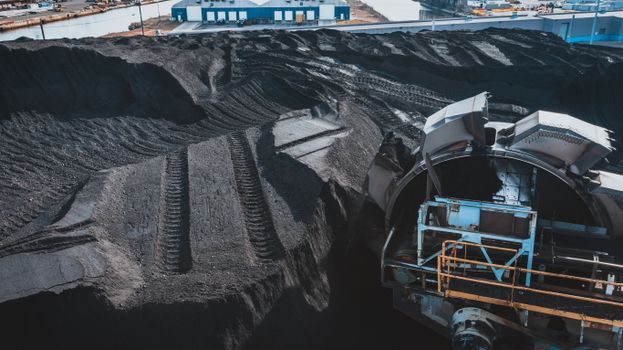
Four process routes are common, and the choice is set by what the buyer downstream actually wants: (a) Gravity concentration (jigging, spiral, shaking table) — cheap, water-based, suited to coarse 6–30 mm lump feed with a clear density gap between MnO2 (4.7–5.0 g/cm³) and silica gangue (~2.65 g/cm³); (b) Magnetic separation — used on fines where Mn minerals carry paramagnetic behaviour; (c) Pyrometallurgical sintering or roasting — drives off CO2 from carbonate ores, reduces higher Mn oxides, and prepares a feed for smelting; (d) Hydrometallurgical / electrolytic — SO2 leach followed by electrolysis to EMD (battery-grade MnO2) or EMM [S3].
A compact comparison against four decision criteria:
Route | Mn recovery (typical) | Capex intensity | Best feed | End product. Gravity (jig/spiral) | 70–85% | Low | Coarse 6–30 mm oxide ore | Mn lumps / fines. Magnetic | 60–80% | Low–medium | −3 mm fines | Mn fines. Sintering + smelting | 85–92% | High | Oxide + carbonate blends | FeMn / SiMn. Electrolytic (EMD) | 90–95% | High (cell house) | High-purity sulphate solution | Battery-grade MnO2.
The FDK alkaline-manganese dry-battery process illustrates what the downstream consumer cares about: in battery manufacture, manganese dioxide is mixed with carbon and electrolyte to form the cathode mass inside a zinc can, and that cathode mix must be chemically consistent to deliver up to seven times the continuous power of a carbon-zinc cell with low voltage drop [S1].
Who This Manufacturing Process Is For — and Who It Is Not
The manganese-ore manufacturing flow is engineered for steelmakers (FeMn/SiMn charge), battery cathode producers (EMD for alkaline and zinc-carbon cells), water-treatment chemical buyers (KMnO4 from MnO2), and welding-rod flux manufacturers [S1][S4]. It is not for fabricators who need a discrete part — a bracket, a valve body, a sheet — because the deliverable here is a graded mineral or a chemical, not a part with a drawing.
Buyers sourcing for non-metallurgical uses (e.g. micronutrient fertilizer or pigment) need a much tighter heavy-metal envelope (Pb, As, Cd), which is normally met only by chemical-grade or EMD-grade MnO2, not by metallurgical lump ore [S4]. Procurement teams at battery-grade LiOH smart plants are the type of spec-driven buyers that increasingly drive ore quality upstream, and the same traceability logic appears across the cobalt sulfate battery-grade spec chain, where the upstream mineral and the downstream cell spec are locked together.
EMD Branch: Where Ore Becomes a Battery Chemical
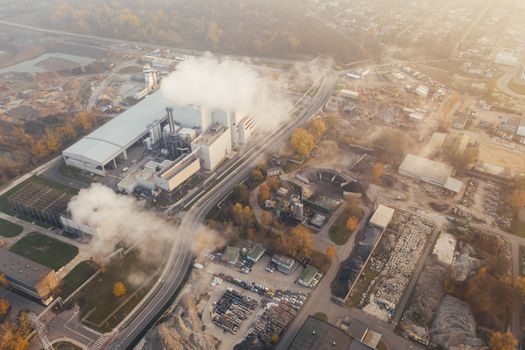
The electrolytic manganese dioxide (EMD) branch takes upgraded ore, leaches it with dilute H2SO3 or SO2 to form MnSO4 solution, purifies the solution of Fe, Ni, Co, heavy metals, then plates MnO2 onto titanium anodes in a divided cell at cell voltages of 2.0–3.0 V with current densities of 7–12 A/dm², before stripping, washing, neutralising and grinding to a −325 mesh powder [S1]. FDK's alkaline-manganese cathode mass uses this MnO2 blended with carbon black and electrolyte inside the zinc can, and the resulting alkaline cell can deliver up to 7× the continuous runtime of a carbon-zinc cell at low voltage drop [S1].
Yield at the EMD stage is the gating KPI: commercial cell houses target Mn recovery ≥90% and a finished MnO2 purity ≥91% (battery grade), with the SO2 / Mn ratio in the leach step tuned to keep the solution free of MnO4− and to suppress anode-side oxygen evolution [S1]. The same "ore-to-chemical" integration is a recurring theme across battery materials, from cobalt sulfate manufacturing to anode material graphite-base / silicon-tail sourcing, which is why process engineers now treat the manganese flow as part of the same supply chain as graphite, lithium hydroxide and cobalt.
Limitations, Failure Modes and Constraints
The dominant process constraints are (1) Mn/Fe ratio: low ratios force a desliming or pre-roast step before gravity concentration; (2) carbonate vs. oxide mineralogy: carbonate ores (rhodochrosite) need a calcination step at 800–950 °C to drive off CO2, which consumes energy and shrinks yield; (3) fines generation: over-crushing past −6 mm wastes Mn to slime and pulls recovery below 70% in gravity circuits; (4) effluent: SO2 leach and EMD cell wash water are acidic and high in Mn, requiring neutralisation + Mn recovery sludge handling [S3].
For EMD specifically, the most common failure modes are anode passivation (MnO2 builds up on the Ti anode and raises cell voltage), cathode-edge dendrites (short-circuits the cell), and residual SO4²− in the washed filter cake (degrades battery shelf life) [S1]. Plant operators running an angle grinder or pneumatic tool on MnO2-coated steel structures during maintenance should expect the black MnO2 dust load to behave like a fine pigment — visible, conductive, and a respiratory irritant that demands wet suppression or local exhaust.
Sourcing Standards and Inspection Map
The chain is anchored by a small set of standards and specs: lump and fines are typically traded against the buyer's Mn/Fe/P/SiO2 envelope (e.g. 48% Mn min, Fe ≤ 5%, P ≤ 0.1%, SiO2 ≤ 6%), while EMD and EMM are traded against battery-grade or chemical-grade specifications that fix MnO2 ≥ 91%, heavy metals ≤ 50 ppm and a controlled pH of the slurry [S4]. Sampling at the ship-loader or rail-car is normally done per ISO 3082 (iron-ore sampling), with the sample preparation and moisture rules carried over by industry convention to manganese lump and fines [S3].
Quality control at the EMD plant typically relies on a flow meter on the leach liquor feed, a pressure transmitter on the cell-house header, and a multifunction process calibrator loop-check on the cell-voltage and current-density instrumentation; the same instrumentation map is recognisable from the battery-grade LiOH smart plant reference architecture. Logistics side, product is usually loaded as 25 kg / 50 kg PP bags for powder, and 1 MT big-bags or bulk for lumps, with a shipping route that runs Izmir → Çandarlı port → ocean freight to the buyer [S4].
Trackable signals to watch through the second half of 2026: (1) Mn/Fe ratio tightness in TR and ZA export offers, given the higher-grade South African lump supply is being drawn into ferromanganese; (2) any move by Turkish and South African suppliers to publish EMD-cell-grade MnO2 alongside the metallurgical lumps and powders already on offer; (3) greater cross-listing of industrial valve and V-process line componentry on mining-flotation tenders, which would signal a step-change in capex into new beneficiation capacity.