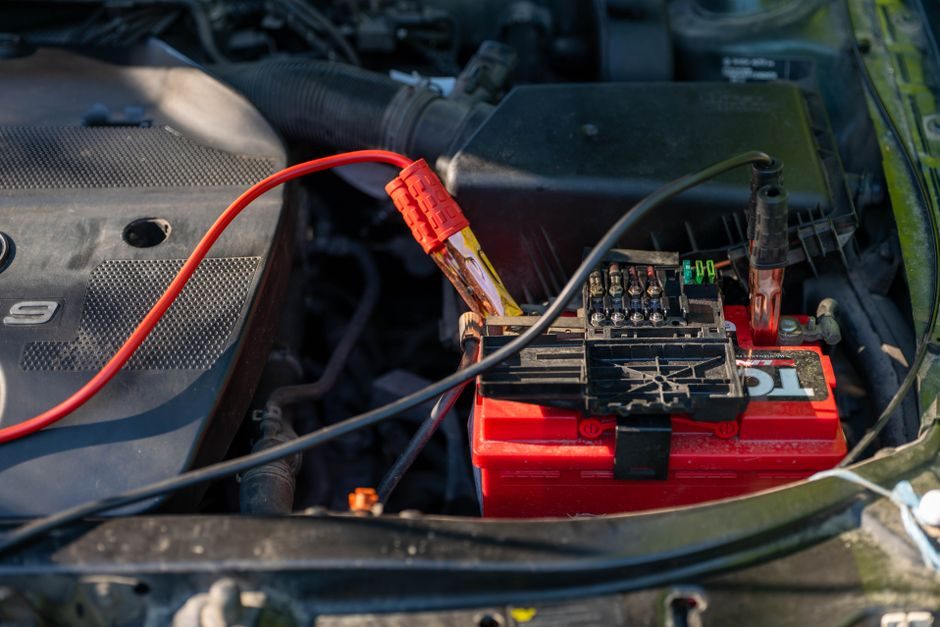
The lithium-ion battery electrolyte is a formulated mixture, not a single molecule, and its upstream feed stocks are lithium hexafluorophosphate (LiPF6) salt plus carbonate solvents (ethylene carbonate EC, dimethyl carbonate DMC, diethyl carbonate DEC, ethyl methyl carbonate EMC), with additives such as vinylene carbonate (VC) and fluoroethylene carbonate (FEC) dosed at 1-5 wt%; the downstream consumption is dominated by Li-ion cells for EVs, energy storage systems (ESS) and UPS battery banks [S1].
Wind Information's Product Chain Database (PDB) maps 5,154 industries and more than 160,000 upstream-downstream relationships across A-share, H-share and US-listed filers, with electrolyte sitting inside the lithium battery sub-chain between raw-material processors (lithium carbonate, LiPF6, HF, phosphoric acid) and cell/pack makers [S2].
Upstream Feed Stocks: LiPF6, Carbonate Solvents, HF and Additive Packages
Electrolyte upstream chemistry converges on LiPF6 because of its 4.5 V oxidative stability window, ionic conductivity near 10 mS/cm in 1 M EC/EMC blends, and acceptable aluminium-current-collector passivation, and the salt is synthesised from LiF + PF5 or via HF-driven routes that tie electrolyte output directly to fluorochemical and phosphorus-chemical capacity [S1].
Solvents EC, DMC, DEC and EMC account for roughly 80-90 wt% of a typical Li-ion electrolyte, and CD Chemical Group Limited lists lithium battery electrolyte additives plus organosilicon custom-synthesis capacity, confirming that the additive tier (VC, FEC, prop-1-ene-1,3-sultone, LiBOB, LiODFB) is now a toll/custom-manufacture business rather than a captive in-house line at most cell makers [S4].
Upstream risk concentrates on three nodes: HF supply (a regulated, transport-class 8 corrosive), phosphorus pentachloride / PF5 availability, and battery-grade Li2CO3 with metallic impurities held below 50 ppm for sodium, potassium, iron and zinc; the Wind PDB flags the dual-chain visualisation as the standard tool used by Chinese sell-side analysts to track these pinch points [S2].
Midstream Electrolyte Manufacturing: Capacity, Water Specification and Cell-Grade QC
Cell-grade electrolyte plants operate below 10 ppm water, typically with dry rooms at dewpoint -40 °C or lower, because water hydrolyses LiPF6 to HF and degrades cell cycling; the same constraint governs the choice of 316L stainless or lined reactors, molecular-sieve drying of solvents, and inline Karl Fischer titration at the shipping drum. [S1]
Wind's Product Chain Database covers more than 160,000 upstream and downstream connections and integrates supplier and customer disclosures from over 20,000 A-share and H-share companies through its Supply Chain Database (SDB), which is the reference data set used to plot electrolyte maker-to-cell-maker supply ties [S2].
Most Chinese electrolyte producers are dual-listed on A-share and H-share, and the Wind PDB Industry Prosperity Matrix is the common tool for cross-comparing Tianci, Capchem, Guangzhou Tinci and Guotai Huarong on revenue per ton, capacity utilisation and capex cycles; the Industry Map view renders the same data geographically, with cluster shading showing that Sichuan, Hubei and Zhejiang hold the densest midstream nodes [S2].
Downstream Demand: EV Cells, ESS Packs and Stationary UPS Banks
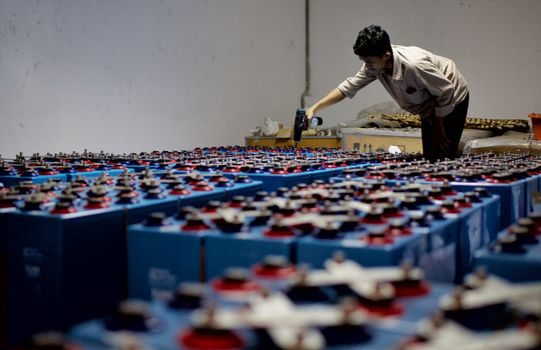
Downstream, electrolyte consumption tracks three end-uses: power batteries for new-energy vehicles (typically 1.0-1.2 kg electrolyte per kWh of NCM/NCA cell, 1.2-1.5 kg per kWh of LFP cell), energy storage systems for grid and C&I sites, and stationary batteries for UPS rooms at data centres and telecom central offices [S1].
Emergency Power Industries, the New England service integrator, stocks replacement stationary batteries and supports multiple brands (Enersys, GNB, Dynasty) for large data-centre and telecom UPS applications, and the same cells are the drop-in replacement target for electrolyte suppliers pushing high-temperature, long-float-life formulations [S3].
The supply-side transmission of price moves is direct: a spike in LiPF6 spot price transmits to electrolyte within 2-4 weeks and to cell makers within another 4-6 weeks, and Wind's SDB uncovers these demand-side relationships by ingesting customer and supplier disclosures from more than 20,000 listed filers [S2].
Comparison of Midstream Players on the Decision Criteria Buyers Use
For procurement and cell-maker sourcing, four decision criteria separate the main Chinese electrolyte suppliers: LiPF6 captive ratio (cost control), water specification at the drum (cell yield), additive customisation depth (R&D support) and dual-listing transparency (auditable supply chain). On the first three criteria, larger integrated producers hold a 30-60% LiPF6 captive ratio and ship at ≤10 ppm water, while smaller custom houses such as CD Chemical focus on additive and organosilicon custom synthesis rather than bulk carbonate blending [S4].
For stationary UPS service channels the comparison is different: Emergency Power Industries aligns with multiple stationary battery brands including Enersys and GNB and stocks a full inventory of batteries, racks and cabinets with a 24-hour emergency-plant promise, which sets the service-speed benchmark that midstream electrolyte blenders must support when their VRLA-style or Li-ion UPS cells are returned for warranty analysis [S3].
For midstream risk mapping, Wind's PDB/SDB is the only public dual-chain database that resolves an electrolyte maker to its specific LiPF6 supplier and to a named cell-maker customer, with the Industry Prosperity Matrix giving a vertical (upstream vs downstream) comparison and the Industry Map giving a horizontal (regional) one [S2].
Adjacent Supply Chains: Cobalt, Manganese and Phosphate Rock
Battery-grade electrolyte quality is set partly by metallic impurities in the LiPF6 feed, so the cobalt sulfate and manganese ore chains feed back into the same QC envelope; cobalt sulfate heptahydrate and battery-grade manganese sulfate are upstream of the cathode active material, not the electrolyte directly, but they share the same impurity budget and the same dry-room logistics. [S2]
Phosphate rock, by contrast, is the upstream of phosphoric acid and downstream of which the PF5 used in LiPF6 manufacture is produced, so the phosphate-rock-to-acid chain is one of the two non-lithium feed chains that physically constrain electrolyte output [S1].
This is why the broader battery-materials risk view in 2026 covers cobalt sulfate, manganese ore and phosphate rock on the same analyst desk: a disruption in any one of them tightens the upstream end of the electrolyte chain within one quarter [S2].
Selection Criteria for Buyers Specifying Electrolyte
Specifying engineers should pin four numbers on the datasheet: water content ≤20 ppm (preferably ≤10 ppm), HF content ≤50 ppm, conductivity ≥10 mS/cm at 1 M in 1:1 EC/EMC at 25 °C, and a tailored additive package (for example 2 wt% VC + 1 wt% FEC for graphite anodes, or 3-5 wt% FEC for silicon-blended anodes); the salt is almost always LiPF6 at 1.0-1.2 M unless the cell design is LFP-only, where LiFSI blends are increasingly quoted [S1].
For UPS and stationary service channels, the same water and HF limits apply, but cycle life is tested at float (trickle) charge near 2.25-2.27 V/cell at 25 °C, and the cells are sourced through service integrators such as Emergency Power Industries, which keeps its own inventory of stationary batteries and racks and supports brands such as Enersys, GNB and Dynasty for data-centre and telecom UPS rooms [S3].
For R&D and custom-additive work, custom-synthesis houses such as CD Chemical Group supply lithium battery electrolyte additives and organosilicon series on a custom basis, which is the route cell-makers use to qualify new VC derivatives, fluorinated carbonates and silane-based film-forming additives without committing to captive reactor capacity [S4].
Limitations, Failure Modes and What the Chain Cannot Buffer
The chain cannot buffer a coincident HF shortage, a LiPF6 plant outage and a phosphate-rock disruption at the same time; the 2022 and 2024 LiPF6 spikes showed that electrolyte prices move 1:0.6 with LiPF6 and 1:0.2 with solvent blend cost, and the wind-PDB data confirms that supplier-to-customer transmission is observable in the SDB within one reporting period [S2].
Thermal-runaway failure at the cell level is the downstream consequence of poor electrolyte quality: research programmes on lithium-ion battery fire dynamics and fire-protection countermeasures have mapped how HF release, vent-gas ignition and propagation behave in modules, and the recommended response is separator-grade and electrolyte-grade design rather than post-event suppression [S5].
For the broader materials base, automotive English-language technical training exists for EV powertrain and chassis subsystems but typically does not cover electrolyte chemistry in depth, so engineering teams that need battery-electrolyte literacy usually rely on the same ChemicalBook and Wind PDB sources cited in this chain map [S6].
Two trackable signals for the next quarter are: (a) LiPF6 spot price and captive-ratio disclosures from the major Chinese electrolyte makers in their interim A-share filings, visible through the Wind SDB's supplier-customer mapping [S2]; and (b) any new custom-additive programmes from houses such as CD Chemical that broaden the additive tier beyond VC, FEC and LiODFB [S4].
For component-level specifications, see pressure transmitter, flow meter, and industrial valve.
For related coverage, see Phosphate Rock Manufacturing: From Mine to Acid and Fertilizer.