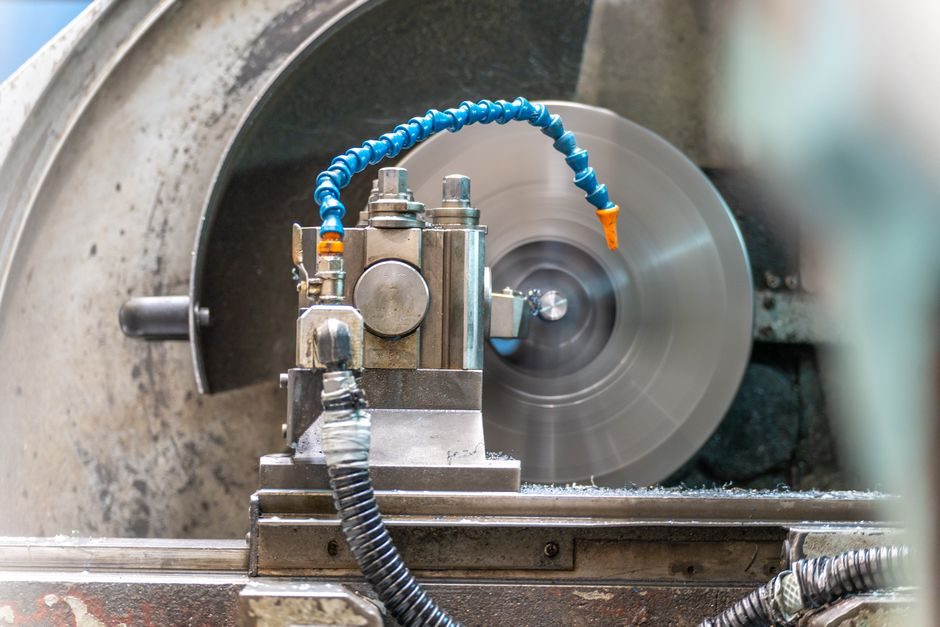
Phosphate rock manufacturing is a three-stage chain — mining and beneficiation of sedimentary apatite ore to a +30% P2O5 concentrate, wet-process acidulation with sulfuric acid, and downstream reaction of that phosphoric acid with sulfuric acid or ammonia to make SSP, TSP, MAP and DAP fertilizers [S2].
About 90% of US phosphate rock demand is converted into wet-process phosphoric acid and superphosphoric acid, which are then reacted further into granular and liquid ammonium phosphate fertilizers [S1]. The remaining tonnage goes to defluorinated rock for animal feed, and to electric-furnace elemental phosphorus for high-purity industrial phosphoric acid [S1].
Ore Grades and the Flotation Beneficiation Window
Sedimentary phosphate ore is sorted into three commercial classes by P2O5 content: high-grade at +30% P2O5, medium-grade at 20–30% P2O5, and low-grade at 15–20% P2O5, with the high-grade often blended with medium material for direct sale [S2].
Low-grade ore is crushed and ground to −74 µm to liberate phosphate from carbonate and silica gangue, then conditioned with fatty-acid salt collector in an alkaline circuit to float silica, followed by an acid stage using phosphoric and sulfuric acid to depress phosphate and float carbonate [S2]. The resulting concentrate is thickened, filtered and dried to +30% P2O5 at an ore-to-concentration mass ratio of roughly 2.5:1, which sets the ball-mill and flotation-circuit sizing for any new beneficiation line [S2].
Wet-Process Phosphoric Acid: The 70–75 BPL Digestion Step
Wet-process acidulation starts with phosphate rock ground to 70–75 BPL (bone phosphate of lime), mixed in a digestion tank with cooled recycled phosphoric-acid/gysum slurry so that free carbonates react first and the sulfate attack on apatite is moderated [S2].
Sulfuric acid is then metered in to drive the main reaction on fluorapatite, Ca10(PO4)6F2, releasing phosphoric acid and precipitating calcium sulfate dihydrate (gypsum) which is filtered off. The filtrate is concentrated to merchant-grade acid (typically 52–54% P2O5), with a side-stream upgraded to superphosphoric acid (≈68–72% P2O5) for high-analysis liquid fertilizers and for DAP/MAP granulation [S1]. Gypsum disposal and HF off-gas scrubbing are the two utility-heavy pain points of this stage.
Single, Double and Triple Superphosphate Compared
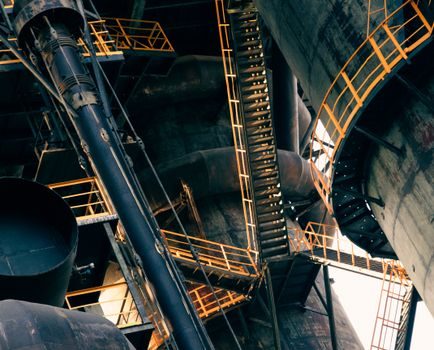
The three mineral superphosphates differ only in which acid is used and in the resulting P grade: SSP at 9% P from sulfuric acid on 100-mesh rock, DSP at 16% P from phosphoric acid, and TSP at 19% P from stronger phosphoric acid [S2].
SSP is made by reacting ground rock (90% passing 100 mesh) with 55–75% sulfuric acid in a pan mixer, discharging onto a wide belt conveyor where the reaction Ca10(PO4)6F2 + 7H2SO4 → 3Ca(H2PO4)2 + 7CaSO4 + 2HF completes, then curing 3–4 weeks in a shed, drying, milling and screening [S2]. DSP and TSP skip the long cure because no free sulfate remains, but they still need denning and granulation; granulation of cured SSP is done with steam addition for size control.
Ammonium Phosphates: MAP, DAP and the N–P Decision
Where nitrogen and phosphorus must be co-applied, the industry standard is monoammonium phosphate (MAP, 11-52-0) or diammonium phosphate (DAP, 18-46-0), both made by reacting ammonia with phosphoric acid in a pipe reactor or a preneutralizer [S2].
DAP needs a higher NH3-to-acid mole ratio (≈2:1) than MAP (≈1:1), which means more ammonia cost per ton of P2O5 fixed, but it ships a higher nitrogen analysis that suits direct application on cereals. In the US, more than half of wet-process phosphoric acid is exported as upgraded granular DAP, MAP and TSP, plus merchant-grade acid, so the granulation train — pugmill, dryer, cooler, screen, crusher — is effectively a second process plant bolted onto the acid plant [S1].
Direct-Application Soft Rock and the pH-5.5 Cutoff
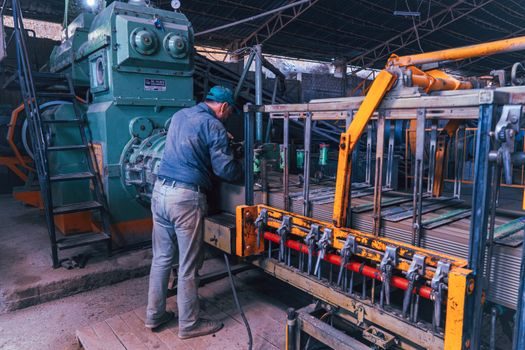
Finely ground soft phosphate rock can be used as a direct-application fertilizer only under specific soil conditions, because the apatite is only marginally reactive [S2].
The two field gates are soil pH below 5.5 and high rainfall; outside that envelope the rock dissolves too slowly to feed intensive cropping, and reactive rock must still be milled to fineness comparable to the 100-mesh grind used for SSP [S2]. This direct-application path is the only branch of phosphate rock manufacturing that skips the entire acidulation block, but it is a niche market compared with the wet-process chain.
Plant Equipment and Process Machinery in the Chain
The mechanical equipment stack behind this process matches the unit operations: jaw and cone crushers, ball mills and vertical grinding mills for the comminution step, conditioning tanks and flotation cells for the silica/carbonate separation, digesters and filter presses for the acidulation, and rotary dryers, granulators, coolers and vibrating screens for the fertilizer-finish stage. [S1]
Current OEM offerings on the manufacturing-machinery market for rock-phosphate plants span small-lot grinding mills (entry-level US$ 60,250–69,406 per set) up to packaged crusher-grinding production lines at US$ 1,000–100,000 per piece MOQ, reflecting the wide tonnage range from regional fertilizer blenders to multi-thousand-tpd acid plants [S3]. Buyers specifying new lines should align crusher gap setting, mill motor class and flotation cell volume to the −74 µm grind and 2.5:1 ore-to-concentrate ratio that the downstream chemistry actually needs, not to the nameplate of the cheapest catalog skid.
Process Specs, Sourcing Signals and Watch-Items
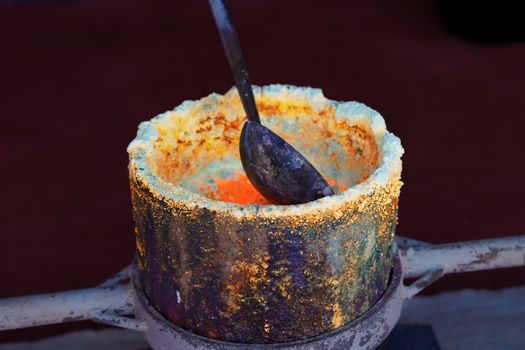
Three numbers anchor a phosphate rock manufacturing spec: 70–75 BPL feed to the digester, +30% P2O5 concentrate out of flotation, and a 2.5:1 ore-to-concentrate mass ratio that fixes beneficiation yield [S2]. On the fertilizer side the grading band is 9% P (SSP), 16% P (DSP), 19% P (TSP), with MAP at 11-52-0 and DAP at 18-46-0 as the N-P co-products [S2].
Trackable signals worth watching: US marketable output running near 41.5 million tons/year with Florida and North Carolina still supplying the bulk of domestic tonnage [S1]; the share of merchant-grade acid versus upgraded DAP/MAP exports as the margin driver; and any new mine-permit activity replacing reserves that the largest producer has already flagged as depleting within the next decade [S1].
For component-level specifications, see rock wool, additive manufacturing material, and multifunction process calibrator.
For related coverage, see Concrete Fiber Installation: Selection, Dosing and Field QA Guide.
