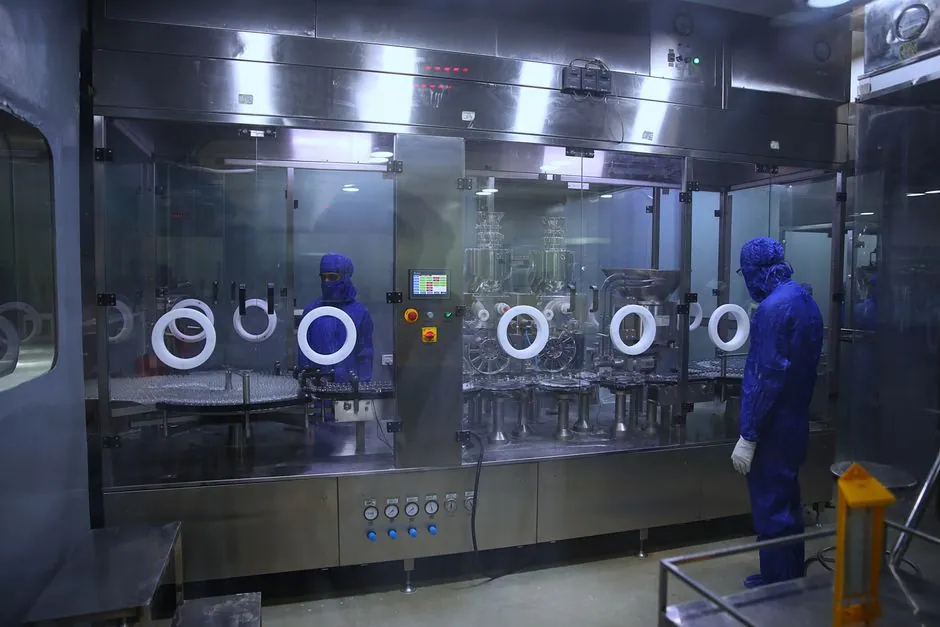
Five standards define the floor of a compliant pack build in 2026: ISO 9001 for the QMS, IEC 62133-2 for portable lithium-ion safety, UN38.3 for transport, ISO 14644-1 for the cleanroom envelope, and a product-specific UL or IEC mark on the label [S3][S4].
For EV and stationary packs the stack widens to include IATF 16969-style automotive quality clauses plus automotive-grade cleanliness targets, while medical packs add ISO 13485 and IEC 60601-1 on top of the core layer [S7]. A 2025 Capgemini study cited by JR Automation found 68% of automotive companies still struggle to elevate battery quality standards at scale, with 59% of battery executives citing cell-to-pack consistency as their top gap [S6].
Core QMS and cell-level safety standards
ISO 9001 remains the baseline management-system standard for any battery or charger maker that needs to demonstrate repeatable conformity to customer and regulatory requirements [S3]. On top of it, IEC 62133-2 is the most widely recognised international safety standard for rechargeable lithium-ion cells and portable battery packs, covering cells intended for portable sealed applications including medical, EV motive, and industrial uses [S4].
For transport, UN38.3 (UN Manual of Tests and Criteria, Section 38.3) is mandatory across air, sea, and road, and pre-dates the product-safety marks; a pack cannot ship without it [S7]. The June 2026 US Federal Register proposed rule for micromobility lithium-ion packs layers UL 2272-24 and UL 2271-23 on top, adding a reverse-polarity test aimed at preventing charger-incompatibility damage to the pack [S1].
Application-specific overlays: automotive, medical, aerospace
Automotive packs face IATF 16949 process control and the AIAG Core Tools (APQP, PPAP, MSA, SPC, FMEA), with cell traceability required to the lot level under most OEM purchase specifications. EV dry rooms and cleanrooms are typically held to ISO 14644-1 Class 7 or better, and many EV cell lines are reported to exceed minimum ISO classifications, with chemistry-handling zones often held tighter to control particulate and moisture uptake [S8].
Medical battery packs must additionally satisfy ISO 13485, which defines the QMS for medical devices, and IEC 60601-1, which governs electrical safety, isolation, and essential performance of the host device [S7]. Aerospace packs layer RTCA DO-160 environmental testing on top, and DO-311A addresses rechargeable lithium battery abuse tolerance for airborne systems; an aircraft battery testing reference programme typically includes altitude, thermal, vibration, and over-discharge sequences before flight qualification.
Production-process quality: slitting, assembly, in-line inspection

Electrode slitting is a yield-defining step. A 2026 multi-criteria decision analysis paper by Wicke, Neef, and Tübke compared knife and laser slitting along four dimensions: cost, throughput, quality, and sustainability, with quality weighted alongside burr size, particle generation, and edge defects [S5]. The PROMETHEE II case study found that laser slitting improves edge quality but raises investment cost, and a tipping-point analysis shows that the cost premium must drop to a defined threshold before laser is preferred at high volume [S5].
At module and pack assembly, the JR Automation review highlights the "last-millimetre" tolerance problem: cell-to-cell spacing, weld penetration on busbars, and torque on compression frames are the three failure modes most often traced to dimensional drift rather than cell defect [S6]. A reference precision pack line typically runs a flow meter on dielectric coolant for laser welding, an industrial valve manifold on the electrolyte dosing skid, and inline pressure transmitter feedback on module fixturing during press-fit.
Comparison of the main option types
Builds stack into three broad classes, each with a different standard footprint and a different audit burden:
1) Consumer/light-industrial packs: ISO 9001, IEC 62133-2, UN38.3, plus a UL or IEC mark on the finished pack (e.g. UL 2054 for household packs) [S4][S7]. Lowest cost, fastest certification, but limited to consumer-grade safety and no process-control overlay.
2) EV and stationary energy storage: adds IATF 16949 process control, ISO 14644-1 Class 7 or better for cell/module assembly, AIAG Core Tools, and supplier PPAP for cells, modules, and BMS [S6][S8]. Highest audit and traceability cost, justified by the field-failure cost of a 70 kWh traction pack.
3) Medical and aerospace: adds ISO 13485 and IEC 60601-1 (medical) or RTCA DO-160 and DO-311A (aerospace), and the test-matrix density roughly triples compared with consumer [S4][S7]. Cleanroom floors are tighter (often ISO 5 laminar flow benches for cell handling) and each shipment needs a full design-history-file pull.
Failure modes and limits of the current stack
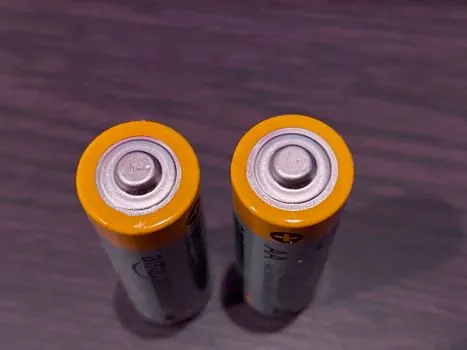
The standards define the floor, not the ceiling. The Capgemini 2025 data quoted by JR Automation is explicit: 68% of automotive companies still cannot elevate quality at scale, and 59% of battery executives name cell-to-pack variation as the dominant defect source [S6]. Typical failure modes that pass the certificate but fail the field are: dendrite growth from uneven electrode pressure, thermal runaway propagation across modules, and connector-rodent damage on underbody EV packs.
Cleanroom practice is the second weakest link. EV dry rooms must hold dew point below -40 °C for cell formation and below -60 °C for some LFP chemistries, and many production audits still record excursions during door cycles and maintenance windows [S8]. For nickel-rich and silicon-anode chemistries, ISO 14644-1 Class 6 is increasingly the working minimum, and Class 5 is no longer unusual for cell stacking.
Sourcing and standards discipline
Specifying engineers should fix the standard stack in the purchase document before naming a vendor: the QMS (ISO 9001 minimum, IATF 16949 for EV, ISO 13485 for medical), the cell safety mark (IEC 62133-2 or UL 1973), the transport mark (UN38.3 report on file), the environmental class (ISO 14644-1 plus dew point for the cell line), and the application overlay (UL 2271-23 for micromobility, UL 9540 for stationary, IEC 60601-1 for medical) [S1][S3][S4][S7].
Two signals to track over the next 6 to 12 months: the finalisation of the CPSC micromobility battery rule from the June 2026 proposed rule, and the revision cycle of IEC 62133-2 and ISO 9001:2015, which will set the next test thresholds for portable lithium-ion packs [S1][S3]. For cell-side supply, cathode material procurement remains the upstream quality gate, since pack-level defect trace-back still terminates at the cathode lot more often than at the assembly line.