
The Milwaukee 36-inch walk-behind trowel is powered by the MX FUEL platform and has a maximum blade speed of 130 RPM [S3], while the Milwaukee 24-inch walk-behind trowel delivers up to 35 minutes of runtime [S7].
The practical answer depends on battery capacity, trowel size, rotor load, and concrete condition [S3][S6].
Runtime Ranges Across Battery Trowels
Wacker Neuson states that its BatteryOne-equipped battery trowels can run for a full workday on a single charge [S6]. That figure describes a high-capacity operating configuration, not a universal runtime for every battery ride-on trowel. Battery capacity, machine mass, blade loading, and operating conditions still determine the result on a specific slab.
The Allen PRO436-B is identified as a walk-behind trowel [S2].
Milwaukee’s MX FUEL 36-inch walk-behind trowel, model MXF336-3HD, provides a shorter operating window under a different architecture. With an MX FUEL REDLITHIUM FORGE HD12.0 battery, its rated runtime is up to 25 minutes, with a maximum blade speed of 130 RPM and a listed bare weight of 164 lb [S3]. That contrast shows why “battery trowel runtime” needs a machine-specific answer rather than one industry-wide number.
Selecting a Ride-On Runtime Target
Battery-powered trowels equipped with the BatteryOne battery can last for a full workday on a single charge [S6]. For a fleet using the Allen PRO436-B architecture, plan around the published 5+ hour battery run time and 1–2 hour charge time, not an assumption of unlimited operation [S2].
The Allen machine also carries two 48-volt batteries totaling 41.5 lb (18.8 kg), so charging logistics affect more than available runtime [S2]. The Allen PRO436-B and the Milwaukee 36-inch machine are both walk-behind trowels [S2][S3].
For operators comparing machine classes, the power trowel category requires attention to rotor diameter, blade configuration, operator weight, and battery exchange arrangements. Runtime alone is not useful if the machine cannot maintain the required finishing pass while its battery reaches its operating limit.
Battery Systems, Capacity, and Charging
The published material states that battery-powered trowels equipped with the BatteryOne battery can last for a full workday on a single charge but does not provide the battery voltage, amp-hour rating, charger rating, or battery mass [S6]. Those missing values mean a direct comparison with the Allen system’s two 48-volt batteries would require specifications that are not present in the research.
The supplied excerpt identifies the Allen PRO436-B as a walk-behind trowel but does not provide electrical, runtime, charging, handle, or battery-removal specifications [S2].
Milwaukee takes a different route with removable MX FUEL packs. The kitted 36-inch MXF336-3HD uses a FORGE HD12.0 battery and is rated at up to 25 minutes per charge [S3]. Its 130 RPM rotor and 5 hp output are paired with a 63 × 30 × 40.5 inch envelope and a 164 lb bare weight [S3].
Milwaukee also published runtime and production figures for a 24-inch battery trowel, rating it for up to 35 minutes and approximately 600 linear feet of edging or 130 linear feet of finishing edging under the stated test conditions [S7]. Those figures belong to a smaller edging machine, not a ride-on trowel, but they demonstrate that coverage per charge depends heavily on the work definition.
Runtime Comparison by Machine Configuration
Runtime and coverage are separate criteria: the Allen PRO436-B lists 5+ hours with two 48-volt batteries and 1–2 hours for charging [S2]. The Milwaukee 36-inch MXF336-3HD lists up to 25 minutes with an HD12.0 battery [S3], while the Wacker Neuson BatteryOne system is described as covering a full workday [S6].
Machine role changes the comparison. The Allen PRO436-B is identified as a walk-behind trowel, but the supplied excerpt does not provide its weight, blade dimensions, working width, or rotor speed [S2]. The Milwaukee model is also a 36-inch walk-behind trowel, but it weighs 164 lb, reaches 130 RPM, and carries a 5 hp brushless motor [S3]. The Wacker statement concerns battery-powered trowels with the BatteryOne battery and does not provide a matching weight, blade diameter, or rotor-speed specification in the research [S6].
Concrete condition and task intensity remain decisive because finishing concrete introduces resistance that is absent during unloaded stand-by. Milwaukee’s rated 25-minute figure corresponds to work of about 2,000 square feet for panning or about 500 square feet for finishing over five passes, with the result varying by application and conditions [S3]. A ride-on operator should therefore reserve charge for the planned slab area rather than use a published maximum runtime as a guaranteed work window.
Where Battery Ride-On Trowels Fit
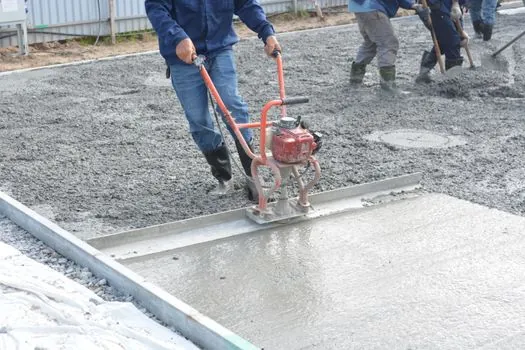
Battery ride-on trowels fit crews that need long uninterrupted finishing capability without engine exhaust, fuel mixing, pull-starting, or engine oil changes [S3][S6]. The Wacker Neuson full-workday claim supports this use in applications where a single charged system can cover the operating shift [S6]. Electric drive also removes direct engine emissions, which supports indoor or enclosed-area finishing when site conditions permit [S3].
They are not the automatic choice for every crew. A contractor with limited concrete work, frequent equipment transfers, or a need for long idle periods between passes may gain less from a full-size battery machine than from a smaller walk-behind unit [S2][S3]. Fleet compatibility also matters: Milwaukee’s machine runs on the MX FUEL ecosystem, Allen’s listed system uses two 48-volt batteries, and Wacker Neuson describes BatteryOne equipment [S2][S3][S6].
Selection should include the operator’s role, planned square footage, charge-swap method, battery availability, and access constraints. A power mixer may be required ahead of finishing, while the trowel must then cover the slab before the concrete reaches a later stage, so scheduling the entire placement-to-finishing sequence is more useful than optimizing runtime in isolation.
Charging Safety and Operating Limits
Multiquip’s STR46SP manual gives two explicit battery controls: keep the battery charged and keep battery cables in good working condition [S1]. It warns that an uncharged battery can allow combustible gas to accumulate [S1]. The MQ Whiteman LD6SL operating instructions repeat the charged-battery warning and add a specific prohibition against charging a frozen battery [S5].
These instructions apply to the cited ride-on models and should be treated as model-level safety requirements rather than generalized charging rules for every battery chemistry [S1][S5]. The LD6SL manual also warns against charging the battery when frozen, making battery temperature a practical precondition for charging [S5].
Dirt management affects battery runtime indirectly by reducing available motor power and adding mechanical drag. Bartell Global advises ride-on trowel operators to remove concrete after use, including using a pressure washer where suitable, because dried concrete in moving parts can cause damage and unexpected maintenance costs [S4]. For electrical ride-on equipment, cable inspection and clean battery connections should be treated as part of the same pre-shift readiness check [S1].
Reading Runtime Claims Before Purchase
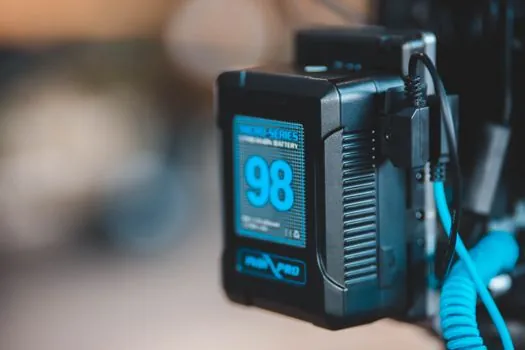
Four runtime claims in the research define the decision range: 25 minutes for the Milwaukee 36-inch MXF336-3HD [S3], 35 minutes for Milwaukee’s 24-inch edging trowel [S7], 5+ hours for the Allen PRO436-B with two 48-volt batteries [S2], and a full workday for the Wacker Neuson BatteryOne configuration [S6].
These values are not directly interchangeable because machine class, battery architecture, work intensity, and coverage definitions differ. The Milwaukee 36-inch claim includes both panning and finishing estimates, while the 24-inch claim uses linear feet for edging and finishing edging [S3][S7]. The Allen claim covers a 289 lb (87 kg), 36-inch walk-behind machine with 155 RPM rotor speed [S2].
A buyer should request the exact battery model, rated capacity in amp-hours, charger input and output, machine weight, blade diameter, rotor speed, and workload conditions behind any runtime claim. If the planned ride-on machine has no published charge-specific figure, the defensible operating plan is a battery-capacity calculation based on the measured current draw of that machine, rather than borrowing the runtime of a smaller walk-behind model [S2][S3][S6].
For fleet tracking, record battery identifier, charge-start time, machine start time, stop time, area finished, and slab conditions for each shift. That dataset turns a catalogue claim into a site-specific duty-cycle figure and makes it possible to compare the full-workday BatteryOne claim with the Allen PRO436-B’s published 5+ hour benchmark [S2][S6].