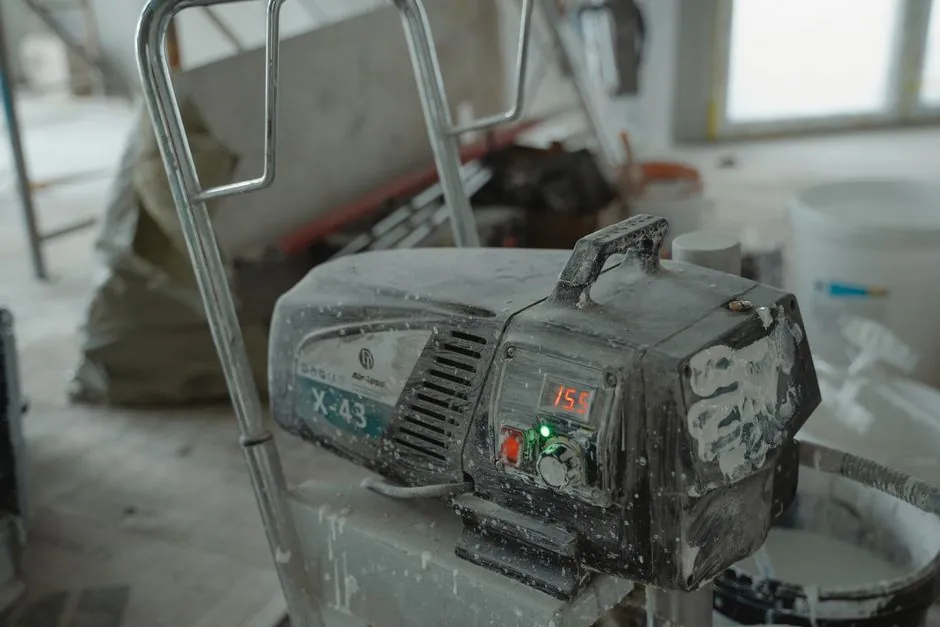
For plaster work, a handheld power mixer is the practical choice for small batches, while a continuous flow mixer is suited to sustained application where feed rate and water dosage can be controlled.
The decision depends on batch size, recipe consistency, available workspace, labor, and whether the mixer must handle aggregate; handheld drill-driven units commonly handle about 0.5–1.5 cubic feet per batch, while continuous systems are designed for uninterrupted material flow [S3].
Core difference: batch control versus uninterrupted production
Handheld power mixers work by combining plaster in a container with a powered mixing paddle. They are portable, inexpensive to operate, and suitable for patching, small areas, and jobs where the operator needs to control each batch. The principal limitation is labor: the operator must add water, mix, stop the tool, and clean the paddle before the next batch [S1].
Continuous flow mixers accept dry material at the hopper and meter it into a mixing chamber while water is introduced. Mixed plaster leaves the machine through a chute or discharge connection while the next material enters, eliminating the load, mix, discharge, and refill cycle [S1][S4].
Batch mixing provides a defined mixing time and a clear batch boundary. Continuous mixing provides a steadier supply, but retention time varies with feed rate, mixer speed, and machine design. Therefore, continuous equipment is not automatically suitable for every plaster formulation, particularly when the recipe changes frequently or requires strict batch-by-batch traceability [S2].
Decision criteria: output, control, workspace, and labor
Handheld drill-driven mixers are one of the mixer categories considered when selecting equipment based on batch capacity, power source, and jobsite portability. For plaster, the same limits mean that a handheld mixer becomes inefficient when application must continue at a steady rate across multiple buckets or containers.
Continuous mixers are a practical option for sustained work and can produce a consistent mix when ingredients are fed correctly. A typical continuous plaster installation includes a hopper, an auger or dosing shaft, a water-control valve, a mixing chamber, and a discharge path to a pump, bucket, or wheelbarrow [S1][S4].
Compare the two methods against four criteria:
Output: handheld mixing is intermittent and operator-paced; continuous mixing is intended to maintain a nonstop stream while the hopper is supplied [S4].
Consistency: continuous dosing can reduce variation when the valve is set correctly and material is fed consistently, whereas handheld water addition is directly exposed to operator error [S1].
Flexibility: a separate handheld batch can be corrected or mixed to a specific recipe, while continuous systems are less adaptable when ingredients or recipes change frequently [S2].
Labor and transport: the handheld mixer must be moved, filled, emptied, and cleaned repeatedly. A continuous mixer reduces stop-and-start handling but adds a machine that must be positioned, fed, monitored, and washed down [S1][S4].
Which mixer suits each plaster job?
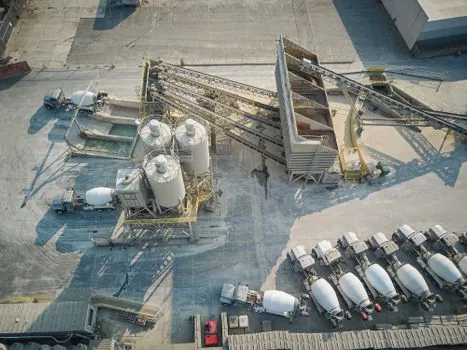
Use a handheld power mixer for small repairs, isolated rooms, sample panels, touch-up work, and batches measured in a pail, tub, or wheelbarrow. Its compact size and low transport burden make it more suitable than a continuous system where access is restricted or the required volume is modest [S1][S3].
Use a continuous flow mixer when plaster must be supplied continuously to a pump, applicator, bucket, or wheelbarrow. This configuration removes waiting for one container to finish before the next can begin and is therefore appropriate for sustained work on larger areas [S1][S4].
For variable plaster recipes, frequent color or formulation changes, and jobs requiring operator-controlled adjustment of each mix, batch mixing remains preferable. A continuous mixer is not a substitute for recipe control: its consistency depends on correct feeding, calibrated water delivery, suitable mixer speed, and a machine designed for the material [S2].
Do not select a continuous mixer solely from its advertised output. Dense mixes and coarse aggregate require careful equipment matching, and a machine described only as having forced action is not automatically suitable for every plaster [S2].
Material compatibility and failure modes
Plaster containing only sand-size particles or no coarse aggregate is generally better suited to a shear-type paddle arrangement than to a tumble-only drum. Paddle mixers are one of five main mixer categories, and their selection depends on mixing action, batch capacity, power source, and jobsite portability.
For continuous systems, the material must pass through the auger, chamber, and discharge path without bridging or creating excessive resistance. Dense mixes and coarse aggregate should be checked against the manufacturer’s stated applications rather than inferred from the generic mixer description [S2].
Common failures are predictable. Handheld mixing can fail through poor water measurement, incomplete mixing, paddle fouling, and inconsistent batch-to-batch water addition. Continuous mixing can fail through an incorrectly adjusted water valve, irregular dry-feed rate, overloaded or unsuitable material, inadequate chamber retention, and residue left inside the machine between jobs [S1][S2][S4].
For either method, preblended plaster requires the manufacturer’s specified water quantity. Hand mixing may vary by person, and contractors are responsible for combining the dry mix with the manufacturer-recommended amount of water.
Safety, setup, and operating controls

Position the mixer on a stable, flat surface, follow the manufacturer’s operating instructions, and switch off and unplug the machine before cleaning [S2]. For handheld equipment, control the paddle during startup, avoid lifting the loaded mixing shaft unless the design permits it, and keep hands and clothing away from moving paddles.
For continuous equipment, establish the water setting before adding the full work load, monitor the auger and discharge, and keep the hopper and metering path clear. The machine should discharge into a receiving pump, bucket, or wheelbarrow without obstructing the flow, because back pressure changes the operating load and can affect consistency [S1][S4].
Cleaning is a production requirement, not an accessory. Handheld paddles and containers must be scraped and washed promptly to prevent plaster buildup. Continuous chambers, augers, chutes, and seals require regular cleaning with the machine isolated from its power source. A mixer that remains loaded between work periods creates both cleaning risk and material-setting risk [S2][S4].
Procurement specification: verify these operating points
For a handheld power mixer, verify the supported operating volume, paddle diameter, approved material types, speed control, power rating, and total weight. The 0.5–1.5 cubic-foot per-batch range and sub-10-pound weight cited for handheld drill-driven mixers are useful orientation points, not proof that every model suits plaster [S3].
For a continuous system, request the manufacturer’s stated output for the actual plaster, approved aggregate limits, hopper capacity, water-control range, delivery-system type, power requirement, cleaning procedure, and minimum operating condition. Confirm the machine on a stable, flat surface as specified in its instructions [S2].
Do not invent a universal acceptance threshold. Acceptance criteria should cover output at the specified feed rate, water-to-dry-material ratio, discharge consistency, material temperature, visible agglomeration, residue after cleaning, and stable operation over the planned duty cycle. For production acceptance, record these points during a controlled trial using the same bagged plaster and water source planned for the job.
A defensible selection is straightforward: specify a handheld mixer for intermittent, small-volume plaster batches, and specify a continuous flow mixer for sustained output with a stable recipe and controlled feeding. Reject either option when its verified operating envelope does not match the aggregate, volume, and production schedule.