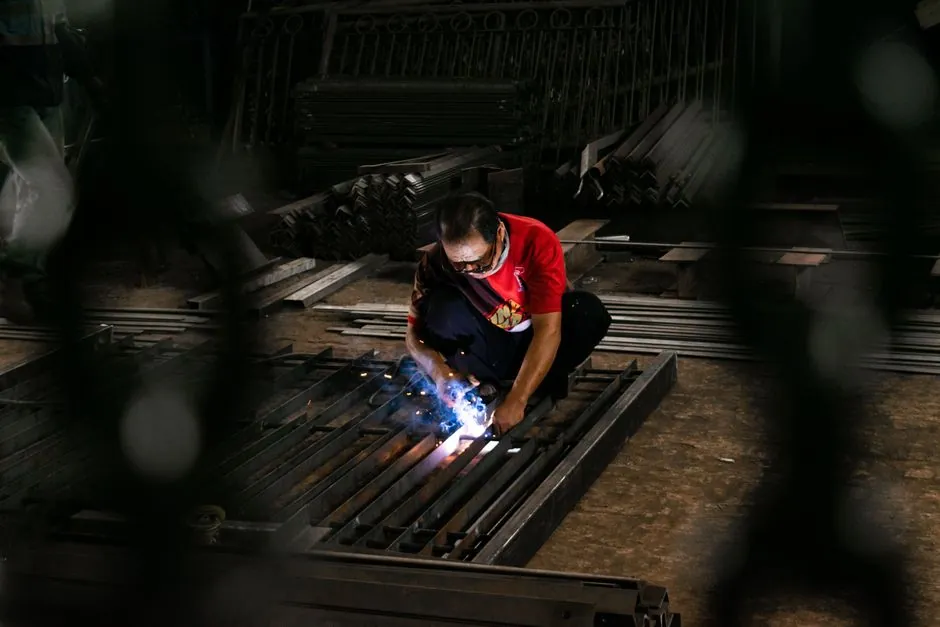
A generator for an arc welding machine should cover the welder’s calculated running watts, arc-start surge, and any connected auxiliary loads.
The calculation starts with the welder nameplate data: volts multiplied by amps gives watts, while generator kVA ratings require a power-factor conversion for comparison.
Generator sizing starts with welder input power
Do not size a generator from the welder’s output-amp rating alone. A 180 A or 200 A label describes welding output, not the electrical input drawn from the generator. Use the input voltage and maximum input current listed in the welder manual [S1][S2].
The basic relationship is “Volts x Amps = Watts” [S1]. One worked example uses a 240 V welder drawing 32.9 A. After applying a 15% voltage allowance, 253 V multiplied by 32.9 A gives 8,323.7 W of calculated operating load. A 30% starting allowance then raises the recommended peak requirement to 11,000 W [S2].
Do not confuse output current with input current. A Miller discussion example calculated 10,925 W by multiplying 230 V by a 47.5 A input draw for operation at full rated output [S4]. The same welder can draw materially different power at different output settings, so the maximum nameplate input remains the defensible basis for a single-machine specification.
Apply two margins for voltage and starting load
A generator selected exactly at the calculated operating wattage leaves no allowance for voltage variation or the transient created when an arc starts. A sizing method adds 15% to the nominal voltage before calculating watts, then adds approximately 30% for starting power and demand spikes [S2].
These are not contradictory rules, because one covers calculated load plus surge while the other provides a general capacity reserve. For procurement, calculate from the manual, record both running and peak requirements, and then select a unit that exceeds the stricter result.
Worked examples make the distinction visible.
Compare 120 V, 240 V and generator ratings
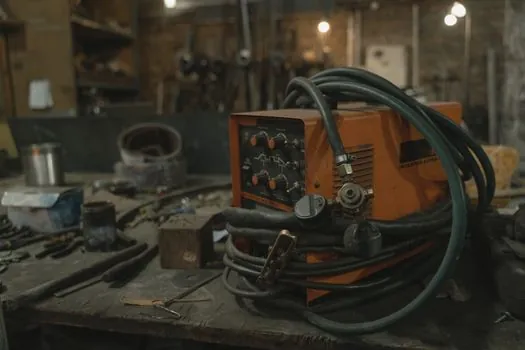
The comparison below separates four decision criteria: voltage compatibility, continuous load, surge requirement, and the operating environment. A larger generator is not automatically the better choice because excess capacity can increase cost, fuel use and transport burden [S2].
Match generator capacity to the welding process
An arc welder does not consume one fixed amount of power. Its demand changes with process, electrode or wire size, material, travel speed, voltage and operator technique. The generator must therefore meet the machine’s highest expected input demand, not the average value observed during a convenient test. [S3]
For SMAW work, the electrode model still matters within the broader arc-welding category. A technical comparison of E6010 versus E7018 electrode settings and selection explains how electrode characteristics affect the welding operation and therefore the electrical load placed on the power source.
For GTAW, the machine may include a water cooler, gas supply and other auxiliary loads. Add those loads to the welding power source before comparing total demand with generator capacity. The same principle applies to powered wire feeders, grinders, lighting and site tools. A generator rated for the welder alone is not a complete site-power calculation.
Size multi-welder systems from load patterns
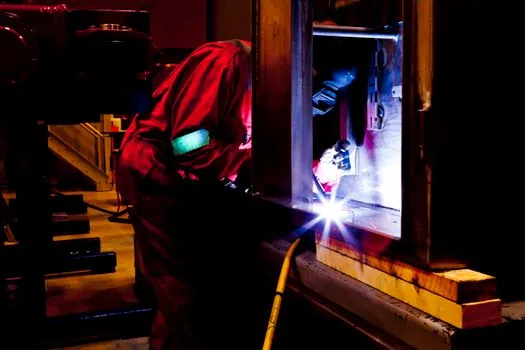
Adding every welder’s full rating produces the theoretical maximum, not the most accurate purchase specification. Multi-welder sites must consider duty cycle, diversity and the start-stop rhythm created by arc ignition, bead travel, repositioning and consumable changes [S3].
This does not mean the generator may be rated at only 40–80% of the summed load, because several operators may overlap their welding periods and auxiliary loads may remain active.
Start with the sum of all connected load, then assess how many welders can operate simultaneously. Add extra capacity for synchronized arc starts, especially on smaller generators where voltage recovery is limited.
Check electrical compatibility and failure modes
A generator can have adequate watts and still fail because its voltage, frequency, outlet, grounding or duty characteristics do not match the welder. Confirm that the generator supplies the welder’s required input voltage at the intended frequency and that its receptacles are suitable for the machine and cable arrangement [S1][S2].
Low voltage or unstable output can cause porosity, unstable arcs, machine faults and premature equipment wear [S3]. Additional consequences of undersizing include mid-bead shutdown and breaker trips when multiple operators ignite arcs at the same time [S3]. These failures interrupt work and may damage connected equipment; the conservative approach is to size from the nameplate and verify the complete installation.
Three-phase or heavy-duty industrial generators can provide greater voltage stability for inverter welders and multi-operator setups [S3]. A compact single-welder generator is more suitable for controlled single-operator work, while a site system carrying multiple TIG welders, plasma equipment or fabrication tools needs a load study rather than a single-machine formula.
Verify rated and operating capacity before purchase
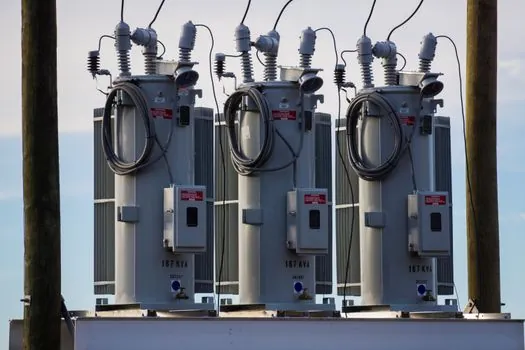
Three numbers belong on the purchase specification: calculated running watts, required peak watts, and the generator’s supported voltage and outlet configuration. Published reference figures place a 180–200 A welder at roughly 8 kVA minimum and 10+ kVA recommended, while a 250 A welder is associated with 13 kVA minimum and 15+ kVA recommended capacity [S5].
Those reference ratings are screening values, not substitutes for the welder manual. Another published example concludes that a 240 V generator rated for 5,000 running watts and 6,000 starting watts can run up to approximately 180–200 A, although sustained operation at that level will place a heavy load on the set [S2].
Before purchase, record the welder’s maximum input volts and amps, calculate watts, apply the selected surge allowance, add auxiliary loads, and confirm that the candidate generator’s continuous and peak ratings both clear the result. For multiple welders, repeat the calculation with documented operator overlap and synchronized arc starts.