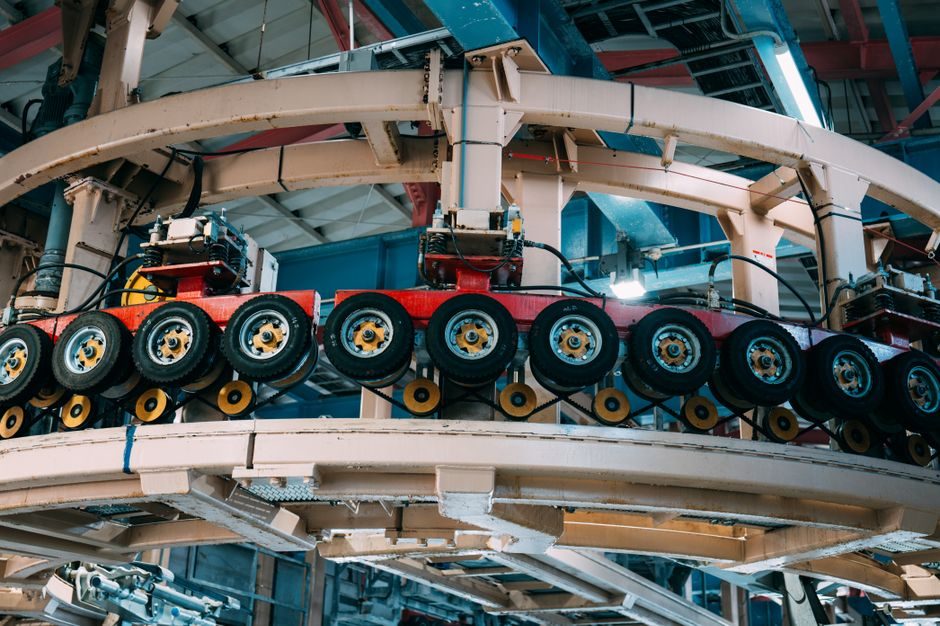
Lithium-ion battery separators are thin porous polyolefin membranes (typically PE, PP, or PE/PP bilayers) produced by either a wet (phase-inversion) or a dry (extrusion + stretch) route, then ceramic-coated to lift thermal shutdown above the PE melt point [S1][S4].
The base film is a 5-25 µm microporous web whose pore structure, Gurley permeability, and tensile profile are set during stretching and annealing; ceramic coating (alumina, boehmite, or PVDF-HFP) is applied as a slurry in a separate step, and the entire line is held together by inline tension and filtration controls [S1][S3]. For a process view that ties separator QA into the wider cell stack, see this lithium battery QA stack 2026 reference, and for line-level throughput and cell-format context the 2026 lithium production line design article lays out the surrounding architecture.
Dry Process: Extrusion, Anneal, Stretch
Dry-processed separators start with PP or PE melt-extruded into a thick precursor sheet, annealed 10-25 °C below the polymer melting point to control crystallite size and orientation, then rapidly stretched in the machine direction to form slit-like micropores; a subsequent biaxial stretch (often simultaneous or sequential) refines porosity, while the final heat-set fixes thermal shrinkage under 2% at 90 °C/1 h for typical LiB grades [S4]. The dry route favors PP homopolymer for higher melt strength and is the mainstream route for high-power cylindrical and prismatic cells; the wet route is reserved for PE and PE/PP bilayers used in high-energy consumer cells, where sub-micron tear resistance matters more than melt point [S1][S4].
Wet Process: Paraffin Carrier, Extraction, Stretch
In the wet route, PE is compounded with paraffin oil and other plasticizers (typically 50-70 wt% diluent), extruded into a precursor, then biaxially oriented before the diluent is extracted with a solvent and the film is dried; the resulting structure is a highly interconnected, near-circular pore network that gives a 30-50% higher Gurley air-permeability per micron of thickness than comparable dry-processed film [S3][S4]. Filtration of the molten polymer, plasticizer stream, and protection liquids at three defined stages of the plant is what holds gel and defect content below the 1-5 ppm metals spec that EV cell makers demand [S3]. The extracted diluent is recovered and recycled, and the closed-loop design is now a baseline permit requirement on new Asian gigafactory lines.
Ceramic Coating and Surface Functionalization
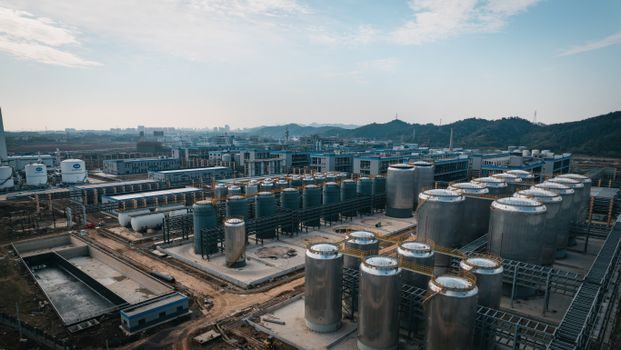
After the base film is slit and inspected, most EV-grade separators receive a 2-5 µm ceramic coating (boehmite or alumina in a PVDF or acrylic binder) applied as a water- or solvent-based slurry via gravure or slot-die, then dried in a floatation or floating-air oven at 50-80 °C to drive off water without collapsing the PE pore structure [S1][S3]. The coating raises the shutdown temperature from ~130-135 °C (raw PE) toward 150-160 °C and, when PVDF-HFP is used as the binder, doubles as a wetting primer that cuts electrolyte wet-out time by roughly 40% on a 21700 cell's first formation cycle [S1]. Single-ply, coated, and trilayer (PP/PE/PP) variants are all covered by current separator patents, including ultra-thin single-ply constructions below 12 µm for high-energy-density stacks [S5].
Inline Process Control: Tension, Filtration, Thermal QA
Separator lines are differentiated less by chemistry than by what they measure in motion: ABB-class non-contact tension sensors (load-cell plus force-loop on each roller) keep web tension inside ±2% of setpoint during stretch, anneal, and coating; Pall-style polymer melt and process-water filters hold iron, calcium, and gel counts inside the 1-5 ppm metals envelope that LiB cell makers require; and DSC / TMA thermal-analysis benches (TA Instruments-type protocols) verify shutdown onset and dimensional shrinkage on every bobbin [S1][S3][S7]. For QA architects trying to map this onto the wider cell stack, the lithium battery QA stack 2026 reference is the natural extension, and the anode material manufacturing process map covers the electrode side of the same line.
Material Trade-off: PE, PP, Trilayer, Coated vs Uncoated
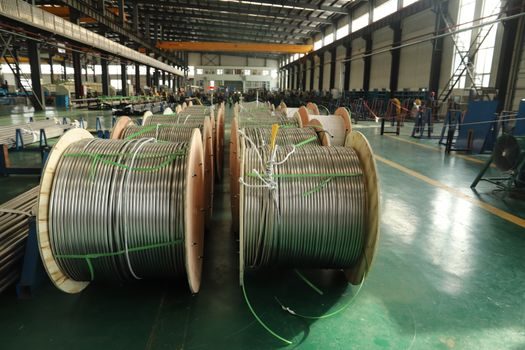
The four dominant separator constructions trade off against four decision criteria: shutdown temperature (PE ~135 °C, PP ~165 °C, trilayer ~155 °C, ceramic-coated PE 150-160 °C); puncture strength (trilayer PP/PE/PP best, dry-PP second, wet-PE third); cycle life at 80% DoD (ceramic-coated PE typically 1,500-2,000 cycles to 80% capacity, dry-PP 1,200-1,500); and cost ($0.20-0.40/m² wet-PE, $0.30-0.50/m² dry-PP, $0.60-1.20/m² ceramic-coated trilayer, per 2024-2025 industry data) [S1][S4]. Uncoated dry-PP remains the default for high-rate cylindrical cells where ionic resistance is the bottleneck, while ceramic-coated wet-PE is the default for high-energy NMC/NCA stacks where thermal margin dominates the spec; trilayer PP/PE/PP lives in the middle as a 1.5-2× cost premium over single-ply for safety-critical applications [S1][S4][S5].
Failure Modes and What Triggers a Bobbin Reject
The four failure modes that drive a separator bobbin to scrap are: pinhole / gel contamination (caught by on-line optical inspection and dielectric spark testers, typically set at 2-3 kV AC for a 20 µm web); thickness banding outside ±2 µm of nominal; Gurley permeability drift of more than ±15% from setpoint; and thermal shrinkage above 5% MD/TD after 90 °C/1 h or 120 °C/1 h anneal [S1][S7]. Wet-process lines additionally track residual diluent content below 50 ppm by GC and surface tension above 30 mN/m to confirm full extraction [S3]. A line running at 50-80 m/min typical throughput can lose 1-3% of bobbin output to these rejects, which is the single largest lever for cost reduction outside raw film yield [S1].
Who This Process Is For — And Who It Is Not
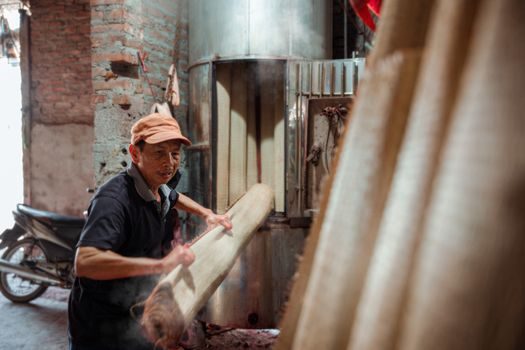
Wet and dry separator lines are sized for capex above $80-150 million per plant, annual capacities of 300-1,500 million m², and qualified cell customers running at least 2-3 GWh/year of EV or ESS demand; this excludes lab-scale or research producers, for whom a flat-film cast line and hand-laminator setup is more economic [S1][S3]. Conversely, solid-state battery pilots do not buy microporous PE/PP separator at all, so the dry/wet process is NOT a fit for solid-electrolyte lines where sulfide or oxide ceramic layers replace the polymer web entirely; the solid-state battery smart manufacturing 2026 piece covers that distinct architecture. A signal worth tracking through the rest of 2026: the ceramic-coating step is the most cited chokepoint in vendor audits, and the next 6 months should bring at least two new slot-die coating OEM announcements from Chinese and Korean equipment builders targeting 100-150 m/min line speed at 2-3 µm dry coat weight.
For component-level specifications, see additive manufacturing material, cyclone separator, and steam separator.