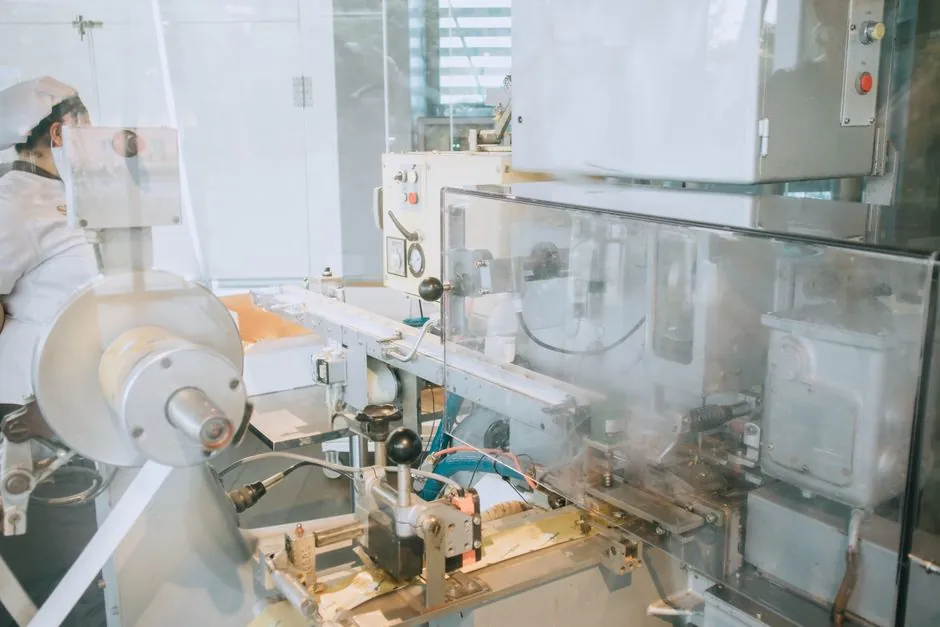
For a first commercial line the ODM path typically moves from RFQ to first production reel in 4-8 weeks, while an OEM program with custom coating and slitting tooling runs 3-6 months before the first mass-production batch [S3].
Where the two models actually diverge on a separator line
In an ODM deal the converter proposes an existing wet-process PE film from its catalogue, the buyer chooses from a menu of coating options, applies its logo and packaging, and ships [S4][S7].
Tooling cost is the line where the two models diverge hardest. OEM tooling for a custom slot-die coating head and slitting blades typically runs USD 20,000-100,000 depending on the number of coating layers and web width, while ODM uses tooling the factory already owns and amortises across many customers [S3].
Decision criteria: which model fits which buyer profile
The OEM route is also the right call when production volume is expected to exceed roughly 50 million square metres per year, which lets tooling amortise inside 18-24 months [S3].
Use ODM when the buyer is validating market demand for a new cell format, when the separator is a commodity input (standard 16-20 micrometre PE wet-process film, no specialty coating), or when capital is constrained and a 4-8 week first-batch window matters more than full design control [S3][S7]. The trade-off is that any coating or substrate tweak the ODM converter offers is also offered to the buyer's competitors, so differentiation has to come from cell assembly or pack design, not the separator itself [S1].
Cost, MOQ and lead-time bands on real programs
Sourcing All's 2026 guide puts a typical OEM electronics-style program at design engineering USD 10,000-50,000, mould and tooling USD 20,000-100,000, 2-4 prototype iterations, and 3-6 months to first mass run; an ODM consumer-gadget program with branding-only changes sits at USD 1,000-10,000 of one-off cost and 4-8 weeks to market [S3]. For a separator programme specifically, the OEM MOQ on a custom coating is usually 5,000-10,000 square metres per slit width, while ODM reels can start as low as 500-1,000 square metres on a standard catalogue item [S1][S3].
Lead time on a separator order is dominated by coating-line slot booking, not by paperwork: an OEM custom coating queues 8-14 weeks at most Asian converter majors, while an ODM catalogue reel with stock coating can ship in 2-3 weeks once the purchase order clears [S3]. For buyers planning a 2027 cell ramp, that 10-12 week delta is the single biggest schedule variable between the two models.
IP, quality control and the failure modes that bite first-time buyers
IP risk runs the other way in the two models. In OEM deals the converter can leak the buyer's coating spec to third parties, and in ODM deals the buyer can be undercut by another ODM customer running the same film [S1][S3]. Both cases are mitigated by a signed NDA plus a tooling-exclusivity clause filed before the first coating trial, not after, and OEM buyers are well advised to register the coating formulation as a trade secret or patent in the country of manufacture [S3][S7].
Quality failure modes differ by model. OEM first-article failures are usually design-side: coating weight off-target, web tension causing thickness variation above the agreed +/- 2 micrometre band, or shutdown temperature drifting outside the spec window. ODM failures are usually supply-side: a catalogue film being quietly substituted when the named grade is out of stock, or a coating line being shared across customers and dragging in cross-contamination [S1][S3].
Side-by-side: OEM vs ODM on a 16 micrometre wet-process PE separator

The ODM route delivers catalogue design only, coating shared with other buyers, negligible tooling, 4-8 weeks to first run, and per-square-metre cost that is already low at the first reel and erodes further only via volume rebates, not exclusivity [S1][S3][S7].
A practical rule that recurs across the sourcing guides: start ODM to validate cell demand and lock in your coated-separator quality defect targets and inspection methods, then migrate to OEM once the SKU clears roughly 12-18 months of stable orders and a coating specification exists that genuinely differentiates the cell [S1][S3].
For the relevant spec sheets and selection criteria, see additive manufacturing material, cyclone separator, and steam separator.