
High-volume lithium-ion separator production now targets defect rates below 10 parts per million, with ceramic coating thickness held to ±2 micrometers across the web, per published separator-coating manufacturing benchmarks from May 2026 [S5].
Those benchmarks sit on top of three regulatory and supply-chain layers: U.S. process wastewater rules under EPA's 40 CFR Part 461 (last amended 1986) [S1], domestic-supply investments like the $1.2 billion DOE loan backing ENTEK's Indiana separator plant [S2], and a global separator market projected to grow from $11.22 billion in 2026 to $37.98 billion by 2034 at a 16.46% CAGR [S4].
What the Separator Must Do and How Quality Is Defined
A battery separator is a microporous polymer membrane that physically isolates the anode and cathode while permitting ionic transport through the electrolyte, and its quality window is defined by thickness uniformity, porosity, puncture strength, thermal shrinkage, and electrolyte wettability, per industry guidance from April 2026 [S2].
Production lines feed ultra-high-molecular-weight polyethylene (PE), polypropylene (PP), or ceramic-coated composites, and converting steps include stretching, slitting, and lamination under tight tolerance [S2]. In 2023, more than 60% of North American battery manufacturers reported production delays tied to separator supply disruptions, a figure that frames why domestic spec compliance is now treated as a national-security issue [S2].
The U.S. domestic market for separators reached roughly $3.1 billion in 2024 and is projected to hit $7.2 billion by 2030, a CAGR above 15% on demand from data centers, aerospace, automotive, and industrial logistics [S2]. For context on the broader production environment, see this spec map of anode material production line design for 2026.
Coating Defect Targets and Process Variables
Process variables that drive that ratio include substrate flatness, line speed, slot-die or gravure coat weight, drying profile, and cleanroom particulate count; coating thickness must be held within ±2 µm across the full web to keep porosity and ionic conductivity consistent [S5].
Real-time monitoring combined with machine-learning deviation correction is being integrated into coating lines as a predictive QC layer, with the explicit aim of catching pinholes, thickness drift, and contamination before a roll ships [S5]. Where liquid-handling accuracy on the coating line matters, this comparison of chemical shipping filling machine accuracy bands illustrates the same tolerance logic applied to dispensing.
Non-Destructive Inspection: Dual-Band Terahertz QC

Dual-band terahertz (THz) inspection has been established experimentally as a non-destructive QC method for battery separators, capable of resolving coating thickness, pinhole density, and internal density variation in a single pass, per a 2026 peer-reviewed study in the Journal of Energy Storage [S6].
THz QC reads both dielectric contrast and sub-surface features, which lets it catch defects that optical vision systems miss on translucent PE/PP film; the published protocol is positioned as a candidate standard for inline separator inspection [S6]. For process engineers tracking where this fits, terahertz pairs naturally with existing in-line laser thickness gauges and porosity airflow testers rather than replacing them.
Inline thickness gauges, basis-weight sensors, and air-flow porosity meters remain the workhorse stack, and THz is the new high-information layer above them, with adoption gated by capital cost and line-speed compatibility [S6].
Effluent and Environmental Compliance
U.S. battery separator plants that wash, coat, or wet-scrub must comply with EPA's Battery Manufacturing Effluent Guidelines and Standards at 40 CFR Part 461, which sets discharge limits for cadmium, nickel, cobalt, copper, lead, iron, mercury, manganese, chromium, zinc, silver, cyanide, oil and grease, total suspended solids, COD, and pH, with some subcategories under zero-discharge requirements [S1].
The rule, promulgated in 1984 and last amended August 28, 1986, is organized into seven anode-based subcategories (Cadmium A, Calcium B, Lead C, Leclanche D, Lithium E, Magnesium F, Zinc G) and is incorporated into NPDES permits for direct dischargers and pretreatment programs for indirect dischargers [S1]. Lithium-subcategory plants, which cover most modern separator coaters, must therefore characterize NMP solvent recovery condensate and ceramic slurry wastewater before discharge [S1].
Supply-Chain Risk and Domestic Spec Sourcing

Separator-grade PE, PP, and ceramic coating feedstocks are concentrated in China and Southeast Asia, exposing North American cell makers to geopolitical and logistics shocks, and in 2023 more than 60% of North American battery manufacturers reported production delays from separator supply disruption [S2].
Domestically, ENTEK is constructing a new large lithium-ion separator plant in Terre Haute, Indiana, backed by a $1.2 billion U.S. DOE loan, representing phase 1 of a multi-site capacity expansion aimed at qualifying U.S.-made separator material to the same defect and coating-uniformity targets as overseas suppliers [S2]. Qualification work typically runs 12 to 24 months per cell-maker, with incoming-quality acceptance tests on thickness, Gurley air permeability, puncture strength, and thermal shrinkage before any roll reaches a coating line.
Selection Criteria: Who Needs This QC Stack and Who Does Not
Process engineers specifying separator QC for automotive-grade lithium-ion cells, grid storage, or aerospace packs should require a defect-rate dossier with sub-10 ppm evidence, ±2 µm coating-uniformity data, dual-band THz or equivalent non-destructive inspection logs, and 40 CFR Part 461 compliance documentation on coating wastewater [S1][S5][S6].
For low-rate specialty cells, primary (non-rechargeable) formats, or cost-driven consumer goods, uncoated PE/PP separator at 50 to 200 ppm may be acceptable, and the cost of THz inline inspection and tight ±2 µm coating control is rarely justified [S5]. The dividing line is duty cycle: high C-rate fast charging, high-nickel cathodes, and 24/7 telecom or AI-data-center backup all push the requirement toward coated, THz-inspected, domestically qualified supply.
Decision Comparison: Coated vs Uncoated Separator
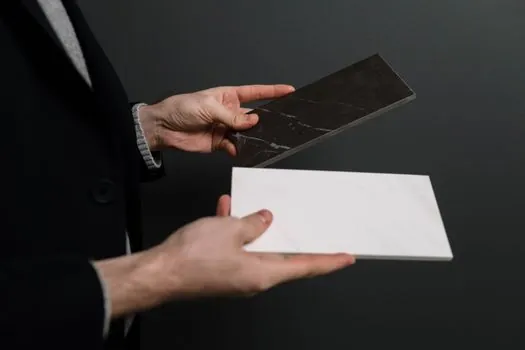
On defect rate, ceramic-coated separators target under 10 ppm versus 50 to 200 ppm for uncoated grades, a tenfold-to-twentyfold gap documented in 2026 coating studies [S5].
On thermal stability, coated separators with Al2O3 or SiO2 layers hold dimensional integrity above 150 °C, while uncoated PE shrinks significantly above 130 °C and PP above 160 °C, a margin that matters for high-nickel and fast-charge cells [S2][S5]. On environmental compliance, both routes flow back into 40 CFR Part 461, but ceramic slurry wastewater adds heavy-metal and TSS loadings that zero-discharge subcategory plants must handle [S1].
Trackable signals into late 2026 include ENTEK Terre Haute phase-1 commissioning milestones, additional DOE loan awards to domestic separator lines, and any incorporation of dual-band THz inspection into a published IEC or ISO separator test method. A separate read on this conversion-process layer is the practical spec map of marine-grade silicon carbide ceramic selection, which covers the same coating-material chemistry from a different angle.
For the relevant spec sheets and selection criteria, see additive manufacturing material, cyclone separator, and steam separator.