U.S. data center developers had announced approximately 101 GW of behind-the-meter natural gas generation capacity as of May 2026, with a Bloomberg NEF analysis cited at 100 GW, equivalent to 18% of the existing U.S. natural gas power fleet [S1][S9]. Industrial Info Resources tracks more than USD 214 billion in BTM-related project value, with over USD 2 billion of gas-fired facilities under active construction [S3].
The shift is structural, not opportunistic. Foley & Lardner's 2026 Data Center Survey reports 56% of developers are actively exploring co-located or on-site power generation as a long-term energy assurance tactic, up sharply from prior cycles [S10]. Grid interconnection queues stretching roughly five years have made utility-delivered power the bottleneck, pushing hyperscale, neocloud, and AI-training campuses toward gas turbines, reciprocating engines, and fuel cells sited on the same parcel as the server hall [S7][S10].
Why Gas, and Why On-Site: The Engineering Case
Behind-the-meter generation is on-site electrical generation that serves the facility load directly, on the customer side of the utility meter, avoiding transmission losses, interconnection studies, and capacity-market exposure [S6]. Natural gas dominates the technology mix because reciprocating engines and aeroderivative turbines can be permitted, fueled, and synchronized in 18-36 months, a fraction of the 5-year-plus utility interconnect timelines now common in PJM, ERCOT, and MISO [S7].
Three equipment families are most often specified for these BTM campuses. Simple-cycle gas turbines (typically 50-100 MW class units) handle peaking and fast ramping, combined-cycle gas turbines cover baseload at 50-60% electrical efficiency, and large-bore reciprocating engines (Wartsila, Caterpillar, INNIO Jenbacher class) deliver 10-25 MW blocks with high part-load efficiency and black-start capability [S3]. Industrial Info's database also flags solid-oxide and proton-exchange-membrane fuel cells as a non-combustion option, though these remain a minority of announced capacity [S3].
Capacity Pipeline by Project: Where the 100 GW Actually Sits
The named project list through 2026-2030 reads like an ERCOT-Interconnection-Queue casualty report. Meta's Prometheus complex in New Albany, Ohio is pairing two 286.5 MW gas-fired plants (Plato South and Plato North) with the data center build, with Plato South targeted for completion in 2026 and Plato North in early 2027 [S3]. Poolside AI's Project Horizon in Fort Stockton, Texas is building a 576 MW gas-fired facility, with another 360 MW under consideration, alongside a separate 246 MW BTM plant in the San Antonio area [S3].
Pacifico Energy's GW Ranch in Fort Stockton anchors the largest single announcement: 1,300 MW of gas-fired capacity using 21 Siemens turbines rated at 62 MW each, paired with a 500 MW battery energy storage system, targeted for initial power-block completion in 2028 and a follow-on pipeline of roughly 5.3 GW [S3]. On the Wyoming side, a single campus near Cheyenne is designed to scale to 10 GW in its ultimate build-out, comparable to New York City's peak grid demand, and a Louisiana site in Richland Parish is contracted at 2.2 GW, roughly twice New Orleans' summer peak load [S1]. Oh Hitt Corporation's Chickasha Airport Industrial Park project adds a 500 MW, four-phase gas-fired envelope to a multibuilding data center plan [S3].
Technology Comparison: Which Prime Mover Fits Which Campus
Specifying the right prime mover is the single most consequential BTM decision, and the trade-off is sharp.
Fuel cells, both solid-oxide and proton-exchange-membrane, are being specified at smaller campuses where non-combustion emissions profiles and quiet operation outweigh the 60-70% electrical efficiency premium cost, and where the host utility has a strict NOx or particulate limit on the BTM permit [S3]. Co-located battery energy storage, as in the Pacifico GW Ranch 500 MW BESS pairing, is becoming standard for sub-second ride-through and to arbitrage gas peaker dispatch against real-time power prices [S3].
Who This Model Serves, and Where It Breaks
BTM gas is the right answer for 100 MW-plus campuses with stable 24/7 thermal loads, where the developer controls the land, the gas interconnect, and the air permit. It is the wrong answer for sub-20 MW edge deployments, for any site without firm pipeline gas within 12 months, and for campuses under state carbon-intensity caps that treat on-site gas-fired kWh the same as utility-delivered kWh for compliance accounting [S3][S6].
The 56% developer adoption figure from the Foley 2026 survey conceals a real split: hyperscalers and AI-training specialists lean heavily toward BTM gas, while retail colocation operators with mixed-tenancy workloads still prefer grid-plus-PPA structures to preserve customer-facing renewable-energy certificates [S10]. Grid-side consequences are already showing up: capacity-market clearing prices in PJM have risen sharply, residential rate cases in Georgia, Ohio, and Virginia cite data center load as a primary cost driver, and at least eight states are debating whether BTM gas plants should pay the same transmission cost-shift as grid-served loads [S1][S4].
Instrumentation, Standards, and the Sourcing Stack Behind a BTM Plant
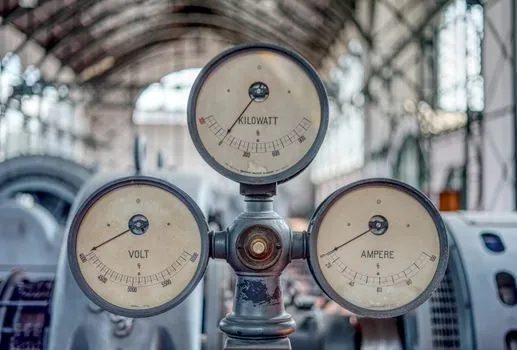
A behind-the-meter gas plant is instrumented like a utility-scale peaker, with three layers engineers cannot afford to under-spec. Combustion analytics use continuous emissions monitoring systems with a gas analyzer for NOx, CO, O2, and stack-flow measurement, tied to the plant's 40 CFR Part 75 or state-equivalent reporting. Fuel delivery is metered through ultrasonic or Coriolis gas flow measurement on the pipeline interconnect, with custody-transfer-grade accuracy to support the BTM developer's gas-supply contract. [S3]
Onsite gas regulation, pressure-letdown, and odorization for the campus distribution loop are housed in a gas cabinet when the BTM site also generates backup nitrogen or hydrogen for generator cooling, a configuration that is appearing in liquid-cooled AI campuses. Fire protection is increasingly specified as a clean-agent system rather than water sprinkler, to avoid the capex of a water-deluge system and the downtime risk to live server halls, see the engineering rationale for non-water agents breaking the fire tetrahedron in gas fire suppression: how non-water agents break the fire tetrahedron. Combustion turbine vibration, bearing-temperature, and lube-oil condition monitoring feed a data logger layer that exports to the plant's historian, with the same per-channel isolation and surge protection that utility-scale operators require.
Emissions accounting and greenhouse-gas reporting for the BTM site are increasingly done with continuous gas chromatograph measurement at the fuel-gas skid, rather than calculated emissions, because state air permits are now demanding measured methane slip from reciprocating engines and turbines as a permit condition.
Trackable Signals for the Next Six Months
Two datapoints will determine whether the 100 GW pipeline converts to steel. The first is FERC and PJM interconnection-queue reform outcomes in docket ER26-12, which would shorten the wait for grid-tied hyperscalers and could pull some of the announced BTM capacity back onto the grid if average queues drop below three years. The second is the Air Permit No. PSD-TX-1567 decision for the Pacifico GW Ranch 1,300 MW block, expected in Q1 2027, whose NOx and methane-slip conditions will set the template for every Texas BTM permit filed after it. [S2]