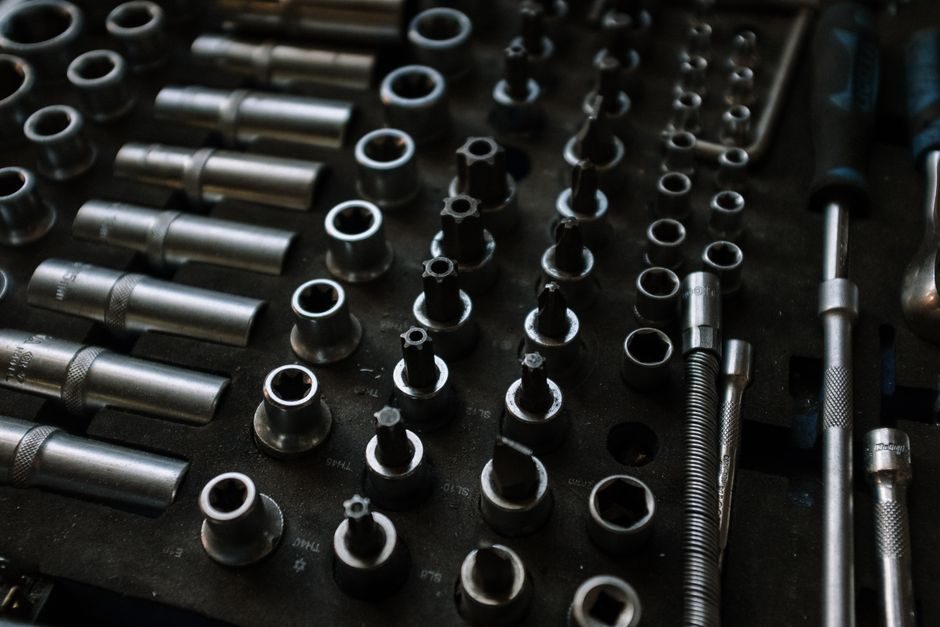
Pulp and paper mills rank among the harshest indoor environments a pneumatic tool will ever see: chronic humidity above 70% RH, intermittent caustic and black-liquor splash, paper dust load, and CIP wash-down cycles that put the tool under hot water several times a week [S1]. A standard 1/2" drive pneumatic impact wrench rated for an automotive shop will lose its housing finish, jam its trigger valve, and corrode its rotor blades inside one or two overhaul seasons on a paper machine floor. Procurement should spec the tool against three concrete numbers — nut-busting torque, cfm at operating pressure, and the duty cycle the mill can actually deliver — before chasing brand or price.
Across the 600-1,500 ft-lb nut-busting band that dominates kraft and recycled-fiber mill work, current production 1/2" drive twin-hammer and pin-clutch models on the market span roughly US $50 for an entry-level no-name pneumatic gun [S3] to US $185 for a professional-grade composite-body 1,250 ft-lb class tool [S5], with vintage 1/2" drive pneumatic wrenches still surfacing in the US $16-35 secondary market [S6]. That price spread maps almost one-to-one to material spec, vibration control and consumable life, not to fundamental torque capability, which is why a paper-mill specification sheet — not a price list — should drive the buy.
Where an Air Impact Wrench Actually Gets Used in a Pulp and Paper Mill
The work content of mill maintenance is concentrated in four zones: the wood-yard and chip-handling area (heavy 3/4" and 1" drive work on debarker shafts, chipper bed plates and conveyor head-pulley bolts); the pulping and brown-stock washing line (1/2" drive on digester manways, agitator couplings, pump bearing housings); the paper machine hall (1/2" and 3/8" drive on press roll bearings, doctor blade holders, felt-roll journals); and the converting/finishing side, where lighter 3/8" drive tools dominate calendar-stack and reel-spool work. Each zone has its own torque profile and contamination risk, and the air-driven impact mechanism selected should match the dominant fastener size in that zone rather than a single mill-wide "shop standard." [S1]
Wood-yard and digester manway work on digesters running at 7-11 bar steam typically calls for 800-1,500 ft-lb of nut-busting torque in a 1/2" or 3/4" drive body, because the fasteners are A490 structural equivalents or ASTM A193 B7/B16 stud bolts that have been heat-cycled and corroded into place. Press-section and felt-roll work, by contrast, lives in the 200-600 ft-lb range with 3/8" or 1/2" drives, where the binding risk is from fibre wrap and stock splash, not from corroded threads. A mill that buys a single 1,500 ft-lb gun for the whole plant ends up over-torquing the small bearings and stripping the felt-roll journals, which is a far more common field failure than under-powering a digester manway.
Torque, Cfm and Drive-Size Bands That Match Mill Work
The 1/2" drive twin-hammer class is the workhorse of the paper-machine hall: production models in this class deliver 600-1,200 ft-lb nut-busting torque from 4.0-6.0 cfm at 90 psi (6.2 bar) shop-air supply, which is compatible with the lubricated 10-25 hp rotary-screw compressors most mills already run [S3]. The 3/4" drive class steps up to 1,200-2,000 ft-lb and 7-12 cfm, sized for digester manways, primary-refiner plate changes and large pump couplings; this class is the right tool for chipper and debarker work where M24-M36 studs are routine. 1" drive impact wrenches (2,000+ ft-lb, 12-18 cfm) are only justified at the very largest mills and are usually rented or assigned to a dedicated rig rather than carried by a general mechanic.
A common procurement error is to buy on peak torque without checking the cfm curve at operating load. A twin-hammer gun advertised at 1,180 ft-lb and listed at 4.5 cfm [S3] will starve a 5 hp single-stage compressor and stall mid-stroke on a corroded manway stud, which is both unsafe and bad for the tool. The safe rule for paper-mill spec sheets is: 1/2" drive class tools at 4-6 cfm require a 7.5-10 hp compressor at 90 psi minimum, while 3/4" drive class tools at 8-12 cfm require 15 hp or larger rotary-screw capacity. Mills running on a shared plant-air ring at 100 psi (6.9 bar) can usually drop one drive size below the 90-psi torque curve and still get full nut-busting performance, which is a useful sizing lever when cfm is tight.
Housing Material, Corrosion Resistance and Wash-Down Survival

Stainless or nickel-plated housings, sealed trigger valves and composite motor housings are the three material features that decide service life on a paper machine floor. Plain cast-aluminium tools with chromate-only finishes will pit through in 12-18 months in the press-section environment; the same tool in a machine shop will last a decade. Procurement should specify at minimum a nickel-plated or composite motor housing, an oil-bath or sealed-bearing rotor, and a trigger assembly rated for wet-handling rather than the dry-shop rating that ships as standard on most general-purpose 1/2" drive pneumatic tools. [S2]
Mechanics in kraft mills should also spec for ergonomics that are not on the catalogue line: vibration-dampened handles (ISO 8662 / ISO 28927 compliant) reduce hand-arm vibration syndrome exposure on long press-section jobs, and 360-degree swiveling air inlets keep the hose from kinking when the gun is used overhead on a felt roll. Basso Industry's IK4185-A1, for example, is a 1/2" drive composite-body impact wrench designed around a twin-hammer mechanism with a side-exhaust handle configuration [S4] — typical of the build pattern that holds up under paper-machine wash-down. Aircat's 1150, in the same 1,250 ft-lb nut-busting class, adds a tuned exhaust path that drops noise below 85 dBA at the operator, which matters when crews are running a 12-hour shift on a press section [S5].
Comparison of the Three Tool Classes Used in Mills
Across the typical paper-mill work envelope, the three main options line up against four decision criteria as follows. 3/8" drive, 200-450 ft-lb: lowest cost (US $30-80 entry-level), lightest weight for press-section and felt-roll work, but under-powered for digester manways and not rated for corroded fasteners. 1/2" drive twin-hammer, 600-1,200 ft-lb: the mill workhorse, US $50-185 new [S3][S5], best fit for general maintenance and paper-machine halls, moderate cfm demand (4-6 cfm) that fits a 7.5-10 hp compressor. 3/4" drive, 1,200-2,000 ft-lb: required for chipper, debarker and digester manway work, US $200-450 in the current production class, but requires 8-12 cfm and a 15 hp compressor to deliver rated torque without stalling. Below 600 ft-lb, the tool cannot break the corrosion bond on heat-cycled A193 studs; above 2,000 ft-lb, the operator is usually over-torquing smaller bearings and the vibration dose becomes a safety issue.
A second comparison axis is consumable life. Twin-hammer mechanisms typically run 50,000-80,000 cycles between hammer and anvil replacement when fed clean, lubricated air; pin-clutch mechanisms last longer (100,000+ cycles) but lose peak torque faster as the clutch pins wear. For a paper mill running three-shift maintenance, twin-hammer is the default because rebuild kits are cheaper and rotor balance is easier to restore in a plant tool room. Pin-clutch makes sense on a single-shift, lower-volume digester-only tool that does not get cycled all day.
Compressed Air Supply and Lubrication Discipline
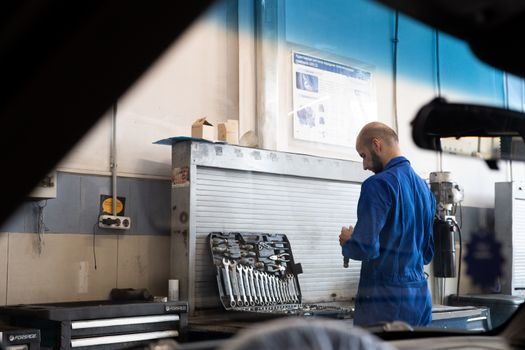
The hidden failure mode in paper-mill pneumatic tools is wet, un-lubricated air. Plant-air systems on a paper machine almost always run at high humidity, and if the mill's after-cooler, receiver and air-dryer train is not maintained, a 1/2" drive wrench will rust its rotor blades and stick its hammer pins within a single overhaul season. Inline FRLs (filter-regulator-lubricator) at the drop are mandatory, and many mills now run tool-mounted oilers on each drop to make sure the pneumatic impact mechanism sees a continuous oil mist. The upstream compressor side of that supply chain is its own sourcing decision, and the 2026 air-compressor upstream-and-downstream sourcing map is a useful companion reference for sizing plant-air capacity against the impact-wrench fleet. [S3]
Air consumption is the second constraint. A 1/2" drive twin-hammer at 1,180 ft-lb rated load draws 4.5 cfm at 90 psi continuous [S3]; six mechanics running simultaneously on a major overhaul event draw 27 cfm of impact-wrench air alone, before any other pneumatic tool. Mills planning a 1/2" drive fleet of 6-8 guns for routine use need a 25-30 cfm compressor at 100 psi minimum to keep pressure drop under 5 psi at the manifold, and a 1,000-litre receiver to absorb the inrush of multiple guns firing at once. The math is simple and routinely ignored; pressure drop is the single biggest reason a "1,200 ft-lb" gun only delivers 800 ft-lb on the paper-machine floor.
Who Should Buy What, and Who Should Not
A small converting or finishing plant running 3-5 mechanics on light press-section work can run a fleet of 3/8" drive 200-450 ft-lb wrenches on a 7.5 hp compressor and will not benefit from 3/4" drive tools. A mid-sized kraft mill with one paper machine and a digester line needs a mixed fleet: 1/2" drive twin-hammer as the standard, with one or two 3/4" drive tools reserved for the digester and refiner area, and a 15-25 hp compressor with a properly sized FRL train. A large integrated mill with wood yard, two paper machines and a converting line needs a layered fleet: 3/8" for converting, 1/2" for the paper machine hall, 3/4" for the digester and refiner, and dedicated 1" drive tools rented in for chipper and debarker overhaul events. [S4]
Tools that paper mills should not buy: ultra-lightweight 1/4" drive "rattle" guns (not enough torque for anything in the mill beyond 3/8" bolts on the reel), and 1" drive pistol-grip wrenches (1,200-1,800 ft-lb) marketed as truck-shop workhorses — they are too heavy, too cfm-hungry, and not balanced for overhead work on a felt roll. The sweet spot of the paper-mill pneumatic fleet is, and has been for two decades, the 1/2" drive twin-hammer gun in the US $80-185 professional class; below that, vibration and durability are field complaints; above that, the gain is mostly ergonomics and not torque.
Standards, Calibration and What "Good" Looks Like in 2026

There is no pulp-and-paper-specific standard governing pneumatic impact wrenches; the relevant references are general industrial tool standards (ISO 8662 / ISO 28927 for vibration, ISO 15744 for noise, and ISO 11148-6 for handheld power tools — pneumatic impact wrench assemblies). Torque accuracy is governed by the manufacturer's published nut-busting curve, and most credible vendors publish a ±10% torque tolerance at 90 psi (6.2 bar) with a stated air-consumption figure. For work that requires a verified clamp load — digester manways, refiner plates, A193 B7 stud sets — a torque wrench tester or electronic torque-and-angle wrench on the back end is still the only way to confirm the joint was actually tightened to spec, regardless of the impact gun's rating. [S5]
In practice, "good" in 2026 looks like this: a 1/2" drive twin-hammer tool, 1,000-1,200 ft-lb nut-busting at 90 psi, 4-5 cfm, 85-89 dBA, composite or nickel-plated housing, sealed trigger, vibration-dampened handle, fed through an FRL and an in-line oiler, with a documented rebuild kit and a hammer/anvil spare on the shelf. Tools in this band are widely available from Taiwanese and Chinese OEMs (Basso, Tianzhu, Sumake-class) at the US $80-150 retail level, and from the legacy professional brands (Chicago Pneumatic, Ingersoll-Rand, Aircat, Snap-on) at the US $250-450 retail level. Mills that standardize on the 1/2" drive twin-hammer pattern, maintain the air supply, and keep a torque tester on the back end run the lowest tool-related downtime and the lowest hand-arm-vibration recordable incidents, which is the closest thing to a "best" answer the category allows.
Trackable signals for the next sourcing cycle: when the Basso-class Taiwanese composite-body 1/2" drive twin-hammer tools cross below US $70 at distributor tier, that is the right time for a mill fleet refresh; and when a mill's 90-psi drop pressure is consistently below 85 psi, the pneumatic impact driver fleet is being throttled by the air supply long before it is being throttled by the tool, which means the next capex line is a compressor or a dryer, not a wrench. The industrial bearing supply chain matters less for the tool itself, but the consumable rotor-blade and hammer-pin parts are usually sourced from the same cluster and follow the same lead-time curve.