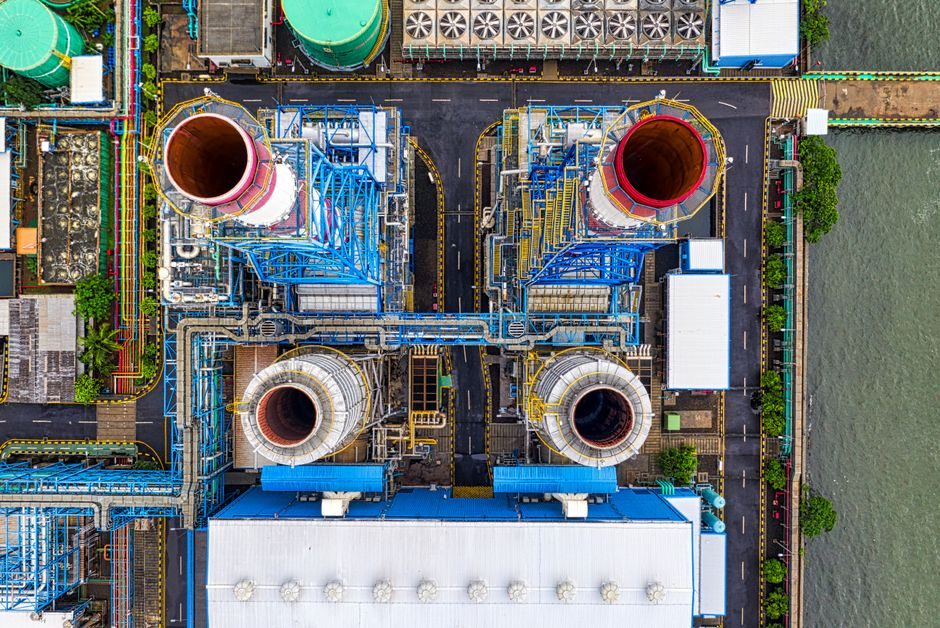
Air compressor manufacturing is a multi-tier value chain: upstream feeds cast-iron housings, electric motors, bearings, pressure switches and intake valves into the assembly plant, while downstream absorbs roughly 70% of output into general manufacturing, oil & gas, food & beverage, construction and electronics lines [S1][S2].
Branded OEMs (Ingersoll Rand, Atlas Copco, Gardner Denver, Kaeser, Quincy, Powerex, Kobelco) and Chinese cluster makers (Denair, Shanghai Machinery Trading group) share the same upstream bill-of-materials, so a sourcing decision in either tier ripples across the same vendor map [S2][S4][S5].
Upstream Layer 1: Castings, Steels and Bearing Stock
The compressor's largest static mass — crankcase, cylinder block, end cover, rotor housing — is almost universally a FC200 / GG25 grade grey iron or ductile iron 60-40-18 casting, with oil-cooled screw housings stepping up to ductile iron 65-45-12 for elevated thermal conductivity and damping [S4][S5].
Cast-iron foundries in Liaoning, Shandong and Hebei feed both domestic screw-compressor assemblers and the export aftermarket; a typical 7.5–11 kW rotary-screw housing blank weighs 32–48 kg before machining [S4]. Worn rotor bearings — most commonly tapered roller bearing sets sized to ISO 15/25 ABEC-3 tolerance, or 222xx-series spherical roller bearings on 75 kW+ units — define the 20,000–40,000 hour overhaul interval that operators plan around [S3].
Upstream Layer 2: Motors, Controls and Valves
Three-phase induction motors in the 0.75–250 kW band dominate the drive end, with permanent-magnet variable-speed units (IE5 / IEC 60034-30-2 class) now standard on new 7.5–45 kW inverter compressors to hit part-load specific power below 6.5 kW per m³/min [S2][S5].
Control-side stack-up is a pressure transmitter or transducer (0–16 bar typical, 4–20 mA + HART), a pressure switch as backup, an air solenoid valve bank for modulation/unload, and an electronic thermistor on the discharge line set to trip at 105–110 °C [S3]. Intake-side stack-up is an air-quality-monitored pre-filter (1 µm) plus a throttled air pick intake valve that loads/unloads against receiver pressure [S1][S3].
Upstream Layer 3: Service Air, Impact Tools and Aftermarket

Once compressed air leaves the package it still passes through an air impact wrench ecosystem — 3/8" and 1/2" impacts at 6.2 bar / 110–170 Nm, 3/4" impacts at 6.5 bar / 700–1,500 Nm — plus downstream filtration and a flow meter for ISO 1217 inlet-condition accounting [S2][S3].
Aftermarket replacement parts (intake valves, oil-separator elements, cooler cores, solenoid coils, minimum-pressure check valves) flow through dedicated portals such as the China Air Compressor Fittings Net network, which routes parts from Shanghai headquarters to branches in Hunan, Guangdong and Zhejiang [S6].
Downstream Layer 1: General Manufacturing and Metalworking
Auto body, white-goods and general fabrication shops consume 7–10 kW oil-injected screw compressors running 6–9 bar(e), typically paired with a 500–1,000 L receiver and a refrigerated dryer sized to a +3 °C pressure dewpoint [S2][S3].
Foundry and die-casting lines layer in cold-chamber die casting machine air logic — clamp intensification, ejector advance and core-pull — which often spikes receiver demand and pushes selection toward 15–22 kW variable-speed units with a 1,500–3,000 L storage receiver [S2].
Downstream Layer 2: Oil & Gas, Petrochem and Energy
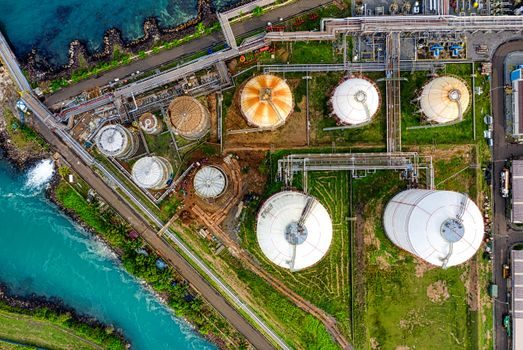
Upstream oil & gas, LNG, refining and petrochemical sites demand oil-free Class-0 units per ISO 8573-1, two-stage packages at 30–40 bar(e), and NACE MR0175 compliance for H₂S service; instrument-air loops additionally require redundancy (N+1 compressors, dual dryers) to satisfy ISA-S7.7 / IEC 61511 SIL instrumentation supply [S1][S2].
Electric-power and combined-cycle plants run oil-injected screw compressors at 7–13 bar for soot-blowing air and pneumatic damper actuation; offshore platforms typically spec API 618-style reciprocating or integrally-geared centrifugal compressor packages for high-pressure service above 50 bar [S1][S2].
Downstream Layer 3: Food & Beverage, Pharma and Electronics
Food, beverage and pharma lines are the second-largest downstream block, requiring 100% oil-free compression (water-injected screw or oil-free scroll), stainless piping (ASTM A270), and dryers sized to a −40 °C pressure dewpoint to keep moisture out of cleanrooms and packaging-seal operations [S2][S5].
Electronics and semiconductor fabs sit at the high end of the air-quality pyramid, demanding ISO 8573-1 Class 1.1.1 or better (particulate ≤ 0.1 µm, moisture ≤ −70 °C PDP, oil ≤ 0.01 mg/m³) and using compressed air both for tool actuation and for proximity sensor / pneumatic-handler purges [S2][S3].
Construction, Mining and Mobile Applications
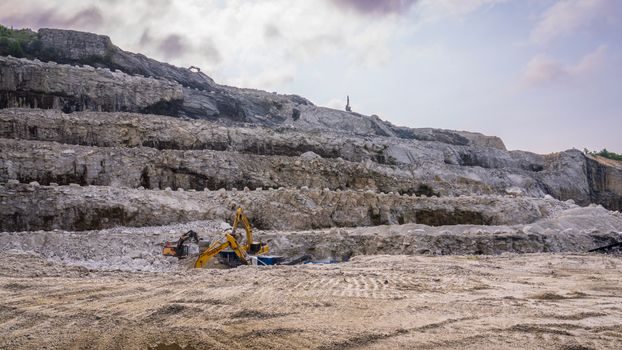
Construction, quarrying and road-building sites rely on diesel-driven portable screw compressors in the 7–35 m³/min @ 7–14 bar band (e.g. 185 cfm / 100 psi class), with the recent shift to Tier 4 Final / Stage V engines reshaping the aftercooler and exhaust-aftertreatment package [S1][S2].
Limitations, Failure Modes and Standards to Watch
The chain has known weak links: cast-iron porosity in rotor housings, bearing spalling from oil carry-over past a saturated separator, solenoid-valve seat erosion, and intake-filter icing in humid ambient air — all four account for the majority of unplanned downtime on 7.5–75 kW units [S3][S4].
Compliance drivers to track: ISO 1217 for displacement and free-air delivery testing, ISO 8573-1 for air purity class limits, IEC 60034-30-2 for motor efficiency classes, ATEX 2014/34/EU and IECEx for hazardous-area packages, and NACE MR0175 for sour-service metallurgical limits [S2]. Verifying that an OEM publishes actual specific-power curves (kW per m³/min) at 7, 9 and 12.5 bar — rather than a single nominal figure — remains the single highest-leverage procurement check on the downstream end [S2].
Trackable signals: a Chinese-language parts-and-equipment portal's continued branch expansion into central and southern provinces, and the rollout of IE5 permanent-magnet drive trains on 7.5–45 kW packages from Denair and peers [S4][S5][S6].