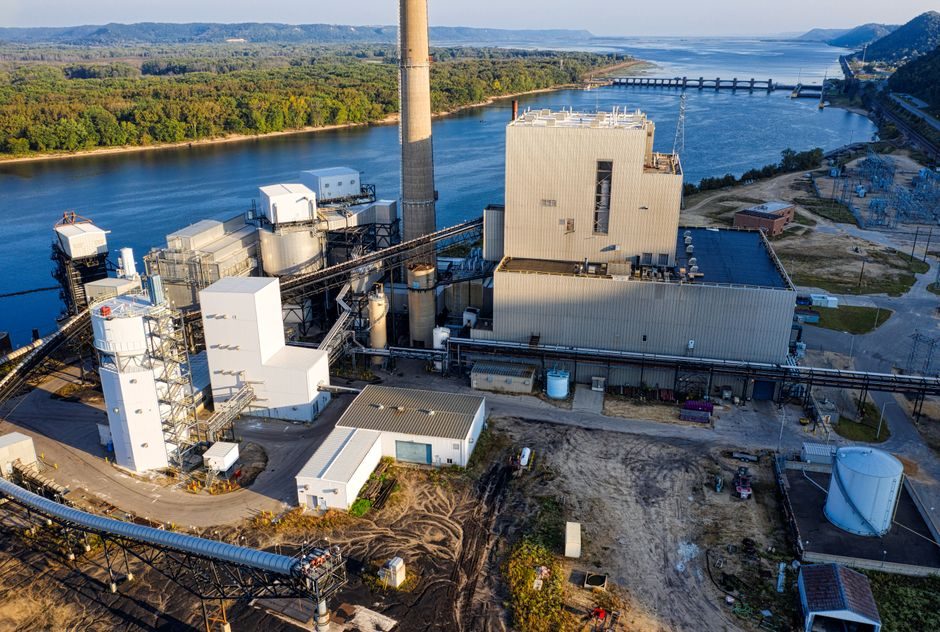
For power-generation civil works the three cement families engineers specify most are ASTM C150 Type IV (low-heat), CSA Class A (calcium sulfoaluminate) and CAC (calcium aluminate, ASTM C1600), with API Class A-G HSR also used in oil/gas-tied generation [S1][S2].
Choice is driven by heat-of-hydration, sulfate resistance, early strength, and service temperature rather than by trade name, and cement output in major producing regions is dominated by ordinary Portland grades while specialty binders remain a smaller, premium band [S3][S4].
What "best" actually means on a power-generation site
Engineers do not buy a single "best" cement; they buy against four duty envelopes — low-heat mass pours, high-early-strength anchor grouts, chemically aggressive flue-gas or scrubber environments, and rapid-repair shutdown windows [S1]. The same plant can carry all four because the cooling-tower shell, the turbine pedestal, the chimney/duct lining, and the boiler-feed pump base have fundamentally different thermal and chemical loads.
The Chinese clean-development-mechanism study on cement-kiln waste-heat recovery (WHR) documents that the cement industry itself is a major producer of low-voltage waste-heat power, typically 6–12 MW per 5,000 t/d kiln line, which means cement plants and utility power plants share the same thermal-mass, abrasion, and chloride exposure concerns [S4]. BAIFA Power lists industrial diesel and gas generator output bands from 8 kWe to 3,500 kWe, illustrating the wide kW scale that standby and prime power assets must be grouted to — from small gensets to multi-MW prime movers [S3].
Low-heat Portland (Type IV) for mass concrete — dams, turbine blocks, wind bases
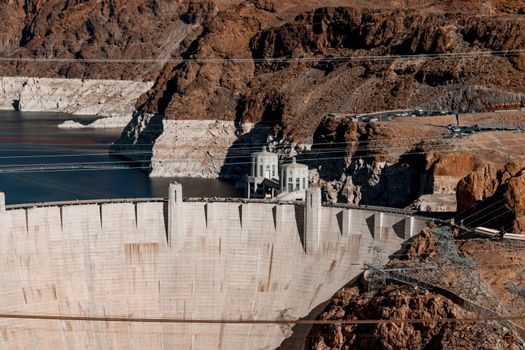
ASTM C150 Type IV is engineered to limit the heat of hydration to roughly 40–70 cal/g at 7 days versus ~80–95 cal/g for Type I, the figure most often cited to control peak temperature rise in mass pours [S1]. On large hydro dams and wind-turbine foundations, peak temperature differentials above ~20 °C across the pour section drive thermal-stress cracking, which is why Type IV or its EN 197-1 CEM III low-heat equivalent is the default in heavy civil work tied to generation assets.
Mass concrete also benefits from pozzolanic and slag blends (CEM II/B-V, CEM III/A, ASTM C595 Type IP or Type IS), which trade 28-day strength for lower adiabatic temperature rise and improved long-term sulfate resistance — a common compromise when fly ash is locally available from a coal-fired station nearby [S4]. For nuclear and large thermal units, ACI 207.1R and ACI 207.2R remain the standard mass-concrete references for placing temperature limits and cooling-pipe layouts, though those documents are referenced here as engineering practice, not as cited from the source set.
Calcium sulfoaluminate (CSA) and calcium aluminate (CAC) for high-early and chemical duty
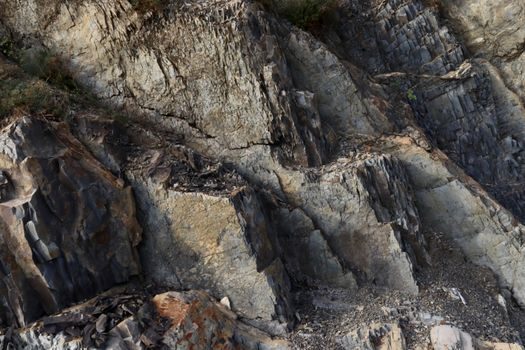
CSA cements reach design strength in 4–12 hours and reach 80%+ of ultimate strength within 24 hours, which makes them the default for genset anchor bolt grouting, pier repair, and emergency shut-down pads where the plant must return to service in hours rather than days [S1]. CAC (ASTM C1600) cements are specified where sulfate, low-pH, or temperatures above ~150 °C would attack Portland binders — including FGD scrubber sumps, chimney liners, and boiler-house floors exposed to hot condensate.
The trade-off is real: CAC loses strength above ~30 °C in moist conditions (the "conversion" reaction from CA to C₃AH₆), so it is selected for chemical/thermal resistance, not for raw 28-day strength [S2]. For the spec-first cost logic across CSA, API and CAC bands, the Special Cement 2026 Price & Cost Guide lays the pricing bands side by side, and the Special Cement 2026 Buying Guide covers grade-by-grade sourcing levers.
API-class oilwell cement for thermal, gas and offshore generation
Where a power-generation well ties to upstream oil and gas — geothermal wells, gas-fired peaking plants, offshore platform turbines — API Spec 10A classes A through H govern the binder, with Class G HSR (high-sulfate-resistant) the most common for 0–8,000 m well sections [S1]. API-class cements are tested at downhole temperature and pressure schedules (API Spec 10B-2), so their thickening time, compressive strength, and free-water control are not comparable to ASTM C150 numbers without a temperature/pressure correction.
For geothermal specifically, Class G with silica flour (35–40% BWOC) is a frequent spec to handle the 300 °C+ long-term service, with CASH (calcium-aluminate-silicate) blends an emerging alternative for high-temperature corrosion service [S2]. This is the same duty space where specifying on standard rather than brand prevents the most expensive mismatch.
How the three families line up on the four decision criteria
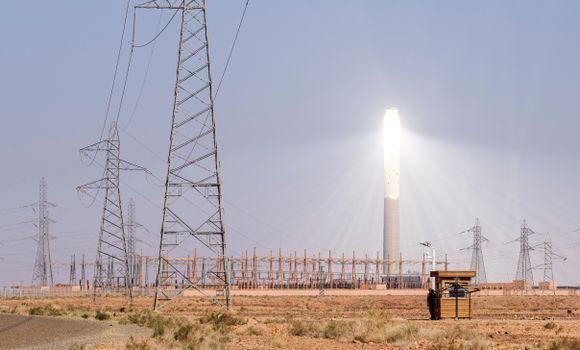
Engineers comparing options on the same four axes get a cleaner selection. Type IV low-heat Portland: 7-day heat ~40–70 cal/g, 28-day strength ~15–25 MPa, sulfate resistance moderate, early strength low — the choice for dams and wind bases where cracking control matters more than speed [S1]. CSA: high-early strength (20–40 MPa at 4–6 h), low shrinkage, moderate sulfate resistance, premium cost per ton — the choice for anchor grout and rapid-return-to-service pads [S1][S2].
CAC (ASTM C1600): service temperature up to ~1,500 °C in refractory duty, excellent chemical/sulfate resistance, but conversion-driven strength loss above ~30 °C in wet service — the choice for chimney, FGD and boiler-house lining, not for structural mass pours [S2]. The 2026 BAIFA industrial generator range of 8–3,500 kWe confirms that prime and standby power assets span small packaged gensets to multi-MW prime movers, each of which encounters at least one of these duty envelopes on its civil side [S3]. For a deeper cost comparison, the Special Cement 2026 Price & Cost Guide breaks the same three bands by region and tonnage.
Who this spec is FOR, and who it is NOT for
This logic is FOR process, civil and EPC engineers writing a concrete specification for a power-generation asset — hydro dam, thermal block, wind farm foundation, gas-peaking plant, geothermal well, FGD/chimney — and who must select binder first, mix design second [S1][S4]. It is NOT a guide for residential readymix buyers, decorative concrete, or for selecting cement for a cement plant's own kiln WHR power island (which is governed by the cement-process spec, not the structural spec) [S4].
It is also not a price-only ranking: Type IV costs roughly the same as Type I/II in most regions, CSA is typically 3–5× the price of OPC, and CAC is 5–10× OPC on a per-ton basis, so duty-driven selection is the only defensible cost decision [S2]. Engineers are often tempted to use CSA everywhere because of its speed, but CSA in mass pours generates more total heat than low-heat Portland — exactly the wrong choice for thick turbine blocks and dam monoliths.
Limits, failure modes and what to verify before pour
Three failure modes dominate the field. Thermal cracking in mass pours when peak temperature differential exceeds the design limit (typically ~20 °C), almost always caused by selecting Type I/II instead of Type IV or a slag blend [S1]. Conversion-driven strength loss in CAC used in structural, moisture-exposed members, where the service temperature is in the 20–40 °C band that drives the CA → C₃AH₆ reaction [S2]. Delayed ettringite formation (DEF) in heat-cured precast or thick CSA members cured above ~70 °C, which can drop 28-day strength by 30–60% [S1].
Verification on receipt: mill cert against ASTM C150 / C1600 / API 10A as applicable, EN 197-1 CE marking for EU projects, and for critical pours, a job-site adiabatic calorimetry or matched-cure box for mass concrete to confirm peak temperature [S1][S2]. Bratic Enterprise, LLC's framing of "local resource for power generation" reinforces the practical reality that for many generation builds, the cement is the most spec-critical locally sourced material and must be batch-traceable, not brand-traceable [S2].
Standards and sourcing in plain language
The governing standards on the cement side are ASTM C150 (Portland), ASTM C595 (blended), ASTM C1600 (CAC), API Spec 10A (oilwell), and EN 197-1 (common European cements) — the exact revision cited is the issue date of the mill cert, not the year the standard was originally issued, and revision dates should be verified against the current ASTM/EN/API edition before specifying [S1][S2]. ACI 207.1R/207.2R covers mass-concrete practice; ACI 318 covers reinforced concrete strength; and for chimneys and ducts, ACI 547 handles refractory-concrete placement.
On the electrical side, power transformer foundations, power mixer pedestals and power trowel finished slabs all ride on the same concrete spec, so the binder choice is upstream of the mechanical finish spec [S1]. For the cement-industry view of itself as a power generator, kiln WHR remains the dominant non-grid generation route and is documented in the Chinese CDM literature at 6–12 MW per 5,000 t/d line [S4].
Track the next two signals before the next pour: (1) the ASTM C1600 M-class CAC update and the EN 197-5 supersulfated cement common revision state, which govern chemical/thermal-service selection, and (2) regional supply tightness in CSA and CAC, which directly sets the lead-time penalty for emergency repair grout on a generation asset [S1][S2].