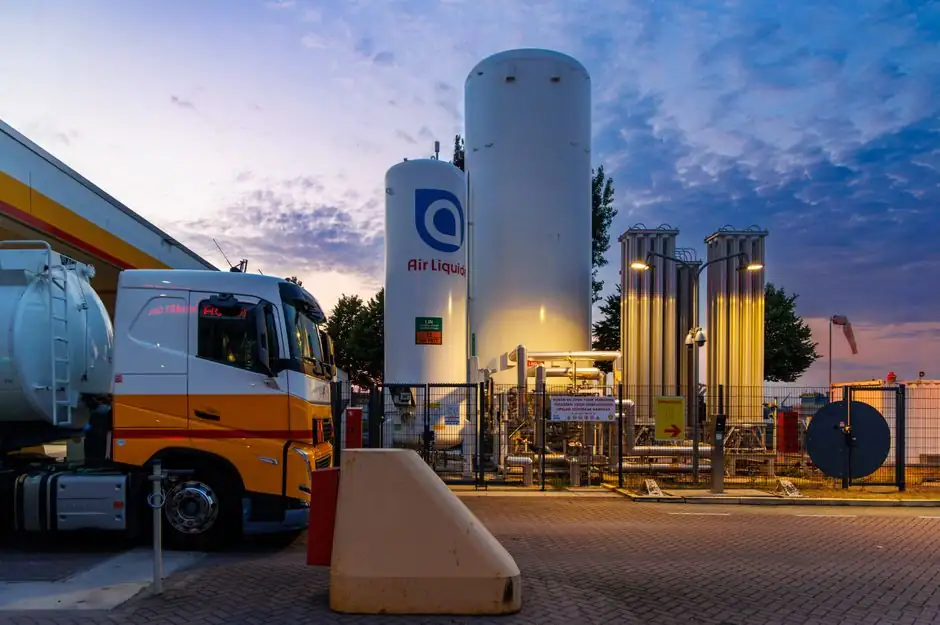
Four gases carry roughly 90% of the industrial water and wastewater treatment gas load: oxygen (O2), carbon dioxide (CO2), ozone (O3), and nitrogen (N2), each tied to a specific process step rather than a general-purpose role [S1][S2].
Pure oxygen and CO2 are flagged by the American Chemistry Council as the most commonly used industrial gases across wastewater, drinking water, and surface-water treatment, with ozone adoption rising in Southern California utilities as a chemical-free disinfection route [S2].
Oxygen (O2) for Aerobic Biology and Aeration
Pure oxygen replaces air in aeration basins to lift dissolved oxygen (DO) well above the 1.5-2.0 mg/L ceiling of diffused-air systems, routinely pushing basin DO into the 4-8 mg/L range that supports high-rate BOD removal [S1][S2].
Higher DO lets operators run mixed liquor suspended solids (MLSS) at 4,000-8,000 mg/L with shorter hydraulic retention times, which is why Linde packages its oxygen feed under the SOLVOX brand for both municipal activated-sludge and refinery/onshore aquaculture basins [S1]. In oil and gas produced-water treatment, MBBR reactors using supplemental oxygen strip carbonaceous BOD and ammonia from refinery and drilling wastewater at loadings that diffused air cannot sustain [S3].
Carbon Dioxide (CO2) for pH Adjustment and Alkalinity
CO2 displaces sulfuric and hydrochloric acid in alkaline wastewater, dropping pH without raising total dissolved solids (TDS) or chloride, a key spec for plants facing discharge chloride caps or RO-feed constraints [S2].
Linde sells this route under the SOLVOCARB banner, dosing gaseous or liquid CO2 into the alkalinity stream to convert carbonate species to soluble bicarbonate; the reaction adds roughly 2.7 mg/L of alkalinity as CaCO3 per 1 mg/L of CO2 dissolved, which operators size against their lime or caustic feed baseline [S1]. Compared to 93% or 98% sulfuric acid, CO2 storage needs only a pressure vessel rather than a corrosion-rated acid tank and dosing header, cutting secondary containment cost on greenfield sites [S2].
Ozone (O3) for Disinfection and Oxidation
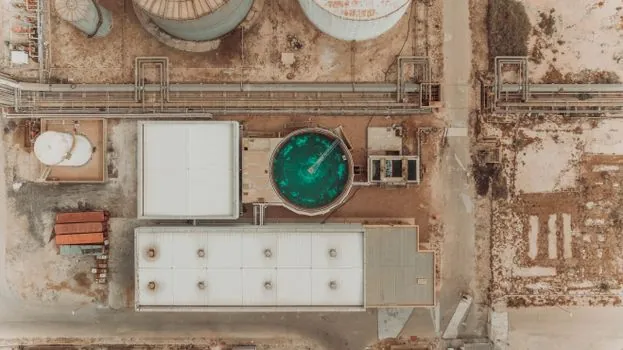
Ozone is generated on-site from oxygen or air, typically at 1-6% wt in the off-gas when fed from LOX, and delivers a CT (concentration x time) disinfection credit that often lets utilities cut free-chlorine residual setpoints by 50% or more [S2].
Beyond disinfection, ozone oxidizes iron, manganese, and sulfides ahead of filtration, and breaks down refractory organics that chlorine alone cannot reach, which is driving replacements of legacy chlorination at Southern California surface-water plants [S2]. A 2025 review of produced-water treatment notes ozone paired with MBBR is being piloted upstream of RO to cut fouling loading on reverse-osmosis membranes, with RO itself removing 95-99% of dissolved contaminants in those trains [S3].
Nitrogen (N2) for Blanketing, Deoxygenation, and Storage
Liquid nitrogen blanketing strips dissolved O2 down to under 50 ppb in deaeration feed and protects stored treated water from oxidation, a common spec for boiler makeup, pharmaceutical water-for-injection loops, and finished-water storage tanks [S1].
In anaerobic and anoxic basins, N2 sparging displaces air to maintain the ORP below -200 mV that sulfate-reducing and denitrifying bacteria require, with on-site nitrogen supplied either as bulk liquid, PSA/VPSA gas, or membrane separation depending on flow rate and purity class [S1]. For high-purity rinse and process water, an online water analyzer tied to the N2 blanketing line verifies DO and ORP in real time.
Side-by-Side Comparison of the Four Main Gases
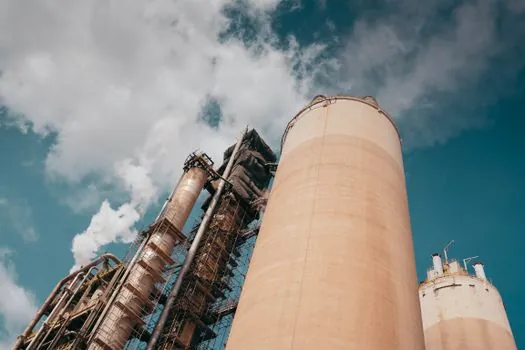
Choosing among O2, CO2, O3, and N2 comes down to the process step, not a single "best" gas, and the table below lines the four options up against the four decision criteria that matter most in plant design. [S2]
O2 wins on aerobic biology and aeration efficiency, CO2 on acid-free pH control with no chloride loading, O3 on chemical-free disinfection and refractory oxidation, and N2 on inerting, deoxygenation, and anaerobic biology [S1][S2][S3]. On supply mode, O2 and N2 ship as cryogenic liquid, on-site PSA, or pipeline; CO2 is normally liquid bulk with a vaporizer; O3 must be generated on-site from O2 or air because it cannot be stored [S1][S2].
For a deeper dive on the gas-handling side, see the industrial gas encyclopedia entry; if a process also needs a gas cabinet for on-site cylinder storage, the gas cabinet page covers ventilation and leak-detection specs. Related chemistry selection, including corrosion and scale inhibitors that pair with these gas feeds, is covered in a best industrial solvents for oil and gas 2026 selection guide, and the membrane side of these trains is mapped in membrane water treatment 2026: RO dominance, regional shifts, and spec levers for buyers.
Selection Criteria and Sizing Levers
Five spec levers drive the final pick: target contaminant, influent flow, required purity, supply mode, and discharge or product-water limits, and they are the same levers any gas analyzer vendor will ask about during commissioning [S1][S2].
Operators with high BOD/COD loads (above 500 mg/L) and tight aeration-tank footprints almost always specify pure O2 over air, with the diffusers sized for 1.5-2.0 SCFM per 1,000 gal of basin volume when fed from LOX [S1][S3]. Plants under chloride discharge caps and RO feed-water specs under 200 ppm Cl should spec CO2 instead of mineral acid, with dosage staged on inline pH control [S2]. Utilities chasing a 3-Log virus or 2-Log Cryptosporidium credit without free-chlorine residuals should pilot O3, sizing generators for 0.5-1.5 mg/L applied dose plus 2-3 mg/L demand [S2]. High-purity or anaerobic service defaults to N2 blanketing, with on-site generation sized for the storage tank turnover rather than peak demand to cut PSA capex [S1].
Limitations, Failure Modes, and Safety Constraints
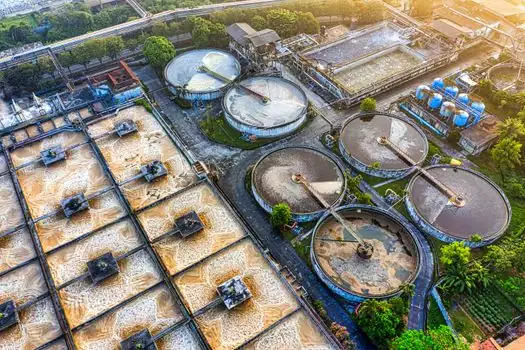
Each gas carries a real operating risk that must be addressed in the P&ID, not in marketing copy: O2 and O3 are oxidizers, CO2 is an asphyxiant, and N2 is an asphyxiant that will not register on standard combustible-gas detectors [S1].
Pure oxygen raises fire risk in aeration-basin blower rooms and feed lines, which is why LOX storage is sited with 50 ft (15 m) clearance from combustibles and why EIGA and CGA guidelines cap oxygen-enriched material lists in those areas. Ozone off-gas must be destroyed in a thermal or catalytic destruct unit running above 300 deg C because TLV-C is 0.05 ppmv, a tight ceiling that has shut down more than one pilot plant. CO2 and N2 both need oxygen monitors with alarms at 19.5% O2 in enclosed rooms, which is where a fixed gas analyzer with a remote head is standard, and operators should confirm analyzer certification against IEC 60079-xx and ATEX 2014/34/EU for the classified area. Legionella control in cooling-tower side streams is another constraint that pushes specifiers toward O3 or O2 over chlorine, but the discharge limit on bromate formation must be checked before final selection [S2][S3].
Trackable Signals and Next-Node Watch List
Three signals are worth tracking over the next 12 months: the price spread between bulk liquid O2 and on-site PSA oxygen, the pace of bromate-limit tightening for ozone in surface-water plants, and the number of US utilities filing to replace gaseous chlorine with on-site generated O3. [S2]
Each of those will reshape the O2-versus-O3 versus-CO2 balance at the design table. For adjacent specification work, see the best industrial solvents for oil and gas 2026 selection guide, the combustible gas detector selection: sensor, mounting, form factor reference, and the heavy-duty SPC flooring selection for warehouses: spec map and buyer's guide for the civil side of the same treatment-hall build.