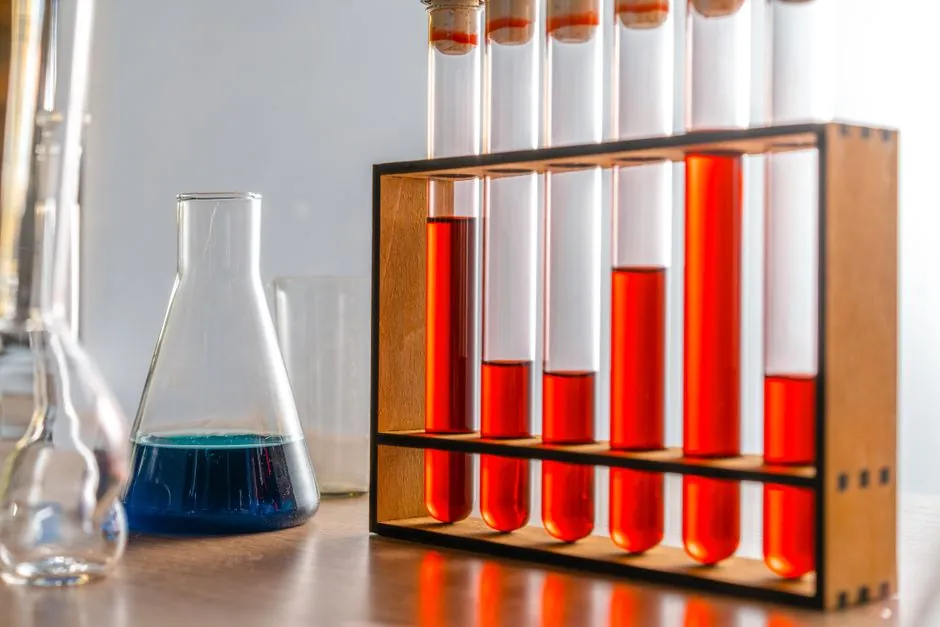
Type I borosilicate glass tubing remains the dominant primary-packaging raw material for injectables, supplied as tubing OD 7.75–35.00 mm with wall 0.45–1.30 mm and cut to 1,500 mm lengths in standard form [S3].
Global market sizing for 2024 is reported in a USD 8.2–15.2 billion range across two analyst houses, with forward CAGRs of 3.9% (2024–2034) and 6.5% (2024–2030) depending on scope and segmentation [S2][S5]. The USA holds the largest share at 36.5% (USD 3.0 billion, 2024), followed by APAC at 31.5% (USD 2.6 billion, 9.0% CAGR through 2030) and Europe at 26.5% [S2].
What "Type I Borosilicate" Actually Means on a Datasheet
Type I borosilicate tubing is qualified under USP <660>, EP, and JP, and is engineered for hydrolytic resistance class HGA 1, which is the highest glass-container durability tier under those pharmacopoeia tests [S1][S3]. The two expansion coefficients that dominate pharma converter purchase orders are 33×10⁻⁷/°C (the North American vial standard, ASTM E 438 Type A) and 51×10⁻⁷/°C (the global injectable standard for ampoules, vials, syringes, and cartridges), both supplied as Corning 33 and Corning 51 respectively [S1]. A higher-expansion 76×10⁻⁷/°C amber grade (G38) sits in the Type III hydrolytic class and is used for light-sensitive oral or topical formats rather than injectables, with a typical composition of 65.5% SiO₂, 5% B₂O₃, 12.5% Na₂O+K₂O, 7.6% Al₂O₃, and iron/manganese colorants [S3].
Thermal checkpoints that drive forming and downstream depyrogenation are the softening point (~724 °C for the 76-exp grade), annealing point (544 °C), and straining point (504 °C); converters routinely run 300 °C+ depyrogenation tunnels on 33- and 51-exp material without dimensional drift [S3]. Material physics such as density 2.51 g/cm³ and the low alkali leachables profile of low-boron borosilicate are the reason the pharmaceutical tubing category is segregated from soda-lime and aluminosilicate alternatives on COA templates.
Supply Base: Who Actually Runs the Furnaces
The pharma tubing supply base is concentrated. SCHOTT, Corning, Nipro, and Gerresheimer (the latter via its own tubing operations) operate the bulk of qualified Type I capacity, with Nipro alone claiming more than 90,000 metric tons of global tubing capacity on three continents under ISO 9001, ISO 15378, and OHSAS 18001 [S3]. Corning reports three-continent production of its 51-exp grade and a single-site 33-exp furnace at Vineland, NJ that it describes as the world's largest 33-exp pharmaceutical tubing furnace [S1].
Chinese suppliers are scaling: Linuo markets pharmaceutical borosilicate tubing with controlled OD, wall, and straightness for ampoules, vials, and cartridges [S6]; Munanglass documents packaging and storage specifications consistent with converter-grade material [S7]; and OGT (Olivotto Glass Technologies) supplies the neutral borosilicate tube-drawing equipment installed across this base [S9]. This capacity pool interacts directly with global logistics packaging flows, since tubing is typically shipped in 1,500 mm shrink-wrapped bundles inside foam-lined export cartons to converters in the EU, US, and India.
Manufacturing Route: From Batch House to Converter Bundle
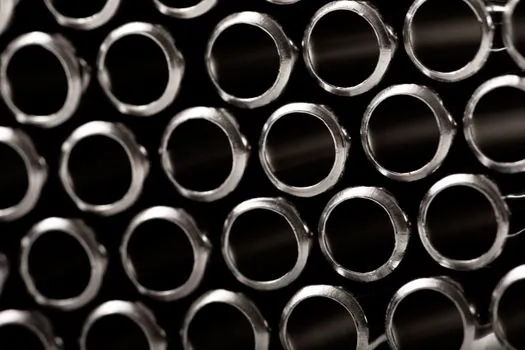
Borosilicate tubing is a continuous-drawn product. Raw batch (SiO₂, B₂O₃, Na₂O, Al₂O₃) is melted above 1,500 °C, homogenized, then drawn through either a Danner process (glass over a rotating mandrel, air-pressure ID control) or a Vello process (vertical draw) to set OD, ID, and wall [S4]. Inline laser gauging of OD and wall thickness, followed by an annealing lehr to relieve internal stress and stabilize geometry, is standard; without controlled annealing, tubes crack during converter cutting or downstream vial forming [S4].
Final ops include cutting to 1,500 mm lengths (the converter-friendly format most OD 7.75–35.00 mm grades are sold in), edge conditioning, cosmetic inspection under polarized light, and dimensional sorting against customer-specific OD/wall/straightness windows [S3][S4]. The mechanical-handling upstream of these lines ties to packaging machinery selection: converters running 36,000+ vials/h BFS or tubular-glass lines need tubing with straightness under ~0.5 mm per 1,500 mm, and OD/wall concentricity tighter than ±0.05 mm on premium 51-exp lots.
Selection Criteria: Matching Expansion, Color, and Format to the Drug
Specifying borosilicate tubing is a four-axis decision, and the axes rarely decouple cleanly. The comparison below lines up the main options against the criteria most procurement and QA teams weight: [S3]
1. 51-exp clear borosilicate (Corning 51, SCHOTT FIOLAX clear): the default for ampoules, vials, syringes, and cartridges carrying injectables. Hydrolytic class HGA 1, EP/USP/JP/YBB compliant, three-continent supply. Best fit for aqueous and biologic parenterals [S1].
2. 33-exp clear borosilicate (Corning 33, ASTM E 438 Type A): the North American vial standard, higher chemical durability than 51-exp under aggressive depyrogenation cycles, single-furnace-sourced for some grades. Best fit for NA vial converters and high-heat terminal sterilization [S1].
3. 76-exp amber borosilicate (G38-class): Type III hydrolytic, iron/manganese colorant chemistry, used for light-sensitive oral and topical products. Not for injectables. Best fit for tablets, syrups, and photosensitive APIs in amber bottles [S3].
4. Boron-free aluminosilicate: drop-in alternative where delamination or pH-shift risk on biologics is being engineered out; Corning offers it as a separate SKU and SCHOTT positions similar compositions in its high-end portfolio. Best fit for sensitive biologics where glass-API interaction is the dominant risk [S1].
Format constraints overlay all of this: OD windows are typically 7.75–20.00 mm (wall 0.45–1.00 mm) for ampoule and small-vial converters, and 20.00–35.00 mm (wall 0.80–1.30 mm) for bottle and larger-vial converters, with 1,500 mm cut length as the de facto converter standard [S3].
Use Cases: Where the Tubing Actually Ends Up

Converters turn the 1,500 mm tubes into four primary container families: ampoules (mostly 1–20 mL, 51-exp clear), vials (2–100 mL, 33- or 51-exp clear), pre-filled syringe barrels (51-exp clear, plus specialized inner-surface treatments), and cartridges (51-exp clear, used in pen injectors and dental anesthetics) [S1][S8]. A separate stream feeds amber glass bottles for light-sensitive oral solid and liquid dosage forms, where the 76-exp amber grade and iron/manganese colorants cut UV transmission below the pharmacopoeia threshold for photolabile APIs [S3].
Downstream demand is anchored to injectable therapeutics: oncology biologics, mRNA vaccines, insulin and GLP-1 pens, anticoagulants, and immunoglobulin infusions, all of which require parenteral primary packaging that meets EP/USP/JP extractables and leachables expectations [S2][S5]. The growth wedge for the next decade is biologics and biosimilars, where the combination of cold-chain storage, large-volume infusion vials, and pre-filled syringes is pulling 51-exp volume disproportionately.
Limitations and Failure Modes Buyers Should Plan For
Borosilicate is not a single material, and the wrong expansion grade against a depyrogenation cycle cracks vials. 51-exp tolerates standard 300 °C+ dry-heat depyrogenation; pushing past its annealing stability window without re-validation is a known delamination and crack-initiation driver [S1][S3]. Amber 76-exp Type III is not interchangeable with Type I in injectable lines: hydrolytic class differences cause measurable pH and alkali leachables shifts that fail EP/USP parenteral tests [S3].
Supply-side risk is real. Only a handful of qualified furnaces produce 33-exp NA-grade material, and the rest of the Type I base is concentrated in fewer than ten plants globally, so a single furnace outage can move spot pricing and force 6–12 month requalification at converters [S2]. Aluminosilicate alternatives partially de-risk this, but they require fresh converter-side validation under each pharmacopoeia.
Standards, Pharmacopoeias, and What Auditors Actually Ask For

The compliance backbone for pharmaceutical borosilicate tubing is the three-pharmacopoeia set: USP <660> (containers, including powdered and water attack tests for hydrolytic class), EP 3.2.1 (glass containers for pharmaceutical use), and JP 7.01 (test methods for glass containers). The YBB Chinese pharmacopoeia standard set applies to material sold into the Chinese domestic converter base and is listed alongside USP/EP/JP on Corning's compliance statement [S1]. ISO 15378 is the quality-management standard specific to packaging materials for primary containers, and converters routinely demand it on tubing-mill COAs alongside ISO 9001 [S3].
For extractables and leachables risk on injectables, the relevant guidance sits in USP <1660> and <1664>, ICH Q3D (elemental impurities), and the various FDA and EMA glass delamination advisories issued over the last decade. Buyers should treat EP/USP/JP compliance on the tubing COA as table stakes and request the supporting hydrolytic-class data, forming-line conversion data, and any inner-surface treatment specifications separately, because these are where audit findings cluster on injectable filling lines.
2026 Buyer Checklist and Trackable Signals
Procurement teams locking 2026–2028 tubing contracts should anchor on five verifiable items: a dual-source letter covering both 33-exp and 51-exp grades, written EP/USP/JP/YBB compliance with lot-level COAs, an ISO 15378 certificate per supplying mill, agreed OD/wall/straightness windows in writing (typical 51-exp premium windows are OD ±0.10 mm, wall ±0.04 mm, straightness under 0.5 mm/1,500 mm), and a documented change-control process for amber-to-clear or borosilicate-to-aluminosilicate substitutions. Trackable signals over the next two quarters: any new Chinese borosilicate furnace commissioning announcements (Linuo, Munanglass, and other domestic suppliers have signaled capacity additions), SCHOTT and Corning furnace outage or expansion notices tied to biologics demand, and any USP <660> or EP 3.2.1 revision activity that would reset the hydrolytic-class test windows. [S1]