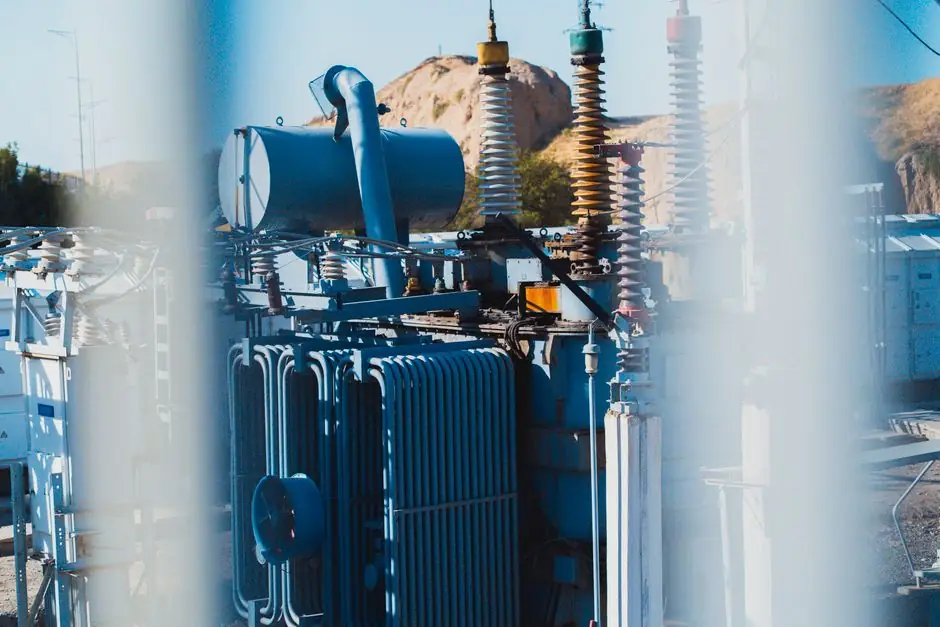
Large power transformer lead times in 2026 run 110-160 weeks from U.S. and Western OEMs, with generator step-up (GSU) units past 160 weeks by Q1 2026, up from a 143-week average in 2024 [S1][S4]. Tier 1 manufacturers are effectively closed for 2028 delivery, and new orders are being written against 2030-2031 production slots [S1].
Availability, not capital or permitting, now sets the project timeline. Roseville Electric in California is ordering large substation transformers five years in advance, and data center developers are reserving factory slots before finalizing one-line diagrams [S1]. Three allocation mechanisms dominate: blanket purchase agreements that guarantee slots 12-18 months out, capacity-reservation contracts that pay a premium for guaranteed build windows, and early design-lock reservations that compress post-permit time from roughly 48 months to 12-18 months [S1][S4].
Lead Times by Class: The Numbers That Drive the Queue
Class matters more than geography in 2026: large power transformers above 100 MVA quote 110-130 weeks with many past 160 weeks; GSUs average 144 weeks and are past 160 in Q1 2026; mid-size units 30-100 MVA run 60-90 weeks; distribution-class pad-mount and cast-resin units run 30-50 weeks; mobile and skid-mounted substations 30-100 MVA sit in a 12-18 month queue [S1][S3].
Wood Mackenzie's Q2 2025 survey pegged the national supply deficit at 30% for power transformers and 10% for distribution units, with GSU demand up 274% since 2019 and substation power transformer demand up 116% [S2]. The same survey reported 128 weeks for large power transformers and 144 weeks for GSUs as the average; the high-voltage bushings that bolt into those units run up to 130 weeks, often longer than the transformer itself [S2][S4]. High-voltage circuit breakers sit at 125 weeks against 77 weeks in 2023, in the same substation queue [S4]. Distribution pad-mount three-phase is forecast to worsen through 2026 and into 2027, while build-to-order dry-type runs 50 weeks to over a year plus another 8-12 weeks for non-standard voltage ratings or enclosures [S4].
Allocation Rule 1: Blanket Purchase Agreements and Capacity Reservations
Blanket purchase agreements (BPAs) with 2-3 manufacturers that guarantee production slots 12-18 months out are now standard practice for utilities, large industrials, and data center developers [S4]. Speculative inventory positions on high-velocity kVA/voltage combinations are the second leg of the same strategy, withstanding 3-6 month carrying costs against the price of a six-month outage on a critical load [S3][S4].
Capacity-reservation contracts pay a small premium, typically single-digit percent of unit price, for a guaranteed build window at a specific OEM. The mechanism works best for predictable annual volumes such as a utility's standard pad-mount replacement program, and it does not solve one-off urgent needs [S3]. The bind on the binder: the RFP-to-contract step alone runs up to six months before manufacturing starts, so the clock on a 30-month unit often begins half a year after the buy decision [S4].
Allocation Rule 2: Early Design-Lock and Pre-Permit Slot Booking

Reserving a production slot before the design is final can compress the post-permit timeline from roughly 48 months to 12-18 months, on the assumption that the slot reservation is honoured even when the spec changes within the OEM's allowed envelope [S1]. For data center developers, factory slots are now reserved before their designs are finalized, effectively making the slot a schedule input set in advance of detailed engineering [S1].
The trade-off is real: a design change that crosses the OEM's allowed tap range, impedance window, or BIL rating can void the slot or push the unit to a later queue position. Buyers managing this risk specify the slot reservation against an impedance and voltage band rather than a fixed design, and they accept a 5-10% cost adder for the optionality. The slot itself is non-cancellable in most Tier 1 contracts, with the deposit forfeitable on abandonment [S1].
Allocation Rule 3: Export Capacity, Remanufactured Units, and Mobile Bridging
Capable export manufacturers in China, South Korea, and India still hold 2027-2028 slots in many 110-220 kV classes; qualification, not price, is the real work [S1]. For utilities that have already type-qualified two or three export OEMs, the 2027-2028 slot is reachable; for those that have not, a 9-15 month qualification program has to be added to the timeline, which often negates the schedule benefit entirely. The dry-type transformer class is one segment where qualified Korean and Indian capacity is widely available for 2027 delivery.
Remanufactured distribution transformers perform equivalently to new at 50-70% of the cost, with lead times of 4-6 weeks instead of 30-50 weeks when the OEM queue is full [S3]. Mobile and skid-mounted substations in the 30-100 MVA range offer a 12-18 month bridging path while a permanent unit is built, and they are increasingly specified for data center commissioning windows where the permanent power transformer is still 30-40 months out [S1]. High-voltage bushings and tap-changer contacts remain the binding sub-components regardless of which path the buyer takes, and the bushing queue at 130 weeks is the single most common reason a finished transformer sits in the OEM yard waiting for a part [S4].
What to Lock In: A Buyer's Decision Map

For a utility replacing storm-damaged units or a developer hitting a substation deadline in 2027, the comparison reads as follows: new-build from a Tier 1 OEM offers 110-160+ weeks and the highest spec confidence but no schedule control; remanufactured offers 4-6 weeks at 50-70% of new cost but is limited to distribution-class ratings; qualified export capacity offers 2027-2028 slots in 110-220 kV classes but requires a 9-15 month type-qualification if not already in place; mobile/skid bridging offers 12-18 months at 30-100 MVA but is a temporary asset. Standard distribution catalog units at 26-40 weeks are workable for routine replacements, but pad-mount three-phase is moving the wrong way and is forecast to worsen through 2027 [S4].
The current 26-40 week range for common catalog distribution units is the lowest lead-time band in the market, and it is the segment where WoodMac's forward modeling shows a narrowing shortfall, possibly down to roughly 5% by 2030 [S2][S4]. GSU deficits may drop from 47% to 14% over the same horizon, but 2030 is a long way off when the project starts construction this quarter [S2]. The DOE 2024-2025 transformer rulemaking added an additional compliance step for some product classes, and high-voltage bushings at up to 130 weeks remain the longest pole in the tent regardless of which allocation path is taken [S3][S4].
Failure Modes and Limits of the Allocation Playbook
The three allocation mechanisms each carry a specific failure mode. BPAs lock volume but not price: the price-escalation clause in a multi-year agreement can eat margin before the unit ships, and 18-month lead quotes that turn into 30 months are the most common complaint logged by distributors [S4]. Capacity-reservation deposits are non-refundable on abandonment, and a design change that crosses the OEM's impedance or BIL window voids the slot.
Early design-lock reservations are non-cancellable in most Tier 1 contracts, with the deposit forfeitable on abandonment, and the binding sub-components (high-voltage bushings, tap-changer contacts, grain-oriented electrical steel) can still push a finished unit out of the OEM yard even when the tank and windings are ready [S1][S4]. For a deeper read on how certification and self-declaration regimes change the export-OEM qualification path, the UL vs CE certification comparison covers the documentation gap that often delays a Korean or Indian type-qualification by 3-6 months. GOES remains the structural bottleneck; re-tooling a steel mill for grain-oriented electrical steel takes years and capital, and the capacity is not yet on-line [S3].
Trackable Signals to Watch Over the Next Two Quarters
Watch the Q4 2026 Wood Mackenzie survey release for the next 128-week and 144-week read on large power and GSU lead times, and the bushing queue length, which is the most reliable leading indicator of finished-unit slippage. The next DOE national-laboratory supply chain gap analysis update, following the May 2026 TP-5700-96742 report, is the second signal; it will show whether the projected 5% power-transformer shortfall by 2030 has held or widened. The third signal is the 2027 slot availability at qualified Korean and Indian OEMs in the 110-220 kV class, which closes or opens the export-bridge path for buyers that have not yet type-qualified. Until any of those move, the operating rule for 2026 procurement is unchanged: lock the slot first, design into the slot second, and price the deposit as the cost of schedule survival. [S4]
For component-level specifications, see construction machinery and equipment.