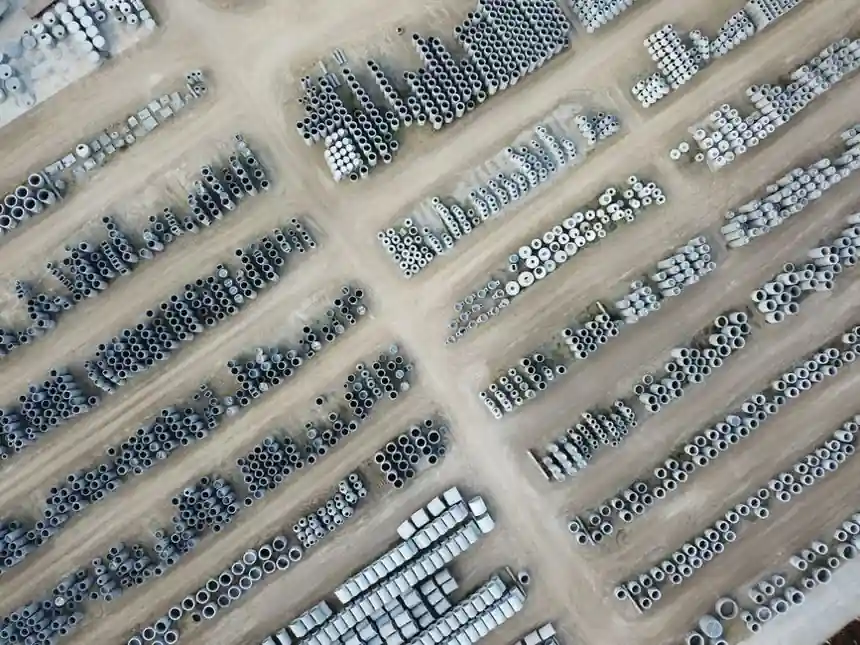
A U.S. customs bonded warehouse holds imported merchandise without triggering duty payment for up to five years, and re-exports from bonded storage are duty-free, making the tool a pure cash-flow and timing instrument [S1][S5].
An FTZ is a CBP-supervised area deemed outside U.S. customs territory under the Foreign-Trade Zones Act of 1934 (19 USC 81a-81u), where storage, processing, and manufacturing are permitted and duties are deferred until goods enter U.S. commerce [S4].
Core Mechanic: How Each Tool Actually Defers Duty
Bonded warehousing simply extends the duty clock: goods arrive, sit under a customs bond, and duties are paid at the rate in effect on the date of withdrawal for consumption, which preserves the option to wait out a future rate cut [S1][S2]. FTZ admission does not trigger duty either, but under 19 CFR Part 146 the importer must elect either "privileged foreign status" (locks in the entry-day rate) or "non-privileged status" (applies the rate in effect at withdrawal), a choice that has become decisive under current rules [S4][S9].
For a distribution-heavy importer, that means the bonded warehouse remains the cleanest "pause button" if future rate reductions are expected, while the FTZ is the right answer if the importer needs weekly entry consolidation, inventory tax exemption, or full manufacturing capability inside the zone [S2][S6].
The April 9, 2025 Shift: Privileged Foreign Status Became Mandatory
The Executive Order "Regulating Imports with a Reciprocal Tariff to Rectify Trade Practices that Contribute to Large and Persistent Annual United States Goods Trade Deficits" (effective 12:01 a.m. EDT on April 9, 2025) requires that subject articles admitted to a U.S. FTZ after that date enter as privileged foreign status under 19 CFR 146.41, eliminating the rate-deferral path for U.S. FTZs [S3].
Operationally, the rule means any product sitting in a U.S. FTZ after April 9, 2025 is taxed at the admission-day rate when it eventually enters U.S. commerce, so the only remaining way to preserve a future rate cut is to keep the cargo in a bonded warehouse or move it to a non-U.S. bonded facility [S3]. The change is the single most important data point in any 2026 cost model, because the FTZ no longer offers the optionality that justified its setup costs for many product lines [S3][S5].
Side-by-Side: Decision Criteria for 2026 Specifying

Below is a practical comparison drawn directly from the research, useful for an engineering or supply-chain lead building a tariff-mitigation specification:
<strong>Storage duration:</strong> bonded warehouse capped at 5 years from import date; FTZ indefinite [S1][S2][S5].
<strong>Operations allowed:</strong> bonded warehouse limited to sorting, cleaning, repacking, labeling; FTZ permits manufacturing and substantial transformation with proper approvals [S1][S2][S4].
<strong>Entry frequency:</strong> bonded warehouse files entry at withdrawal; FTZ user can file a single weekly entry, lowering Merchandise Processing Fees and broker cost, which is why the crossover sits at roughly 52 shipments per year [S2][S4].
<strong>Tariff rate election:</strong> bonded warehouse uses the rate in effect at withdrawal (favoured when rate cuts are expected); U.S. FTZ post-April 9, 2025 is locked at the admission-day rate unless admitted under domestic status under 19 CFR 146.43 [S2][S3].
<strong>Re-export:</strong> both allow re-export without U.S. duty payment, so a 100% re-export flow pays zero either way [S2][S5].
<strong>Inventory tax:</strong> FTZs exempt foreign and export-bound domestic goods from state and local inventory tax; bonded warehouses generally do not, a real estate-driven advantage of FTZs for high-value, slow-turning stock [S2][S6].
<strong>Compliance cost:</strong> bonded warehouse has lower startup cost and lighter governance; FTZ requires a grantee/operator structure, FTZ Board oversight under 15 CFR Part 400, CBP Form 214 admissions, activation agreements, and periodic audits [S1][S4].
Who Each Tool Is For (and Who Should Skip It)
A bonded warehouse is built for distribution-centric supply chains: seasonal importers, re-export traders, and companies with uncertain demand that need a 0-5 year pause without paying rent on a formal zone designation [S1][S5]. It is the wrong tool for any operation that wants to assemble, kit, or transform product in the U.S., because substantial transformation is generally off-limits [S2][S4].
An FTZ is the right answer for high-volume importers (more than ~52 entries per year), manufacturers who can exploit inverted-tariff election, and operators who need indefinite storage combined with state and local inventory-tax exemption on export-bound goods [S2][S4][S6]. It is the wrong answer for a small importer whose primary hope was a future tariff rate cut, because that optionality was removed by the April 9, 2025 privileged-foreign-status mandate [S3].
Quantified Working-Capital Example
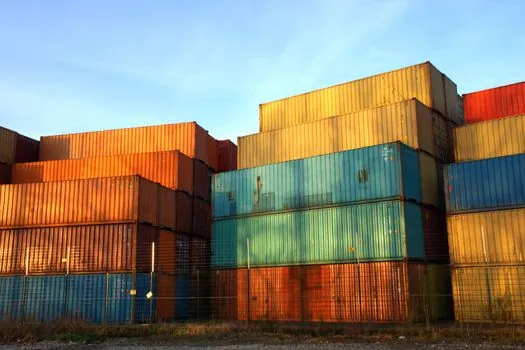
A useful 2026 sizing exercise: an importer with $10 million in annual tariff exposure at a 25% combined rate who turns inventory every 60 days defers $2.5 million in duty payments by 60 days per cycle inside an FTZ, a working-capital benefit that has to clear FTZ setup, operator, and audit costs before activation [S4]. The same importer using a bonded warehouse forgoes the inverted-tariff option and the weekly-entry savings, but keeps the rate-flexibility value if tariffs are expected to fall [S2][S4].
For a manufacturer, the inverted-tariff election is the more powerful lever: choosing to pay duty on the finished good instead of the individual components can save several percentage points on the duty bill when the finished-good rate is lower than the component rate, a delta that compounds across high-volume production runs [S5].
Mexico Bonded Warehouse as a Rate-Flexibility Escape Valve
Because U.S. FTZs are now rate-locked at admission, several logistics advisors point to a Mexico bonded warehouse as a way to keep goods in a bonded environment without surrendering future rate flexibility, on the logic that a non-U.S. bonded facility is not bound by 19 CFR 146 [S3]. The same sources note that approximately 17% of U.S. import storage now sits in bonded warehouses, up from about 11% in 2020, a structural shift that is consistent with importers re-positioning inventory away from rate-locked U.S. FTZs [S3].
For an engineer evaluating a multi-country footprint, the design rule is: use the U.S. FTZ for manufacturing throughput and weekly-entry savings, use a U.S. bonded warehouse for short-to-mid-term inventory where future rate cuts matter, and use a Mexico or Canada bonded facility when both rate flexibility and a North American footprint are required [S3][S6].
Failure Modes and Common Mistakes

The single most common error is treating FTZ and bonded warehouse as interchangeable, when in fact they have different storage caps, different manufacturing rights, and now different rate-election rules [S1][S3]. Other recurring failure modes: activating an FTZ for a low-volume flow (under ~52 entries per year) where the Merchandise Processing Fee savings do not amortize the setup cost, and storing inventory in a U.S. FTZ while waiting for a tariff cut that the April 9, 2025 rule no longer permits [S2][S3][S4].
Compliance failure modes are equally concrete: missing CBP Form 214 admissions, weak inventory recordkeeping under 19 CFR Part 146, and bonded-warehouse audit findings on goods held beyond the five-year cap, each of which converts a deferral tool into an immediate duty bill plus penalties [S1][S4].
Specification Checklist for 2026
For a written tariff-mitigation spec, a useful structure is: define the product's expected storage horizon (0-5 years, longer than 5 years), the operations required (storage only, repack, full manufacturing), the entry cadence (fewer than or more than 52 per year), the tariff trajectory assumption (rate up, rate down, flat), and the state and local inventory-tax exposure, then match the answers to the FTZ / bonded warehouse / Mexico bonded warehouse split above [S2][S3][S6]. A related procurement note: this same kind of "mechanism selection under regulation" logic shows up in industrial spec work such as Ex tb cable gland selection for Zone 21 dust areas and explosion-proof junction box vs distribution box layout, where the ATEX/IECEx zone classification drives a binary equipment choice in much the same way the FTZ-vs-bonded decision is driven by the rate-election rule.
For a rebar or steel buyer weighing U.S. versus imported feedstock, the FTZ bonded path also intersects with grade-specific rebar selection, because inbound steel stored under FTZ or bonded status changes the landed-cost model used in the spec.
Trackable signals for the next planning cycle: any CBP or FTZ Board guidance that re-opens the rate-election question for U.S. FTZs after April 9, 2025; further movement in the share of U.S. import storage sitting in bonded facilities beyond the ~17% benchmark; and any change to the five-year bonded-warehouse cap or to 19 CFR 146.41/146.43 status rules, each of which would materially shift the answer above [S3][S4].
For component-level specifications, see construction machinery and equipment, lamps and light fittings, and lighting equipment and electric lamps.