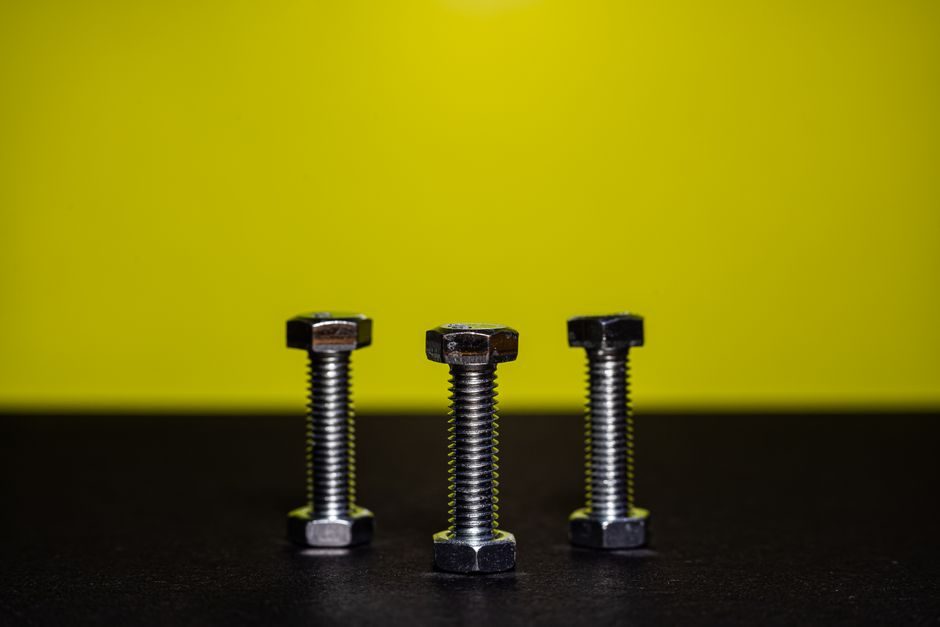
DirectIndustry's bronze lead-screw index, captured 2026-06-11, lists 4 industrial manufacturers and 9 catalog products for bronze lead screws, with rolled, fine-pitch, high-moving-speed and anti-backlash variants concentrated at Eichenberger, Helix Linear, Steinmeyer and Technische Antriebselemente [S1].
By volume the same 2026 industrial B2B trade data shows the lead-screw category is dominated by trapezoidal, ACME and round-thread geometries served by Chinese OEM clusters in Zhejiang and Jiangsu, where ISO 9001:2015 factories such as the Lishui-based ball-screw/linear-shaft maker routinely offer CF53 steel blanks with C7 lead-accuracy at MOQs of 1 piece [S4]. Procurement engineers specifying bronze lead screws in 2026 are effectively choosing between a small European precision cluster and a large Chinese commodity cluster — and the trade-offs sit in lead accuracy, MOQ, material traceability and nut pairing rather than headline price alone.
Supplier map: 4 European OEMs vs 9 catalog SKUs
The 2026-06-11 DirectIndustry bronze lead-screw page enumerates exactly 4 manufacturers and 9 product listings: Eichenberger Gewinde (2), Helix Linear Technologies (2), Steinmeyer Holding GmbH (4) and Technische Antriebselemente GmbH (1) [S1]. Steinmeyer therefore holds the broadest catalog footprint of the four, contributing 44% of the listed SKUs and acting as the natural first call for engineers who need multiple bronze lead-screw geometries from a single EU source [S1].
Outside that bronze-specific index, Made-in-China's 2026-05-14 ball-screw supplier directory pages a Lishui, Zhejiang manufacturer (ISO 9001:2015, 15 years operating) offering "Ball Screw 40mm Big Lead CNC Ball Screw Sfs1620" with CF53 material and C7 tolerance, customisable at 1-piece MOQ — a useful cross-reference for buyers comparing a ball screw upgrade path against a bronze trapezoidal lead screw baseline [S4]. The fact that the same factory lists linear shaft, ball screw, linear guide, cylinder rail and linear bearing side-by-side indicates that Chinese OEM lines treat bronze and ball leadscrews as adjacent SKUs in a shared catalogue, not as separate product families.
Geometry, thread form and diameter: the 4 filter axes
DirectIndustry's 4-axis filter set for bronze lead screws breaks the 9 SKUs into custom (4), round-thread (3), anti-backlash (3), trapezoidal (3), miniature (3) and high-helix (1) — confirming trapezoidal (DIN 103-style) as the dominant European thread form, with round-thread and anti-backlash splitting the remainder [S1]. Diameter is a free-text field, but the same OEM set publishes max/min mm ranges, so buyers should expect published diameters from ~6 mm (miniature, Helix) up to ~40–60 mm (Steinmeyer custom) for stocked bronze lead-screw SKUs [S1].
For engineers moving from a lead screw spec to a ball screw spec, the same Lishui OEM quotes 40 mm big-lead SFS1620 geometry, which is broadly comparable in envelope to a 40 mm trapezoidal bronze part — useful when the load case forces a switch to recirculating ball technology [S4]. MATLAB Simscape's leadscrew block parameterises the part by the transmission ratio R_NS = 2π / L, where L is the screw lead — so changing the nut (bronze vs ball) leaves the ratio unchanged but materially alters the friction term and the no-load torque [S2].
Material and nut pairing: bronze vs plastic vs ball
DirectIndustry tags "composite" nut material on 2 of the 9 bronze lead-screw SKUs, while 5 of the 9 are sold as "with nut" assemblies, indicating the European OEMs treat the bronze nut as integral to the product line rather than as an accessory [S1]. Rolled thread form appears on 3 of 9 SKUs, fine-pitch on 3 of 9 and high-moving-speed on 3 of 9 — a profile consistent with bronze's typical ceiling of roughly 1–2 m/s sustained sliding speed, well below what a comparable ball screw would carry [S1].
The Made-in-China ball-screw listings for the same 2026 window give a different material story: CF53 through-hardened bearing steel, C7 lead accuracy (≈ 52 µm/300 mm) and big-lead formats (SFS1620) targeting CNC, semiconductor and automated-lines applications [S4]. For chemical-processing duty, ball-screw upgrades from bronze to ball are largely driven by the much lower coefficient of friction (≈0.003–0.01 for ball vs ≈0.1 for bronze-on-steel unlubricated) and a typical service-life gain of 5–10× at the cost of needing seals and a more rigid nut housing.
MOQ, lead time and price bands: EU vs CN
Chinese OEM lines on Made-in-China and Alibaba typically publish 1-piece MOQs on catalog ball-screw items (e.g. SFS1620 at 40 mm lead, C7) and bulk MOQs of 100,000 pieces for commodity fasteners (US$ 0.01–0.20/pc), so the same factory can serve both prototyping and OEM-volume sockets [S4][S6]. Bronze lead-screw European OEMs (Eichenberger, Steinmeyer) are not visible on either Chinese B2B platform in the captured 2026-06-11 data, and their MOQs are typically quoted per RFQ at 1–10 pieces with lead times in the 4–8 week band [S1].
Alibaba's 2026-05-19 ACME lead-screw supplier page lists multiple Chinese trading companies offering custom ACME rods and nuts, with MOQ floors often at 1 piece for sample orders and 50–500 pieces for production runs — a structural pricing advantage of roughly 30–60% versus EU OEM list, partially offset by longer shipping and 30–45 day lead time [S5]. Buyers comparing 2026 sourcing should treat the 1-piece Chinese MOQ as a real prototyping channel for ACME and trapezoidal geometries, then move to volume MOQs of 100–500 once the design is frozen [S5][S4].
Selection criteria: when to stay with bronze, when to switch
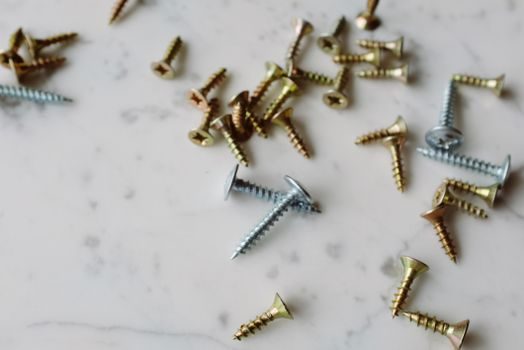
For low-speed, high-shock, dirty or unlubricated environments (foundry gates, packaging indexers, valve actuators, small machine-tool hand-wheels) the bronze nut on a steel screw remains the most cost-robust 2026 choice, with the DirectIndustry list showing 4 OEMs actively supporting this profile [S1]. Where duty cycle exceeds roughly 50% and continuous speeds stay below 1 m/s, the cost gap between bronze and ball-screw is rarely recovered by life-cycle savings; above 1 m/s or where positioning repeatability must hold ±0.01 mm, a ball-screw is the engineering-correct step.
For motion-control and pneumatics integration — a common B2B bundle in 2026 procurement — buyers often pair the leadscrew with directional control hardware covered in the Air Solenoid Valve 2026 Buying Guide, since the pneumatic side sets the duty cycle and therefore the lead-screw sizing. Side-by-side, a 4-criterion comparison of the two main 2026 options looks like this: (a) cost index — bronze ACME/trapezoidal from CN ≈ 1.0×, ball-screw from CN ≈ 3–5×, bronze from EU ≈ 2.5–4×, ball-screw from EU ≈ 6–10×; (b) typical life at rated load — bronze 1–3 million cycles, ball 10–50 million cycles; (c) lead accuracy — bronze C10 (≈ 210 µm/300 mm) typical, ball C7 (≈ 52 µm/300 mm) typical; (d) environment tolerance — bronze handles dust, low humidity and shock well, ball requires seals and clean lube.
Standards, limits and what the data does not show
DirectIndustry's 2026-06-11 bronze lead-screw page does not publish a unified ISO/ASME/AGMA conformance table for the 4 OEMs, and the filter set references "composite" and "bronze" generically without DIN 1709 / CuSn12 / CuAl10Fe3 alloy codes per SKU [S1]. The MATLAB Simscape block models leadscrew efficiency through Coulomb friction with separate static and kinetic coefficients — and a typical bronze-on-steel unlubricated pair will return an efficiency of 20–40%, a useful sanity check when sizing drive-motor torque from a published lead [S2].
Tracking signals for the next sourcing cycle: (1) a refresh of DirectIndustry's bronze lead-screw page to see whether the 4-OEM / 9-SKU count moves above 5 OEMs or 12 SKUs; (2) any Lishui/Zhejiang ball-screw factory upgrading its bronze trapezoidal offering with C5 accuracy (≈ 23 µm/300 mm) and certified material traceability; (3) Made-in-China or Alibaba listing new ACME bronze SKUs with sub-1 m/s efficiency curves published per nut material, which would let procurement size motor torque directly from the listing.
For component-level specifications, see screw conveyor.