
Displacement sensor selection on a brownfield PLC upgrade is constrained first by the existing signal architecture (4-20 mA loops, HART overlays, or native digital fieldbus) and by the physical envelope already on the skid; resolution, full-scale range, and contact-vs-non-contact choice are evaluated only after that.
This sequencing is anchored in field practice: [S1] Control Engineering's brownfield-integration guidance observes that end users are primarily concerned with "ensuring their production line will run the same way as it did before the system upgrades," and that risk is dominated by electrical and mechanical compatibility of the replacement transducer with the existing I/O card. A 4-20 mA acceleration-doubled-integrated displacement output described in [S6] PCB Piezotronics documentation remains the cleanest drop-in choice for plants that want continuous monitoring and integration with a PLC, DCS, and SCADA without rewriting logic.
Baseline-First Audit of the Legacy Loop
The dominant cutover risk in displacement-sensor replacement is I/O compatibility with the existing I/O card, not the performance gain of the new device, because [S1] Control Engineering's brownfield-integration guidance treats end-user concern as "ensuring their production line will run the same way as it did before the system upgrades" and frames the upgrade as a baseline-preservation exercise. Engineers replacing analog proximity probes, LVDTs, or string-pots on a 20-year-old skid should start by capturing the existing transducer's loop type, supply voltage, output impedance, and connector pinout, because the PLC migration only succeeds if the new device looks identical to the I/O card it lands on. A documented 4-20 mA output path ([S6]) is the simplest case; a HART-enabled replacement is the next simplest; a native digital fieldbus sensor only fits if the new PLC rack carries a compatible master card.
Relative-Vibration vs Absolute-Vibration Channels
For rotating-machinery retrofits on hydro machines, the standard regime is non-negotiable: ISO 20816-51 "call[s] for measurement of both relative vibration in displacement units (μm) and absolute vibration in velocity units (mm/s) [and] require two different transducers" ([S4] Meggitt Sensing Systems, Part 2). A proximity probe carries the relative-vibration channel; a velocity sensor carries the absolute channel. A single transducer with an integrated-displacement output path does not satisfy the standard's intent, and any brownfield scope that tries to consolidate both signals onto one device to save cabling typically fails compliance review and is re-specified before FAT. On bearing housings, accelerometer-derived displacement ([S6]) is acceptable for trending but should not be marketed as a proximity-probe equivalent.
Contact vs Non-Contact: Forced by the Bracket

Contact vs non-contact on a brownfield site is usually forced by the bracket, not by the spec sheet: [S2] Aivon's displacement-sensor guide lists contact types (LVDT, string-pot, piezoresistive, potentiometric) and non-contact types (optical encoder, laser triangulation, eddy-current proximity), and recommends non-contact "for high-precision, non-destructive measurements." On a brownfield upgrade, the existing mounting bracket and target surface typically decide the question long before the OEM datasheet is written: hydraulic-cylinder position feedback on a press line is almost always already machined for an LVDT rod-and-bore; retrofitting a laser triangulation station there is rarely justifiable. Conversely, a greenfield dimensional-gauging island is the only place where non-contact sensors come in cleanly. [S8] Omron's 2017 technical guide treats the workpiece (target) properties as a first-class selection input, not a footnote, which keeps the contact/non-contact question tied to the physical target rather than to the marketing literature.
Range, Resolution, and Repeat-Accuracy Specification
Range and accuracy for contact sensors are application-driven: [S7] Dadisick's contact-sensor selection guide specifies LVDT for micron-level displacement and potentiometric sensors for millimeter-level displacement, with resolution driven by the application (semiconductor tooling needs sub-micron stability). [S5] Optex FA's technical guide separates three laser-sensor parameters the spec sheet must carry: resolution (smallest detectable increment), repeat accuracy (peak-to-peak fluctuation at a static target, expressed in percent of F.S.), and full-scale range. Mixing these up — quoting repeat accuracy where the application needs absolute accuracy, or quoting F.S. percent where the OEM datasheet lists resolution in micrometers — is the most common brownfield RFQ error. Damper and industrial valve stem position is the typical potentiometric territory (millimeter to meter travel), where the same wear and resolution trade-off applies.
Environmental Envelope and Target-Material Constraints
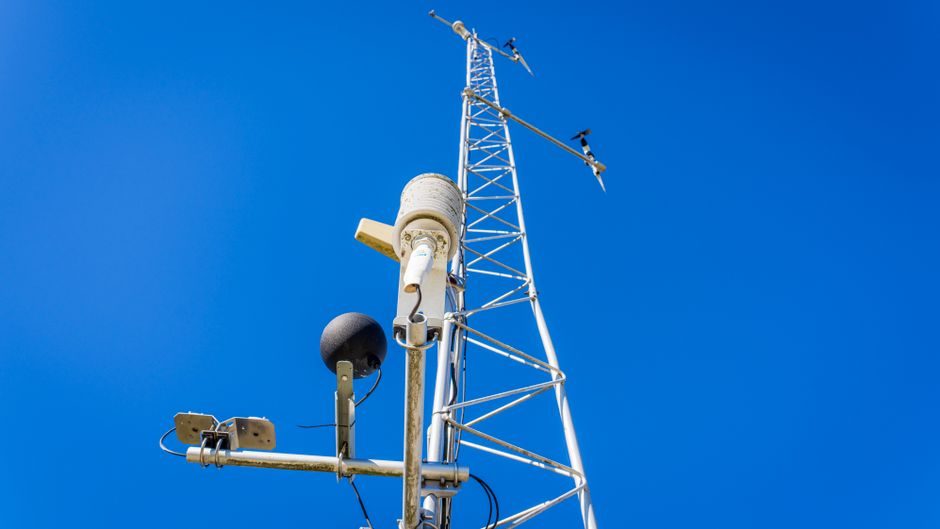
[S3] Vitrek's displacement-sensor knowledge base lists environmental factors and target material properties alongside accuracy as the three primary selection inputs, and on a brownfield site those three are already fixed by the existing installation: ambient temperature, IP rating of the housing, presence of coolant or wash-down, and EMI from VFDs in the same cabinet. A laser triangulation sensor that performs on the OEM test bench will fail on a press-shop floor with oil mist unless the optical window is purged — a constraint the OEM datasheet never covers. [S8] reinforces the same point by treating the workpiece as a first-class input. For related process loops on the same skid — pump discharge pressure, hydraulic supply pressure — the same baseline-audit logic applies (see pressure sensor for the parallel instrumentation workflow); a brownfield upgrade that audits displacement in isolation typically misses mismatches on adjacent measurement loops.
Output-Signal Compatibility with the New PLC
4-20 mA remains the default brownfield displacement output in mid-2026 because [S6] PCB Piezotronics documentation cites "easy integration with PLC, DCS and/or SCADA system" as the principal advantage, and the new PLC rack's I/O card fixes the realistic output menu regardless of the sensor's native capability. Modern displacement sensors expose 4-20 mA, 0-10 V, push-pull digital, IO-Link, and various digital fieldbus variants, but a sensor that natively speaks IO-Link can only be wired in if a compatible master card is provisioned in the new rack; otherwise the integrator is forced back to analog. Motion-control islands that pair displacement feedback with servo motor drives typically route encoder signals separately from the analog displacement loop and should be scoped as two distinct cutovers, not one.
Who These Criteria Are For (and Who They Aren't)
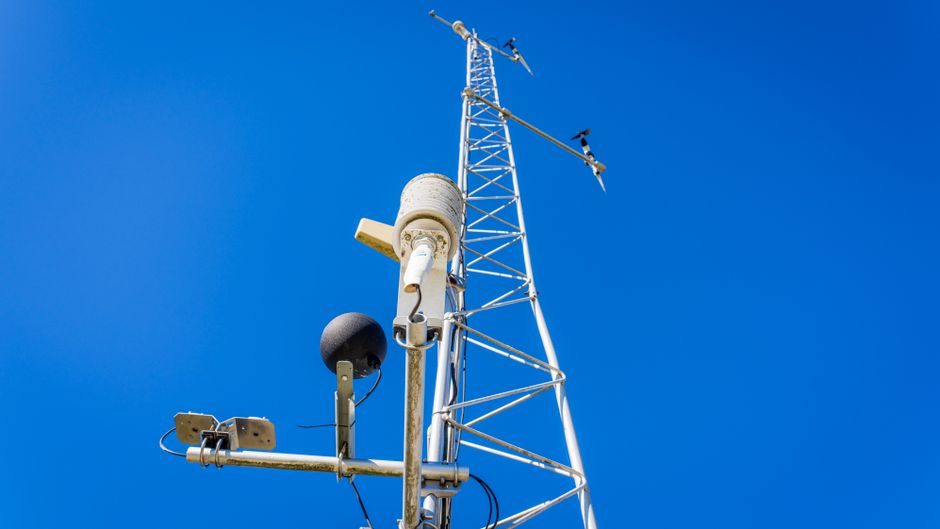
These criteria apply to control engineers and integrators running staged PLC/DCS migrations on process skids where the production line must restart at the same setpoints after cutover. They do not apply to greenfield plant design, where the loop type, mounting, and even measurement principle are open variables. They also do not cover safety-rated position sensing for safety instrumented functions or machine-guarding light curtains, which fall under separate functional-safety evaluation paths outside the scope of [S1]'s brownfield-integration discussion. Engineers specifying safety-instrumented valve travel should treat displacement-sensor selection as a sub-problem of the safety-instrumented-function design, not as a brownfield I/O swap.
Comparison: Four Displacement-Sensor Families on a Brownfield Cutover
Four families cover the majority of brownfield displacement-sensor decisions in process plants. LVDT: best for sub-micron to millimeter-range linear position on existing hydraulic and pneumatic cylinders; typical output 4-20 mA or ±10 V; rod-and-bore mounting, often already machined. Potentiometric: best for larger millimeter-to-meter travel on dampers and industrial valve stems; cheaper than LVDT but lower resolution and wear-limited over time. Eddy-current and laser triangulation: best for non-contact vibration and dimensional gauging on a clean, flat, conductive target; sensitive to oil, dust, and window contamination. Accelerometer-derived displacement (double-integrated 4-20 mA, per [S6]): best for retrofits on bearing housings where only an accelerometer mount exists, but it does not replace a proximity probe for ISO 20816-51 relative-vibration compliance ([S4]). On a cutover, wiring and bracket fit is the deciding axis; precision is a tiebreaker.
Trackable signals for the next planning cycle: (1) whether the new PLC platform is provisioned with IO-Link masters before the sensor list is frozen — this decides whether the integrator can specify digital-output displacement sensors or is locked back to 4-20 mA loops; (2) whether the legacy proximity-probe cabling can be re-used end-to-end, or only to the junction box, which determines whether the upgrade is a sensor swap or a re-pull and re-terminate. A third, slower signal is the appearance of integrated IO-Link displacement sensors on the price lists of the major LVDT vendors — when that is standard catalogue rather than custom build, the brownfield 4-20 mA default will start to shift.