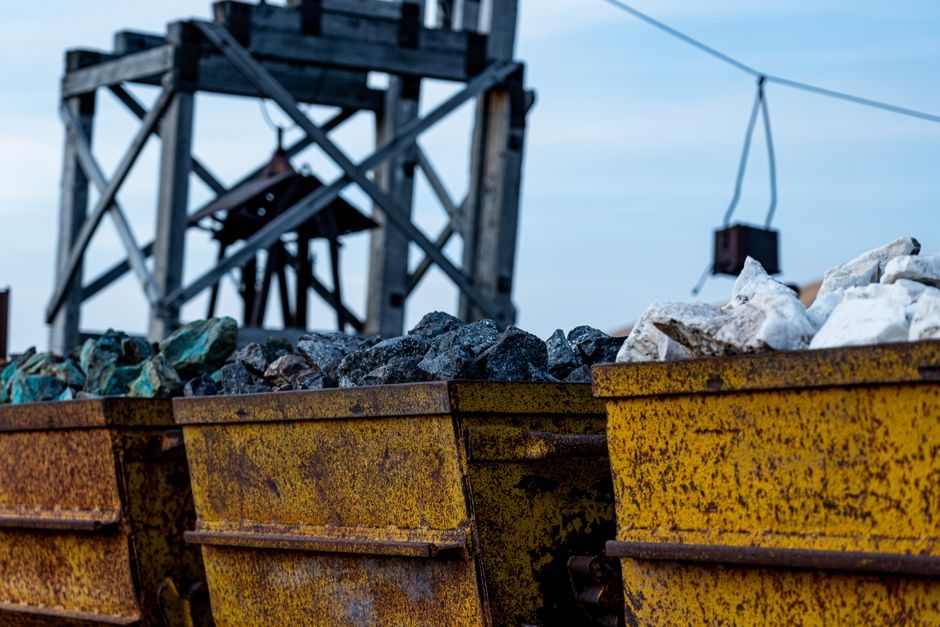
Bucket elevator selection is driven by four hard numbers: required capacity in tonnes per hour, vertical lift height, bulk density of the handled material, and a duty class set by the product's flowability, temperature and abrasiveness [S2][S5].
Off-the-shelf grain-leg units span roughly 25 tph to 1200 tph of vertical transport, and stainless-steel centrifugal models serve clean food, sugar and salt duty where wash-down and hygiene are specified by the end user [S1][S2]. Custom-engineered TDTG-series units from Chinese OEMs ship in seaworthy packaging at 1-set MOQ and scale to feed-mill, grain and wood-pellet applications [S6].
Definition and Scope: Centrifugal vs Continuous vs Positive-Discharge
A bucket elevator is a vertical bulk-handling conveyor whose buckets are bolted or welded to a belt or chain that runs between a head pulley (or sprocket) and a boot pulley, with material picked up at the boot and thrown or discharged at the head [S1][S3]. Three discharge classes govern the geometry: centrifugal discharge throws free-flowing granular and powder product at head-pulley speeds typically 1.0–1.5 m/s; continuous discharge scoops material over the head sprocket using closely spaced buckets on a chain for sluggish, abrasive, or large-lump product; positive-discharge (also called perfect-discharge) uses two parallel strands so the bucket inverts at the head and physically pushes material out, used for hot, dusty or sluggish product above 1.5 m/s [S3].
The TDTG-series is a continuous-discharge chain-bucket elevator used in feed, grain and pellet duty, supplied by Liyang (Jiangsu) manufacturers as a complete head-section, leg-casing and boot assembly [S6]. G&AS builds custom centrifugal units in stainless steel for food/pharma service, where hygienic finishing (smooth welds, easy-clean housings) is a contractual line item [S1].
Selection Criteria: Throughput, Lift, Density, Particle Size
Mysilo grain legs are designed across a 25 tph to 1200 tph capacity envelope in steel construction, which fixes the bucket cross-section, belt width and head-pulley diameter [S2]. The Sudenga grain-leg line serves both on-farm and commercial duty and is paired with hammer-mill and roller-mill auxiliaries up to 36 tph at 500 µm grind [S5].
The two design equations that drive the whole selection are: capacity Q (tph) = bucket volume (L) × buckets per metre × belt speed (m/min) × bulk density (t/m³) × 60 / 1000; and required head-pulley power P (kW) ≈ Q × H / (367 × η), where η is overall mechanical efficiency (belt/chain drive, bearings, back-leg friction) — typically 0.7–0.85 for belt elevators and 0.5–0.7 for chain elevators. Lift height H sets the casing length, the belt/chain loop count, and the take-up weight at the boot.
Selection of discharge type follows material characteristics, not just throughput: free-flowing fines (flour, sugar, salt, cement, sand) → centrifugal; large lumps, hot clinker, sluggish or abrasive ore → continuous; very hot, dusty or light/fluffy product above 1.5 m/s → positive-discharge. Particle size also fixes the bucket projection: a rule of thumb is bucket projection ≥ 2.5× the maximum lump dimension, otherwise spillage back into the up-leg becomes a wear and housekeeping problem [S3].
Comparative Pass: Centrifugal vs Continuous vs Positive-Discharge
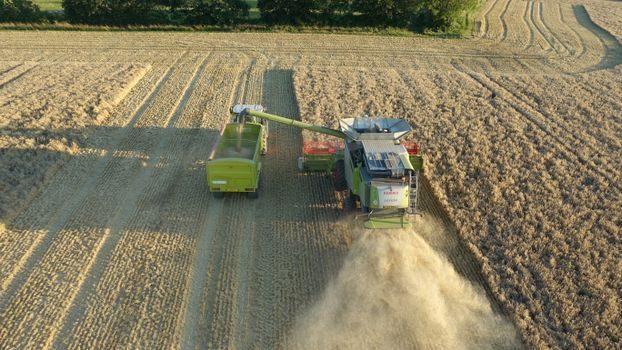
Side-by-side against four decision criteria drawn from current OEM data: (1) throughput band — centrifugal covers the 25–1200 tph spread seen on Mysilo steel grain legs [S2]; continuous-discharge chain units dominate the feed-mill TDTG range from small plants to several hundred tph [S6]; positive-discharge sits at the low-to-mid tph band but with very large bucket volume. (2) Material fit — centrifugal for granular and powder; continuous for lump, abrasive and hot up to roughly 250–300 °C with steel buckets; positive-discharge for hot clinker, gypsum, raw-meal and other slow-moving bulk solids. (3) Drive and casing — centrifugal uses a rubber belt, single head pulley, and an enclosed sheet-metal casing; continuous uses single or double strand chain and sprockets; positive-discharge uses two parallel chains with sprockets at both head and boot. (4) Cost and lead-time — centrifugal belt units are the cheapest and fastest to source; TDTG continuous-discharge units sit in the middle; positive-discharge casings and dual-chain drives are the most expensive and longest to deliver [S1][S2][S6].
For green-field feed or grain plants, the default pick is the centrifugal belt elevator in the 25–1200 tph band; for abrasive, hot or large-lump service the engineer pays a 20–40% premium for continuous-discharge chain hardware [S2][S6].
Use Cases: Grain, Feed, Sugar, Pellet, Cement
In commercial grain handling, the steel bucket elevator is the standard vertical conveyor on a receiving leg, with capacities scaling from on-farm 25 tph units to export-terminal 1200 tph legs, all sharing the same head-pulley and boot geometry [S2][S5]. The G&AS stainless-steel centrifugal unit is the typical pick for sugar, salt, flour and semolina plants where the spec calls for food-grade finish and wash-down [S1].
The TDTG-series bucket elevator is the workhorse in Chinese feed mills and wood-pellet plants, paired upstream with a pellet mill and rotary roller dryer, downstream with a counter-flow cooler and rotary screener — a complete skid line shipped in seaworthy packaging [S6]. Sudenga pairs its bucket elevators with hammer mills, roller mills (single, double, triple pair, up to 36 tph at 500 µm) and load-compensating roll-gap controls for commercial grain systems [S5].
For bulk-handling solids where the duty is abrasive or hot — clinker, limestone, alumina, raw-meal — the engineer normally moves from belt to chain and from centrifugal to continuous or positive-discharge, and specifies high-temperature grease in the head and boot bearings. A linear guide is a different component class (linear motion bearings) and is not part of the elevator mechanical train; engineers sometimes confuse the two because both involve a "guided" motion, but in the elevator the belt or chain is the carrying element, not a profiled linear rail.
Failure Modes, Limits and Mis-Spec Traps
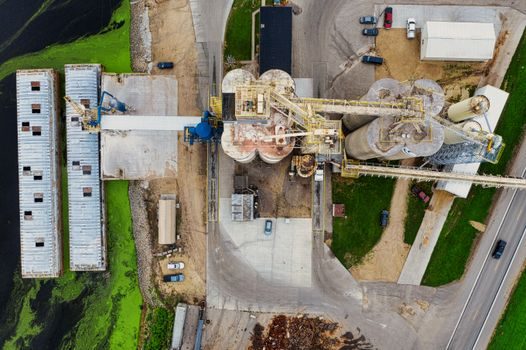
The most common sizing error is picking a centrifugal unit for a sluggish, lumpy or hot product: the bucket cannot throw the material clear of the head pulley and it falls back down the up-leg, causing back-loading, belt slip and eventual motor overload. The fix is to switch to continuous or positive-discharge, not just to upsize the motor [S3].
Other recurring traps: (1) ignoring bulk density — going from wheat at 0.75 t/m³ to cement at 1.5 t/m³ roughly halves volumetric capacity at the same bucket geometry; (2) ignoring temperature — above ~150 °C, PVC elevator belts fail and the spec must move to steel-cord belt or chain with high-temp buckets; (3) ignoring dust explosion class — sugar, flour and grain dust falls under ATEX/IECEx zone classification in EU plants and the elevator must be specified with explosion panels, rubber belt (non-sparking), and grounding brushes; (4) under-specifying the boot take-up — the boot is the wear point, and a 150–300 mm take-up travel is needed to compensate for chain or belt stretch over a 30–50 m lift [S1][S2][S6].
Bucket spacing and projection are also a noise and vibration source: too-close spacing on a high-speed centrifugal unit elevates noise above 85 dBA and forces acoustic enclosure spend, whereas a 1.5–2× bucket-projection spacing is the usual starting point for free-flowing grain.
Sourcing, Standards and Spec Discipline
European-built centrifugal units typically ship to ISO 5049 / DIN 15201 elevator-conveyor rules; for explosive-dust duty the OEM will quote ATEX 2014/34/EU conformity and IEC 60079-series enclosures on the drive; for North American grain duty the relevant references are NFPA 61 (agricultural dust), NFPA 68 (explosion venting) and CEMA (Conveyor Equipment Manufacturers Association) bucket-elevator design guidelines. Specifying these documents by name on the data sheet is the cleanest way to lock scope with the vendor [S1].
On the sourcing side, the TDTG-series from Liyang, Jiangsu is the default low-cost continuous-discharge option at 1-set MOQ and seaworthy export packing [S6]; Mysilo ships steel centrifugal grain legs across the 25–1200 tph band [S2]; G&AS builds custom stainless centrifugal food-grade elevators in smaller batch sizes [S1]; Sudenga supplies a complete grain-leg line with hammer-mill, roller-mill and load-compensating controls for North-American on-farm and commercial accounts [S5]. For a crossed-roller guide — another motion-control component, not an elevator part — see the encyclopedia entry.
A practical spec checklist before RFQ: capacity tph, lift height m, bulk density t/m³, particle size and lump dimension, material temperature, moisture and flowability, zone classification if dust-explosive, belt vs chain, discharge class, casing finish (mild steel painted, galvanised, or stainless 304/316), drive motor kW and IE3/IE4 efficiency, and take-up type.
Decision Logic and a Related Reference
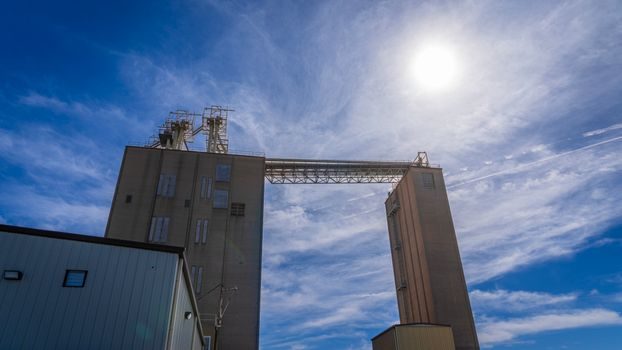
Use centrifugal belt when the product is free-flowing, dry, fine-to-granular, and below ~150 °C; switch to continuous-discharge chain when the product is lumpy, sluggish, or hot; switch to positive-discharge when the product is hot, dusty and slow-moving, even at the cost of a heavier head drive. Throughput drives bucket geometry, lift height drives belt or chain loop count, and duty class drives material and discharge type [S1][S2][S6].
Engineers sizing adjacent equipment can cross-check on overhead conveyor selection for horizontal and inclined in-plant distribution, or on overhead conveyor sourcing in 2026 for the OEM cluster map.