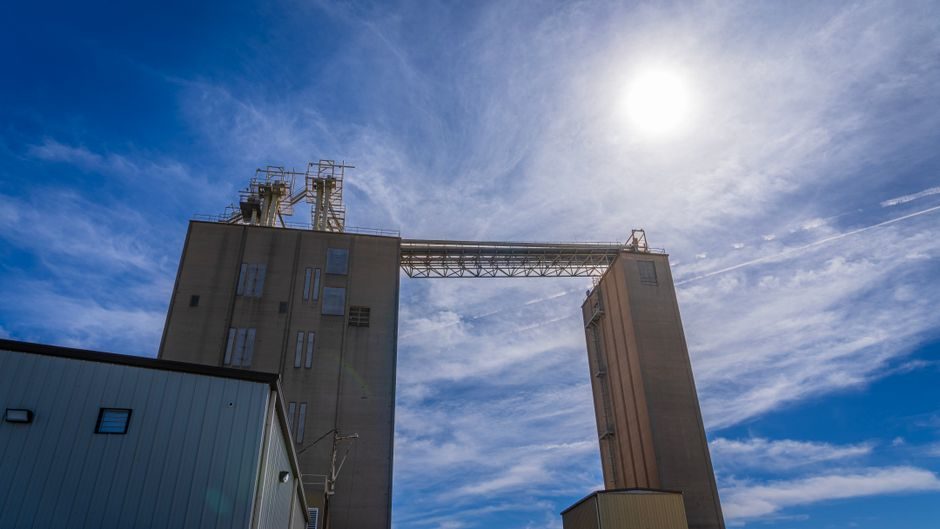
A bucket elevator is one of the most efficient ways to lift bulk material vertically, consisting of a series of buckets fixed to a belt or chain running between a foot pulley and a head pulley [S1]. The selection mistake most engineers make is starting with bucket shape or supplier catalogue and working backwards; the correct order is material properties, capacity, lift height, and environment, because each gate eliminates entire machine families before you ever look at a price sheet.
This article walks those four gates in sequence, lines up the three discharge styles against concrete decision criteria, and flags the spec data you must collect from a supplier before you sign a PO. For a parallel spec-first drill on a related vertical-lift problem, see this tower crane selection guide — the gate-based logic is identical even though the machine class is different.
Gate 1: Material Class and Flow Behaviour
Bulk density, particle size, moisture, abrasiveness, and temperature drive the first cut more than any other parameter. Dahan Machinery groups vertical bucket elevator designs by the material they handle and lists cement, clinker, fertiliser, grain, sand, and chemical powder as common duty classes, each with its own recommended bucket and belt/chain combination [S1]. Abrasive ores and clinker push the spec toward a steel-link chain with malleable or cast-iron buckets; food-grade grain pulls it toward a PVC or rubber belt with nylon or HDPE buckets.
Material temperature is a hard cut-off: standard rubber belt elevators are typically rated for ambient-to-around 80 °C material, and above that you must move to a steel chain or high-temp belt. Moisture and lump size together decide whether you can run a centrifugal-discharge unit at all — lumpy, sticky, or highly aerated material breaks the centrifugal separation at the head pulley and forces a continuous or positive-discharge design.
Gate 2: Capacity, Lift Height, and Casing
Required throughput (m³/h or t/h) at the design bulk density sets the belt/chain width and bucket pitch; lift height sets the casing length and the number of intermediate supports, plus the head pulley diameter (and therefore the required motor kW). Standard industrial units span roughly 5–600 t/h with lift heights from 4 m up to about 60 m on common belt/chain designs; anything taller moves into the bucket-elevator-on-tower territory usually handled with steel-cased high-capacity units [S1][S2].
Spaced-bucket continuous designs and positive-discharge units trade raw head-pulley speed for controlled discharge, which allows them to handle fragile, dusty, or hot material at the cost of lower m³/h per unit of casing width. Always request a duty factor (S.F.) curve from the supplier — gearboxes and bearings derate sharply above 8–10 starts/hour or above 40 °C ambient, and that derating is invisible on a one-line catalogue datasheet.
Gate 3: Discharge Type Comparison — Centrifugal vs Continuous vs Positive
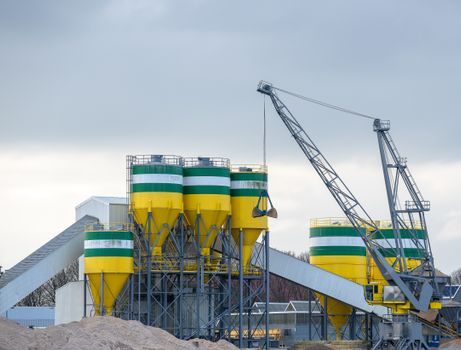
Three discharge families cover almost every industrial bucket-elevator spec, and the choice is set by Gate 1 and Gate 2, not by preference. The table below lines them up against the four criteria a process engineer actually weighs at the desk. [S1]
Centrifugal discharge uses a high head-pulley speed (typically 1.0–1.8 m/s belt speed) to throw material out of the bucket at the top, giving the highest capacity per casing width but only for free-flowing, non-sticky, fine-to-medium material with low dust tolerance [S1]. Continuous discharge runs the belt slowly (around 0.5–1.0 m/s) and tips the bucket over a snub pulley, so material slides out by gravity — that gives low breakage, gentler handling, and tolerates slightly lumpy or dusty material, but cuts capacity per metre of casing.
Positive-discharge (also called perfect-discharge) uses a pair of free-running rollers on the up-leg to tilt each bucket forward and empty it cleanly at the head pulley, which handles large lumps, hot material, and high-moisture product where centrifugal units simply fail. For context on the cross-machine selection logic used in this article, the same spec-first discipline appears in this mesh belt conveyor sizing breakdown, where the gates run speed, temperature, and product fragility before the belt family is even discussed.
Gate 4: Environment, Standards, and Supplier Vetting
ATEX classification for the elevator casing (zone 21/22 dust or zone 1/2 gas) and the gearbox duty (Ex d IIB or IIC) must be locked before quoting, not after. Bucket-elevator casings are sealed against dust spillage better than open-belt conveyors, but the bearings, take-up, and boot pulley still need a rated dust-cap or zone purge if the conveyed product is combustible; bearing and chain-supplier pages such as the Coimbatore-based RADIANT CHAIN & BEARING CENTRE list industrial bucket-elevator chains and sprockets as a stock line, but the explosion-protection certificate must be matched to the project hazardous-area drawing before the chain is ordered [S2].
Mechanically, the well-known engineering rule of thumb is that head-pulley diameter should be at least 20× the belt ply rating and that the backstop on the head shaft prevents reverse rotation on loaded casings — confirming both with the supplier's GA drawing avoids the classic "back-flow on power failure" failure mode. Wear-liner material (Ni-Hard, AR plate, or UHMW-PE on the boot) is a separate line item that extends service life 2–4× in abrasive service; a supplier that cannot quote liner grade and thickness is a red flag. For cross-reference on supplier vetting logic, see the chain conveyor supplier sourcing map which walks the same direct-OEM vs dealer question for an adjacent product class.
Common Failure Modes and What to Spec Against Them
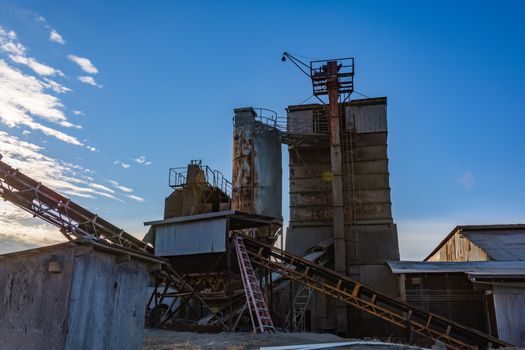
The four failure modes that eat bucket-elevator service budgets are belt/chain stretch, bucket back-flow on power loss, casing spillage at the boot, and explosive dust ignition. Belt/chain stretch is controlled by specifying a take-up travel of at least 1.5–2.0% of casing length and a casing access door at the boot to re-tension without dismantling the casing [S1]. Bucket back-flow is controlled by a certified backstop on the head shaft, not just a brake on the motor — brakes wear, backstops do not.
Casing spillage is the result of boot geometry, not bucket shape: a properly designed boot has a clean angle of repose curve, a tangential inlet, and an internal settling plate to de-aerate the material before the buckets pick it up. Dust ignition is controlled by specifying explosion panels sized per the cubic volume of the casing (a panel rated to NFPA 68 / ATEX 2014/34/EU dust-explosion principles) plus a bearing-temperature cut-out on the head and boot shafts. If your supplier's datasheet does not list these four items as standard or named options, escalate the technical review.
Quick Sourcing Checklist Before You Request a Quote
Trackable signals to watch over the next quarter: a measurable drift among Indian and Chinese OEM catalogues toward higher-head centrifugal units in the 100–400 t/h band, and growing availability of pre-engineered ATEX-rated steel-cased elevators with full bearing-temperature monitoring — both are visible on the Dahan and RADIANT type product pages and worth re-checking before finalising vendor selection [S1][S2]. For an adjacent material-handling spec map, this crawler crane sizing field guide uses the same gate-based walkthrough on a different machine class and is useful as a training template for junior engineers learning the spec-first method.
For component-level specifications, see pressure transmitter, and flow meter.