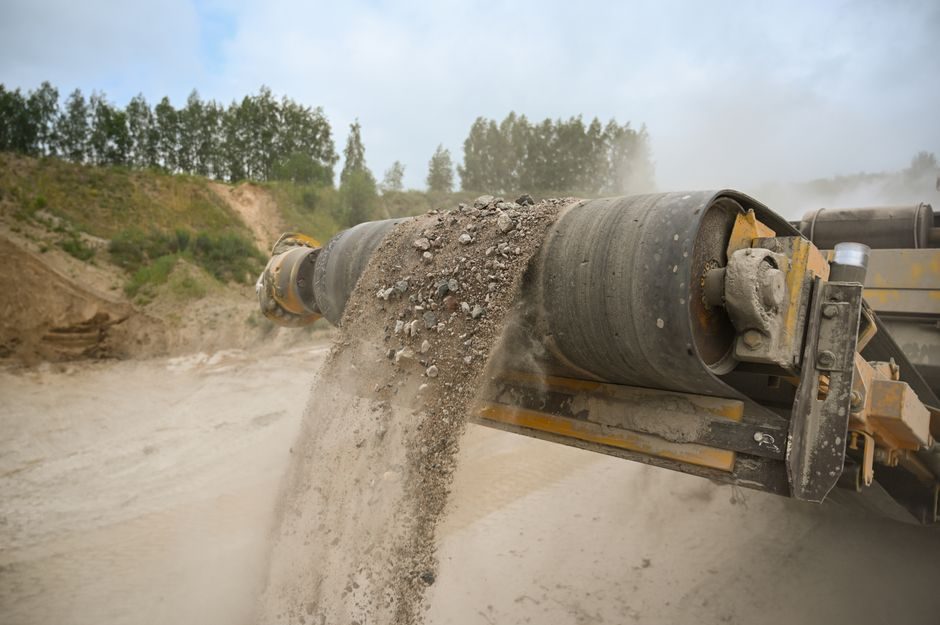
Overhead conveyor sourcing in mid-2026 routes through three distinct clusters: North American OEM Bridgeveyor with its C-250 stainless-steel line, Indian system integrators (Raj Conveyors, Advance Equipment Co.) handling turnkey factory builds, and a high-volume China tier on Made-in-China.com where overhead chain conveyor MOQ-1 m units list at US$480.00-680.00 per meter [S3][S6][S7].
DirectIndustry's overhead-conveyor-system vendor index lists 12 industrial manufacturers with combined application tags spanning transport (12), industrial handling (11), clothing/garment accumulation (9), wire harness (4) and automotive body-in-white (3) — useful as a coarse segmentation by end-market [S1]. The China tier further shows dispersion by province: Fujian-Xiamen working-overhead lines include a non-standard shot-blasting conveyor at US$6,500-20,000 per set (MOQ 1) [S5].
North American OEM Tier: Stainless and Wash-Down Builds
Bridgeveyor markets itself as the original North American manufacturer of the C-250 overhead conveyor line, with a dedicated stainless-steel product family targeted at food, beverage, pharmaceutical and wash-down environments requiring corrosion-resistant overhead conveyance [S3].
For specifiers in regulated industries — meat, dairy, ready-meal, pharma packaging — stainless overhead conveyors are commonly selected when daily wash-down, sanitizer exposure (chlorine, quat-amine, peroxy-acid) and 304/316L contact-surface compliance are written into the URS [S3]. The wash-down constraint typically rules out painted carbon-steel x458 chain and pushes selection toward lube-free polymer-bearing trolleys and stainless drive components.
India Tier: Turnkey System Integrators
Indian system integrators position themselves as full-scope conveyor companies — design, supply, installation — rather than catalog part vendors. Raj Conveyors (Hyderabad, +91 79978 66985) advertises conveyor-system design and installation across India [S6]; Advance Equipment Co. (Wagle Estate, Thane, established 1992) lists a portfolio of roller, belt, screw, slat, bucket elevators and transfer units for material handling [S9].
The Indian tier typically targets in-house plant projects (automotive tier-1s, white-goods assembly, FMCG) where the buyer wants a single point of accountability for layout, structural steel, drive sizing, EOT crane interfaces, and site commissioning — a scope that aligns naturally with the heavier end of the overhead conveyor product family. Selection logic for these integrators mirrors the path/pitch/drive decisions in the related overhead conveyor sizing and selection guide.
China Tier: MOQ, FOB Price Bands and Cluster Geography
The China cluster is best read off wholesale portals. On Made-in-China.com, overhead chain conveyor entries cluster in two MOQ bands: entry-level at 1 meter (Mujia Automation Technology Shanghai, US$480.00-680.00/m) and mid/heavy at 1-2 pieces from Shandong and Qingdao factories, with one Qingdao Ausense packing-equipment line quoted at US$50,000-100,450 per 2-meter MOQ-2 order [S7].
Cross-checking the same product family on Alibaba's custom-conveyor-chain directory returns 483 suppliers, with a top-tier vendor profile of US$10-50 million total revenue, 73.3% response rate, and an export mix spread across North America (11%), South America (11%) and Mid East (11%) — a useful signal that mid-volume overhead-chain OEM exporters exist outside the Made-in-China diamond-member filter [S8].
For sourcing engineers, the practical reading of these numbers: under US$700/meter buys light-duty painted-carbon-steel x348/x458 chain and trolleys with 30-50 kg per carrier payload, while US$50,000+ 2-meter line items track heavier enclosed-track or monorail power-and-free systems rated for automotive body-in-white overhead transfer.
Application Segmentation by End-Market
DirectIndustry's tag-frequency count is a workable proxy for where overhead conveyors actually ship. Top end-markets, with tag counts in brackets: garment/clothing accumulation (9), storage/warehouse systems (4), wire-harness assembly (4), automotive body-in-white (3), heavy-load industrial (3), and food-and-beverate (2) [S1].
Garment accumulation and wire-harness are the classic "power-and-free / enclosed-track light overhead" use cases — slow-moving carriers, frequent stop-and-hold, ergonomic workstation height. Automotive and heavy-load are the classic "monorail / chain-on-I-beam" use cases — continuous drive, high payload, often integrated with overhead bridge crane cells in body shops.
Food and beverage, despite the lower tag count, is a high-spec niche where stainless construction and sanitary design dominate the spec sheet — usually a Bridgeveyor-class product or a European x348 stainless build rather than a low-cost FOB-China x458 painted line.
Selection Criteria Comparison Across the Three Tiers
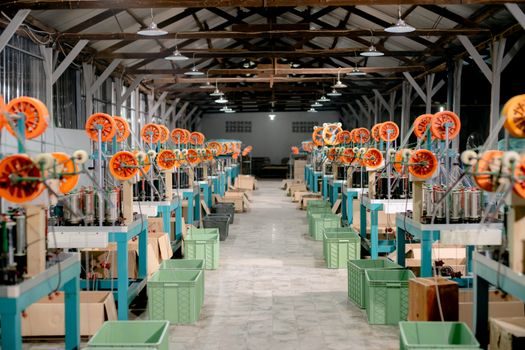
For a quick side-by-side read of the supplier landscape, the three tiers line up as follows. North American OEM (Bridgeveyor): high price/unit, stainless and wash-down, regulated-industry focus, 4-12 week typical lead, direct factory support [S3]. Indian integrator (Raj, Advance): mid price, painted carbon-steel default with stainless options, full EPC scope including civil/structural, 8-16 week lead with site install [S6][S9]. China OEM (Made-in-China, Alibaba): low-to-mid FOB price, MOQ 1-2 m or 1-2 pieces, port-only delivery with no install, 4-8 week ex-works lead, diamond-member/audit-trail supplier verification available [S7][S8].
Decision logic is straightforward: choose China OEM when unit cost and short lead dominate, when the buyer can self-install and integrate with existing overhead conveyor structures, and when the sanitary/regulated spec is light. Choose Indian integrator when full EPC scope and one-point accountability matter, and when budget rules out North American OEM. Choose North American OEM when the spec sheet carries 304/316L stainless, daily wash-down, USDA/FDA contact-surface language, or when local service coverage is mandatory.
Failure Modes and Sourcing Constraints
Three common procurement pitfalls show up across all three tiers. First, MOQ 1-piece or 1-meter pricing on China portals is the entry SKU — production-run pricing at 50+ meters typically drops 10-25% but requires a separate RFQ and tooling deposit [S7]. Second, "manufacturer/trading company" hybrid suppliers on Made-in-China can flip between factory-direct and resold units between RFQs; the diamond-member/audited-supplier flags are the only consistent signal [S7]. Third, the conveyor chain itself — the wear part — is rated by working load, not breaking load, and a 30 kg per-carrier payload rated chain is not a 100 kg per-carrier chain regardless of catalog photo.
A practical cross-check on the chain-conveyor supplier ecosystem is mapped in the related chain conveyor suppliers 2026 sourcing map, which expands the directory approach used here to the wider chain-conveyor category.
Two trackable signals for the next sourcing cycle: the Made-in-China.com diamond-member/audited-supplier population for overhead chain conveyor lines, and the publication of any new Bridgeveyor C-250 variant datasheet — both feed directly into the engineering decision tree of belt conveyor vs overhead chain vs monorail for a given duty cycle.