
E-commerce fulfillment centers moved a record share of small-parcel volume in 2025, and bucket elevators are the vertical-lift workhorses that bridge mezzanine sortation, returns handling, and outbound dispatch towers.
Selection in this segment is governed by parcel size, throughput in parcels per hour, lift height between 4 and 18 m, and the need for gentle handling of polybagged or boxed items, with centrifugal discharge preferred below 4,000 pph and continuous-flow designs specified above that line, paired with a VFD-driven helical-bevel gearbox for soft start.
What a Bucket Elevator Does in a Parcel Hub
A bucket elevator is a vertical bulk material handling system that uses a series of buckets fixed to a rotating belt or chain to scoop product at a boot section, lift it inside an enclosed casing, and discharge it at the head [S7]. In an e-commerce context the same machine is re-tasked to move loose parcels, totes, polybags, and return-stream items between floors without consuming the aisle footprint of an inclined belt. Two discharge families dominate: centrifugal discharge elevators, where buckets mounted on belt or chain throw material out at the head pulley, and continuous-flow elevators, where buckets are spaced on overlapping chains and discharge by gravity through a snub sprocket [S1]. The bucket elevator encyclopedia entry details how the bucket profile and head-pulley speed are matched to the product's bulk density and lump size.
For parcel work the "bulk density" is set by parcel mass and the bucket fill ratio, not by mineral weight. A typical e-commerce bucket elevator specification sheet asks for type of material handled, density, capacity in cubic feet per hour, discharge height, ambient temperature range, and duty hours [S1]. The Floveyor guide and Ryson engineering checklist both require the same seven inputs: lift height and center distances, bucket and belt materials, drive horsepower, RPM, loading hopper geometry, safety devices, and foundation loads [S2][S7].
Throughput Gates: Parcel Mass, Footprint, and pph Targets
Capacity in a fulfillment bucket elevator is set by the smallest of three gates: the bucket volumetric capacity in cubic feet per hour, the belt or chain linear speed, and the infeed conveyor's parcels-per-hour ceiling [S3]. Standard CBE-class models span 500 BPH (13 MTPH) up to 20,000 BPH (544 MTPH), with intermediate steps at 1,000, 5,000, 7,500, 10,000, 12,000, and 15,000 BPH [S4]. For non-bulk parcel work, the rule of thumb is one bucket per parcel in low-speed gravity discharge and two to three parcels per bucket in high-speed centrifugal discharge, but the supplier data sheet must be the binding number [S1].
Selection matrices, like Table 1 in IS 7167 (1974), rank materials by bulk density, lump size, abrasiveness, and moisture, and pair each row with a recommended bucket style, spacing, and belt speed [S5]. The same logic transfers to parcels: the "material" is a defined SKU mix with a target mass distribution, a defined maximum parcel dimension equal to the bucket face width, and a fill percentage of 70-85% for polybags and 50-70% for rigid cartons to avoid spillage at the head pulley [S5][S7]. Engineers should refuse any selection sheet that omits bucket spacing, belt speed, and percentage filling, since those three numbers alone fix the throughput claim.
Drive and Control Package for Modern Fulfillment Sites
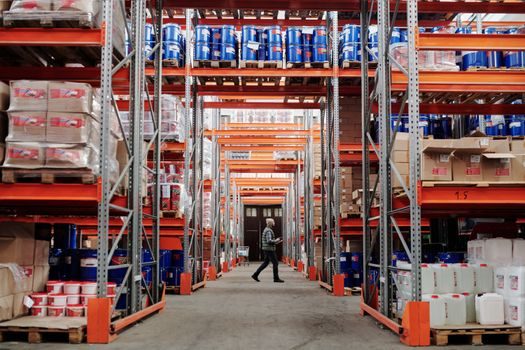
Modern parcel-hub bucket elevators are paired with a VFD-driven helical-bevel or right-angle shaft reducer, a shaft-mounted backstop, and a belt-misalignment or speed sensor wired into the conveyor PLC [S2]. The PLC monitors zero-speed, belt slip, bearing temperature, and head-pulley alignment, and the standard data sheet lists drive package details including motor horsepower, gearbox ratio, and RPM as line items [S2]. For a 12 m lift at 1,500 pph a 3.0-5.5 kW motor is typical, while a 20,000 BPH unit at full capacity pushes into the 15-22 kW band [S4].
Control integration is where most projects fall down. The PLC coordinating the bucket elevator's VFD, safety circuit, and upstream sorter must share a common fault register so a belt-slip event can hold the infeed conveyor and prevent backlogging [S2]. Engineers familiar with PLC integration know that the elevator's safety devices (zero-speed, belt-misalignment, bearing temp) are usually wired as 24 VDC dry contacts into a safety relay, not as analog signals, so the PLC program can treat them as discrete inputs with a single 100 ms debounce.
Materials, Sanitation, and Static Control
Bucket material selection has moved decisively away from mild steel in any parcel zone that touches food-grade, pharmaceutical, or direct-to-consumer returns. Injection-molded HDPE, polyurethane, and nylon buckets are now specified for grain, food, and gentle-handling duty, while pressed steel and ductile iron remain the default for abrasive minerals [S6]. For e-commerce, the practical rule is: specify FDA-grade polyurethane or HDPE for any bucket that touches a food or cosmetics SKU, and add a static-dissipative carbon-loaded belt for any line that handles powders, polybagged electronics, or paper-wrapped apparel where tribocharging is a fire risk [S6][S7].
Corrosion and sanitation are coupled. Stainless 304 buckets, UHMW-lined casings, and continuous-welded seams survive daily washdown in grocery-fulfillment cells, but the same spec on a dry-goods apparel line is wasted capital [S7]. The Martin Sprocket selection tables and IS 7167 (1974) both highlight material moisture content and environmental temperature range as required data sheet fields, because both numbers fix whether standard paint, galvanizing, or full stainless is needed [S3][S5].
Safety Devices, Foundation, and Layout
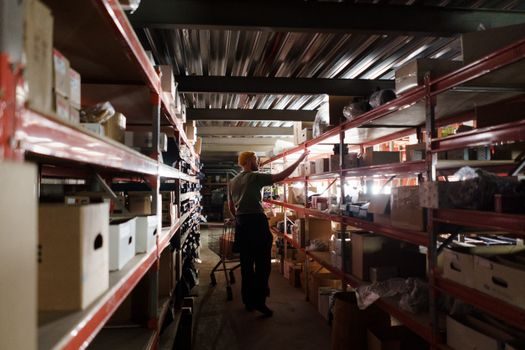
Bucket elevators in a staffed fulfillment zone are typically guarded to ISO 13849 PLd with a top-head anti-runback sensor, boot-level take-up switch, belt-misalignment limit on both sides, and a centrifugal over-speed trip on the head pulley [S2]. The Ryson engineering checklist lists seven layout and spec items: elevator dimensions and lift height, material specs, drive system details, loading and discharge arrangements, safety device specs, capacity and speed ratings, and foundation and support structure requirements [S2]. Any of those missing on a submittal is grounds for rejection at the engineering review stage.
Layout matters as much as the spec. The bucket elevator should sit inside a fenced machine cell with at least 600 mm clearance on the drive side for motor and gearbox service, and the discharge chute angle should sit between 45 and 60 degrees to keep parcels from pooling on the head pulley transition [S2][S7]. Foundations for a 20,000 BPH unit at 18 m lift typically require a 1.0-1.5 m deep reinforced pad with vibration isolators, and the supplier will not warrant the gearbox bearings if the foundation stiffness drops below roughly 50 MPa [S2]. Engineers who spec a bucket elevator against a standard mezzanine slab without confirming the foundation report are accepting an avoidable bearing-failure risk.
Comparison of the Three Discharge Families for Parcel Duty
Centrifugal discharge elevators run at higher belt speeds (typically 1.0-1.5 m/s) and throw material out of the bucket by centrifugal force, which suits free-flowing parcels and totes but damages fragile or open-top loads [S1][S7]. Continuous-flow, or "perfect" discharge, elevators run slower (0.5-0.8 m/s), use overlapping buckets on chain, and gravity-discharge at the head snub, which is the right choice for fragile, oriented, or high-value parcels [S1]. Positive-displacement, en-masse, or flight elevators handle the slowest, most aggressive materials, but they are over-specified for almost every e-commerce use case and rarely win the ROI math in a parcel hub.
On four decision criteria for parcel hubs: (1) Throughput ceiling, centrifugal typically caps near 4,000 pph in parcel sizes, continuous-flow scales to 20,000 pph and beyond, positive-displacement stays below 2,000 pph and is rarely economic. (2) Parcel handling gentleness, continuous-flow scores highest because of gravity discharge and lower tip speed, centrifugal scores lowest for open or fragile items. (3) Capital cost per pph, centrifugal is the cheapest per unit of capacity, positive-displacement the most expensive because of the heavier chain and casing. (4) Maintenance burden, centrifugal belt elevators are the simplest to service, continuous-flow chain elevators need periodic chain elongation checks, and positive-displacement units need the most frequent bearing and flight inspections [S1][S3][S7]. The procurement decision in 2025-2026 typically lands on continuous-flow for hubs above 4,000 pph and centrifugal for returns, mezzanine lift, and lower-volume cells [S6][S8].
Specification Checklist Before Release
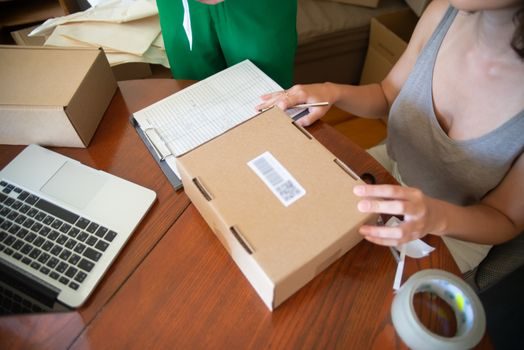
A release-ready e-commerce bucket elevator spec carries ten items: capacity in parcels per hour, lift height in meters, bucket material (HDPE, polyurethane, or stainless 304), belt or chain type with static-dissipative rating where required, drive motor kW and gearbox ratio, VFD with soft-start ramp, safety device list mapped to ISO 13849 PLd, loading hopper and discharge chute geometry, foundation load report, and ambient temperature plus washdown rating [S1][S2][S7]. Any vendor quote missing more than two of those should be returned for revision before the layout review.
Two trackable signals from the 2025-2026 sourcing cycle: BEUMER Group is actively marketing bucket elevator systems as a vertical-lift module for CEP (Courier, Express, Parcel) and e-commerce sortation, so European fulfillment integrators can shortlist it as a reference design [S8]. Bucket elevator buckets themselves represented a USD 310.8 million segment in 2025, roughly 18.5% of the global bucket elevator market by component value, with engineered profiles and gentler materials gaining share at the expense of pressed steel [S6]. Engineers writing the next spec should lock the throughput gate in pph, not in MTPH, and require the supplier to map their parcel mix onto the IS 7167 (1974) selection table before accepting a capacity claim.
Spec-level background on the components involved: pressure transmitter.
This topic is covered further in Magnetic Drive Pump Sizing and Selection Guide: Solids, Temperature, and Coupling Gates.