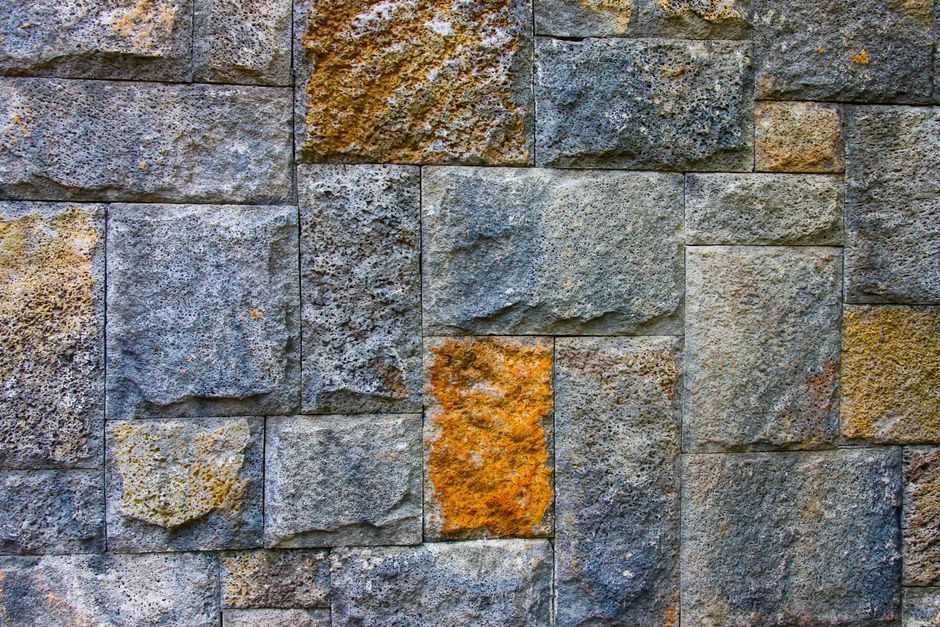
Granite, travertine, marble and onyx remain the four dominant building-stone categories in 2026, with full-bed (≈100 mm) cladding and thin stone veneer (≈20–30 mm) as the two install formats buyers must price separately [S2][S4].
The category is fragmented regionally: Iranian quarries supply the bulk of travertine and onyx to the Middle East and South Asia, U.S. Pennsylvania and the Appalachian belt supply the North-American full-bed/veneer market, and Chinese and Indian quarries anchor the global granite trade [S2][S4]. Buyers should anchor any spec on material, format, finish and certification — not on the cheapest per-tonne quote.
Material bands: granite, travertine, marble, onyx
Granite is the hardest of the four — Mohs 6–7, density ~2.65–2.75 g/cm³ — and is the default pick for high-traffic flooring, exterior cladding and curbing where abrasion resistance dominates the spec [S2].
Travertine is a sedimentary calcite (Mohs ~3–4, density ~2.4–2.5 g/cm³) with a characteristic porous structure; it is sold unfilled, filled, or polished and is most often specified for wall cladding, pool decks and Mediterranean-style façades. Iran is the single largest travertine source, and the bulk of export-grade blocks ship through Isfahan and Azarshahr [S2].
Marble (metamorphic calcite, Mohs 3–5) and onyx (banded calcite/aragonite, Mohs ~3, semi-translucent) sit at the decorative end of the trade. Onyx is sold in slabs that are back-lit and priced at a premium because of low quarry yield; marble is used for interior flooring, stair treads, columns and sculpture, and is sensitive to acid-rain and acidic cleaners [S2].
A quick Mohs/density comparison is the first filter on any 2026 RFQ:
Format: full-bed vs thin stone veneer
Full-bed (traditional) building stone is the structural-thickness product — typically 75–100 mm in the U.S. trade, sometimes 100–150 mm in Middle-East specifications — and requires a concrete or masonry foundation to carry its dead load, which runs ~150–270 kg/m² for granite and ~120–180 kg/m² for travertine [S4].
Thin stone veneer is cut to 20–30 mm nominal thickness and is adhered to a substrate (cement board, masonry, or steel-stud with lath) rather than built up structurally; this is the "at a fraction of the cost" line on most U.S. vendor catalogues and is now the default for residential re-siding and light-commercial interiors [S4]. Dead load drops to ~50–80 kg/m², and a skilled crew can install 15–25 m²/day of veneer versus 4–6 m²/day of full-bed.
Two consequences for the 2026 spec: (1) full-bed should only be chosen where the architecture is structural-stone or where local code still demands it (parts of the U.S. Northeast, Saudi/GCC heritage districts); (2) veneer is the only realistic format on light-gauge steel stud, on high-rise façades above ~30 m, and on tilt-up concrete. Buyers comparing line items must convert to "installed cost per m²" — quarry price is roughly 1.5–2.5× higher per m² for full-bed, but the install labour can swing the final number 3–5×.
Finish, edge and dimensional standards
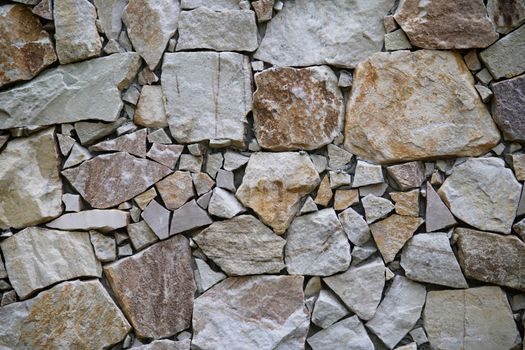
The five stock finishes in 2026 are polished (granite, marble), honed (marble, travertine), brushed/tumbled, sand-blasted and natural-cleft (slate, quartzite) [S2][S4]. Polished granite/marble deliver the highest specular reflectance but the lowest slip resistance — R11 or wet-rated pendulum values are rarely published, so commercial flooring specs should request a pendulum test report (UK EN 14231 / ASTM E303) per lot.
Dimensional standards worth naming: ASTM C615 (granite dimension stone), ASTM C1527 (limestone/ travertine dimension stone), ASTM C503 (marble dimension stone, exterior/interior), and EN 1467/1468 for rough blocks and slabs. Most U.S. distributors ship to nominal tolerances of ±2 mm on cut-to-size pieces under 600 mm and ±3 mm on pieces up to 1200 mm [S4].
Cornices, fireplace surrounds, fountain bowls and carved inscriptions are quoted as custom items with a separate engineering drawing, and the lead time on a custom cornice can run 6–10 weeks versus 2–3 weeks on stock slabs [S2].
Cost levers buyers actually control
Five levers move the 2026 quote more than the headline material choice: [S1]
1. <b>Format</b> — full-bed vs veneer. The single biggest swing; veneer typically halves the installed cost on a like-for-like wall.
2. <b>Stock vs custom</b> — stock 600×600 mm tiles in 6 stock colours clear in 1–2 weeks; a non-stock quarry run is 6–12 weeks plus a minimum order quantity that often hits 200–500 m².
3. <b>Finish</b> — polished is cheapest because it is a default line; honed, brushed and tumbled add a per-m² conversion fee. Sand-blasted and bush-hammered run highest because of the additional CNC time.
4. <b>Thickness tolerance</b> — calibrated (machine-trued to ±1 mm) tiles cost more than "tolerance grade" tiles but lay faster and use less adhesive; on a 1000 m² floor the labour saving typically beats the premium.
5. <b>Container packing</b> — stone ships by 20'/40' container; a 20' container holds ~22–25 tonnes of marble slab or ~18–20 tonnes of granite, and any requirement to re-crate or to use A-frame racks pushes the per-tonne landed cost up sharply. Most 2026 e-commerce stone shops publish container-load pricing and updated FOB prices to take this out of the buyer's hands [S2].
Buyers sourcing adjacent materials can use the same per-tonne/container discipline — see how it is done on industrial solvents and synthetic resins — the format-vs-finish trade and the container-loading constraint are conceptually identical.
Quality checks, sourcing map and standards

Three lot-level checks belong on every 2026 purchase order: (a) a quarry/source declaration by name and region — the same way a pressure transmitter PO states the HART/Foundation Fieldbus protocol, a stone PO states the quarry, the bed direction and the block number; (b) a Type A certification that the material meets the relevant ASTM C-series or EN 1467/1468 standard; (c) photos of the actual crates or bundles before container loading, plus a packaging list tied to crate numbers. [S2]
Sourcing reality by region: Iran (Isfahan, Azarshahr, Mahallat) is the dominant travertine exporter and a major onyx source, with most e-commerce shops now publishing updated FOB prices in USD/m² on their product pages [S2]. The U.S. Appalachian belt (Pennsylvania, West Virginia, New York) supplies the domestic full-bed and thin-veneer market for landscaping and structural applications, with delivery typically by flatbed rather than container [S4]. China and India anchor global granite supply; India additionally supplies a large share of the world's polished-slab and cut-to-size tile capacity.
For a one-page selection rubric in 2026, the four-way decision is straightforward: pick <b>granite</b> for any exterior, high-traffic or acid-exposed surface; <b>travertine</b> for warm-tone walls, pool decks and Mediterranean façades where the porous texture is the design point; <b>marble</b> for interior floors, stairs and columns where acid exposure is controlled; <b>onyx</b> only for back-lit feature walls, bars and reception desks where the buyer is prepared to pay the quarry-yield premium. The same installation discipline (substrate, expansion joint, sealant, slip rating) is the larger hidden cost driver and should be priced before the stone is ordered.
One trackable signal for the rest of 2026: U.S. Pennsylvania and West-Virginia thin-veneer producers continue to push lead times down by holding stock-veneer palettes in 6–8 colours at 20 mm nominal — a useful hedge against container delays out of the Middle East for any project that can be specced to a stock palette [S4]. A second signal: more Iranian exporters are publishing live USD/m² prices on their own e-commerce sites, which is slowly closing the information gap that used to favour trading-houses [S2].
For component-level specifications, see building stone, and linear guide.