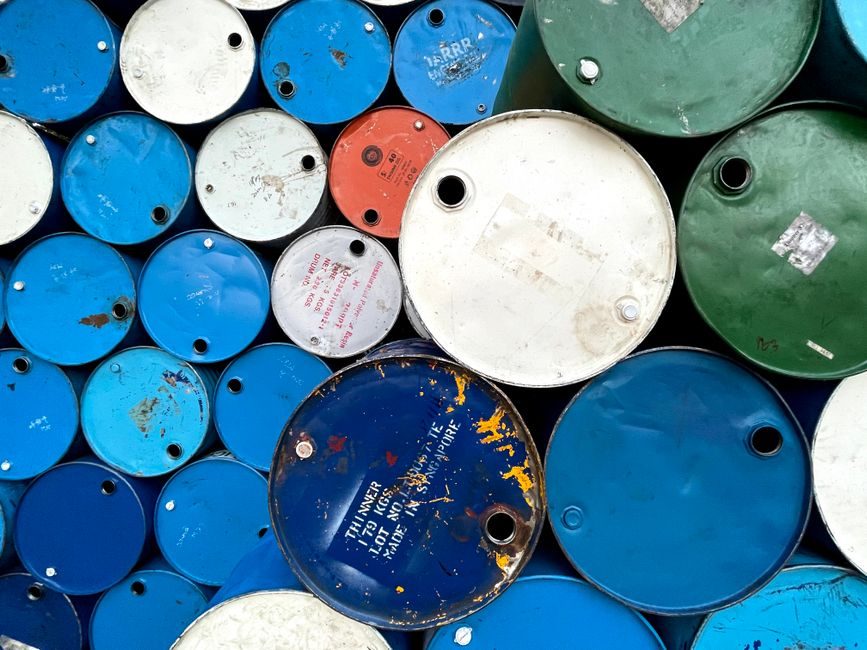
Industrial solvent procurement in 2026 runs on two parallel price curves: a petrochemical track where acetone, toluene, methyl ethyl ketone, ethyl acetate and isopropyl alcohol move with crude and propylene spreads, and a bio-based track where ethyl lactate, methyl-L-lactate and food-grade lactic acid are quoted by Chinese specialty makers such as Shenzhen Esun Industrial on purity plus order volume [S1].
The cost drivers a buyer can actually move are grade (technical, USP, food, electronic), purity spec, packaging (200 kg drum vs 1000 kg IBC vs ISO tank), and Incoterm — not the headline barrel price, which is set by feedstock.
Cost structure: feedstock, grade and logistics as the three real levers
Feedstock remains the dominant variable: petrochemical solvents inherit the propylene-naphtha cracking margin, so a $10/bbl move in Brent translates into roughly a 3–5 % move in domestic acetone or MEK ex-works quotes within a quarter. Bio-based solvents sidestep that volatility but carry higher fixed conversion cost — ethyl lactate and methyl-L-lactate are sold against CAS numbers 97-64-3 and 27871-49-4 respectively, with separate food-grade and feed-grade price tracks published per listing on Chinese B2B catalogs [S1].
Grade is the second lever and the easiest to overspec. Technical grade (≥99 %) is the working default for paints, coatings and industrial cleaning. Electronic grade solvents used in semiconductor wet benches add another premium tier driven by sub-ppb metal specification. For coating formulation, the industrial solvent reference entry lays out the typical purity tier ladder and the test methods that separate them.
Major solvent families and where each one fits
Aromatics (toluene, xylene) remain the workhorses for industrial coatings, thinners and extraction; they are inexpensive per litre but carry significant VOC and worker-exposure load. Oxygenated solvents — acetone, MEK, ethyl acetate, butyl acetate — dominate nitrocellulose, PU and epoxy resin thinning. Alcohols (methanol, ethanol, IPA) cover cleaning, cosmetics and pharma extraction. Glycol ethers and acetates handle water-based coating coalescence. Green esters (ethyl lactate, methyl-L-lactate) target coating and cleaning applications where VOC and biodegradability are specified [S1]. The same ester and ketone pool underlies solvent-based industrial adhesive formulation for packaging, footwear and laminates, where open time, polarity and bond-strength retention drive selection.
Selection should be driven by evaporation rate (n-BuAc ≈ 1.0 reference), Kauri-butanol value, surface tension, flash point and whether the substrate tolerates water-miscible solvent. For seal and gasket shops choosing which solvent to wipe with, the industrial rubber selection criteria guide covers which polymer families tolerate which solvent class without swelling or extraction loss.
Comparison: petrochemical vs bio-based solvents on decision criteria

On the four criteria a buyer actually weighs, the split is sharp. Cost per kilo favours petrochemical by a wide margin for acetone, MEK and toluene at 2026 mid-year quotes. VOC regulatory pressure, biodegradability and food-contact eligibility favour ethyl lactate and methyl-L-lactate, where Shenzhen Esun Industrial lists both food-grade and feed-grade lactic acid (CAS 79-33-4) plus ethyl lactate (97-64-3) and methyl-L-lactate (27871-49-4) as a coordinated green-solvent product line [S1]. Carbon-footprint disclosure and ESG reporting score cleanly for bio-based. Supply continuity in disruption favours the petrochemical majors for sheer volume redundancy.
For price-sensitive bulk cleaning, degreasing and paint thinning where ESG reporting is not binding, petrochemical solvents remain the rational default. For food processing, pharma extraction, cosmetics, and any application feeding an EU or US export line, green esters are typically specified regardless of the per-kilo penalty.
Specifications, test methods and what to put on the datasheet
A defensible solvent datasheet states purity (GC area %), water content (Karl Fischer, ppm), acidity (mg KOH/g), residue on evaporation (mg/100 ml), colour (APHA/Pt-Co), density at 20 °C, and the relevant grade standard (technical, ACS, USP, FCC, electronic). For food-contact applications, the regulatory reference is regional — FCC for the US, EU 1935/2004 for Europe, GB 4806.x for China. For pharmaceutical residual solvents, the ICH Q3C class (1/2/3) sets the maximum permitted daily exposure and effectively dictates which solvents can stay in a process stream. [S1]
Storage and handling lines on the datasheet are non-negotiable for safety review: flash point (closed cup), auto-ignition temperature, vapour pressure, and the recommended grounding/bonding for Class IB flammables. These are the values fire-protection review and the HSE audit will check first; missing any of them is the most common reason a new solvent source is rejected during PPAP or incoming-qualification gate. Solvent-store and drum-bay layouts are typically also reviewed for LEL detection tied to an industrial buzzer and strobe interlock, which is checked in the same HSE audit walk-through.
Packaging, logistics and the hidden 8–15 % swing
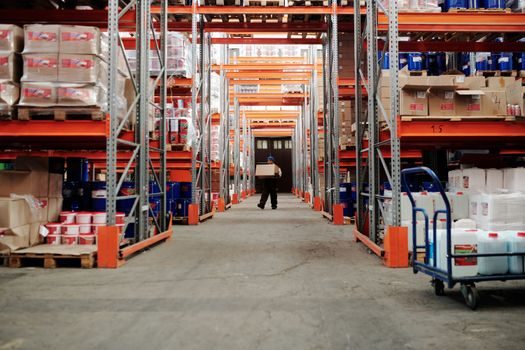
Packaging is where 8–15 % of delivered cost hides. Solvent pricing is usually quoted ex-works or FOB in 200 kg steel drums, but the same molecule in a 1000 kg IBC or a 21-tonne ISO tank lands at a substantially lower per-kilo rate, even after the IBC/tank cleaning or return-logistics fee. Smaller buyers (under 5 t/month) rarely have the volume to justify ISO tank and should benchmark drum vs IBC on total cost including drum-deposit and disposal. Reusable IBC and ISO tank return-lot verification is increasingly documented with industrial borescope inspection of liner and weld seams, and a passing inspection report is now routine on food-grade and pharma-grade deliveries. [S2]
Incoterm choice shifts risk more than price. EXW leaves the buyer arranging hazardous-materials transport, dangerous-goods declaration, and bonded-warehouse handling — work that an experienced solvent distributor absorbs at a known margin under DAP or DDP. For first-time imports, a Chinese B2B-listed supplier such as Shenzhen Esun Industrial with verified individual-proprietor status and direct CAS-number listings offers the shortest quoting path [S1].
Limits, failure modes and what the price does not tell you
A low headline per-kilo price can mask real cost. Acetone and MEK at aggressive spot prices frequently have water content drifting above 0.5 %, which destroys a nitrocellulose lacquer and costs ten times the solvent saving in scrap. Ethyl acetate on the cheap end often has 1–2 % ethanol carry-over that destabilises moisture-sensitive PU systems. The same risk applies to recycled or reclaimed solvents, which are common at the bottom of the spot market. [S3]
Supply risk is also grade-dependent: food-grade and USP-grade lactic acid supply tightened several times in recent years when downstream demand for biodegradable polymers and pharma-grade salts spiked. Buyers who consolidated onto a single source have been hit harder than those running dual-source qualification. For a comparable view on how grade consolidation hits cost in adjacent chemistries, the POM price and cost guide walks through the resin-grade premium ladder in similar terms.
Trackable signals to watch over the next quarter: (1) any movement in propylene spot against Brent, which propagates into acetone/MEK within 4–8 weeks; (2) food-grade vs technical-grade lactic acid spread on Chinese B2B portals, which flags bio-polymer pull on the same feedstock; (3) ISO-tank availability on the China–EU and China–US lanes, which has been the binding constraint for bulk-volume bio-ester imports in 2025–2026 [S1].