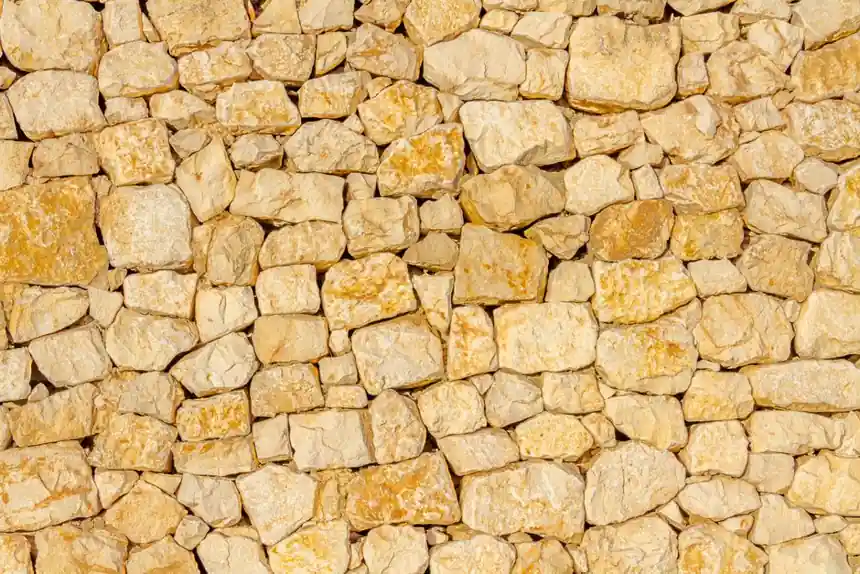
Natural stone material costs $35–$50 per square foot, while skilled masonry installation adds $20–$30 per square foot [S5].
The applicable budget depends on slab or veneer format, nominal thickness, quarry-to-site distance, fabrication, finish and reinforcement, rather than a single square-meter price.
Stone Price Basis and Unit Conversion
Natural stone slabs and tiles are quarried, then cut and finished, and their material prices range from $35–$50 per square foot, with quarrying in distant geographic areas sometimes increasing transportation costs [S5]. One square foot equals 0.092903 square meters, while one square meter equals 10.764 square feet, making a $35–$50/ft² material range equivalent to approximately $377–$538/m² [S5][S4].
That is a broad screening range, not a bid. A buyer also needs the stone type, dimensions, thickness, finish, wall system and delivery address to establish a defensible price.
For comparison, manufactured stone veneer uses lightweight concrete cast in molds and colored to imitate natural stone. Its material range is $8–$12.50/ft², roughly $86–$135/m², which places it below the $377–$538/m² natural-stone material benchmark before installation [S5].
Thickness Changes Material Quantity and Handling
A 6-inch concrete slab uses 50% more concrete than a 4-inch slab of identical footprint, demonstrating the direct quantity effect of thickness in cast construction [S4]. The same principle applies to stone: larger slab thickness raises quarry yield requirements, cutting time, weight, handling effort and support requirements, although a stone project needs a manufacturer’s fabrication schedule rather than a generic cubic-yard conversion.
Concrete data provides a useful quantity check for flooring and paving work adjacent to stone installation. Ready-mix concrete was priced at $130–$190/yd³ in the broader 2026 estimating data, but this is a concrete benchmark and must not be applied directly to quarried stone [S3].
Finish Changes Labor, Yield and Appearance
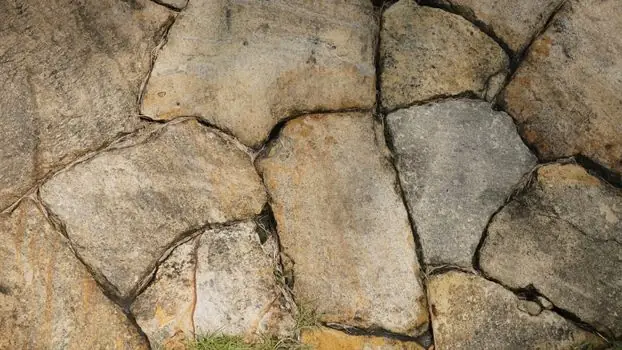
Finish selection affects fabrication time, material yield, installation labor and maintenance.
Concrete finishing data demonstrates the scale of the finish premium in adjacent flatwork: a plain broom finish is the low-cost option, while stamped or decorative work pushes installed pricing upward, with one estimate placing decorative or stamped slabs at $15–$30/ft² [S1]. Another patio guide gives $9–$16.25/ft² for stamped concrete [S7]. These concrete figures support the conclusion that finish labor can exceed the apparent material-price difference, but they are not stone quotations.
For stone, specify the finish by appearance, texture, dimensional tolerance and exposure condition. A saw-cut face, split face, honed surface and polished surface involve different processing sequences. Polish also changes reflection, slip behavior and cleaning requirements. The procurement document should separate factory finish, fabrication, installation, joint treatment, sealant and maintenance rather than accepting one unqualified “finish” allowance.
Natural Stone, Thin Veneer and Manufactured Veneer Compared
Natural stone costs $35–$50/ft² for materials, thin stone veneer averages $12–$30/ft² for materials and $20–$50/ft² installed, and manufactured stone veneer materials cost $8–$12.50/ft² [S5][S8]. On material price, thin veneer is the middle option and manufactured veneer is the lowest.
Full natural stone is appropriate when quarried material, long-term appearance and dimensional character justify its labor and logistics. Thin natural stone veneer is a middle path where the exposed face remains stone but panel weight must be controlled. Manufactured veneer fits projects seeking stone-like appearance with standardized dimensions and lower handling effort. None should be selected from price per square meter alone, because substrate, anchorage, fabrication waste and maintenance remain part of the decision.
Installed Cost Drivers Beyond Purchase Price
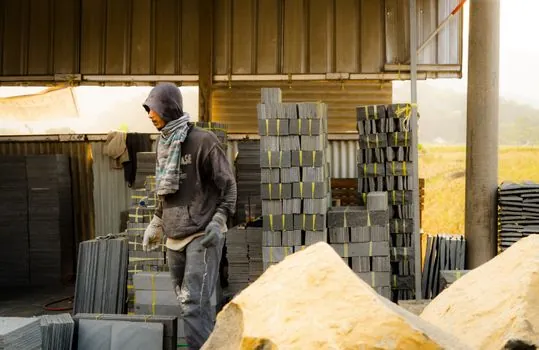
Quarrying in distant geographic areas can increase the transportation costs included in the $35–$50/ft² natural-stone material range [S5]. Full stone installation also requires cutting, shaping, special tools and support equipment, which supports a separate $20–$30/ft² masonry allowance [S5].
Thin stone veneer averages $20–$50/ft² installed, while local stone-veneer crews produce an installed benchmark of $32–$45/ft² [S8][S6]. The spread reflects differences in material selection, fabrication, crew rates, overhead and site conditions.
Total cost of ownership must include installation, maintenance and replacement risk. Full natural stone can require monthly cleaning, annual deep cleaning and sealing every 1–3 years depending on porosity [S5]. Manufactured veneer has lower maintenance intensity, but exterior units may still require sealing [S5]. For heavy-traffic applications, test stone abrasion resistance for busy lobbies before accepting a finish without checking wear performance.
Quotation Checklist and Price Validation
A stone quote should identify the material, quarry or supplier, slab dimensions, nominal thickness, face finish, edge treatment, joint pattern, panel weight, anchorage, substrate, delivery terms and unit price. Requiring these fields exposes omissions before installation begins, when substitution and labor disputes are expensive. [S4]
Check thickness against panel size and handling plan, finish against exposure and cleaning requirements, and reinforcement against substrate and attachment design. The broader 2026 concrete market illustrates the need for line-item control: ready-mix concrete was $130–$190/yd³, gravel base was $1.50–$3/ft², wire mesh was $0.35–$0.65/ft², rebar was $0.80–$1.50/ft², placement and finishing labor was $3–$16/ft², and old-slab removal was $2–$6/ft² [S3]. These are concrete cost benchmarks, but they demonstrate how an installed price can conceal separate material, preparation, reinforcement, labor and demolition lines.
For the next procurement step, obtain at least three like-for-like quotations using the same stone type, thickness, finish, panel area, anchorage basis and delivery scope. Confirm whether quarrying, freight, fabrication, setting, waste, protection, sealing and tax are included. That comparison will reveal whether the price premium comes from thickness, finish, logistics or installation scope rather than from the stone category alone.