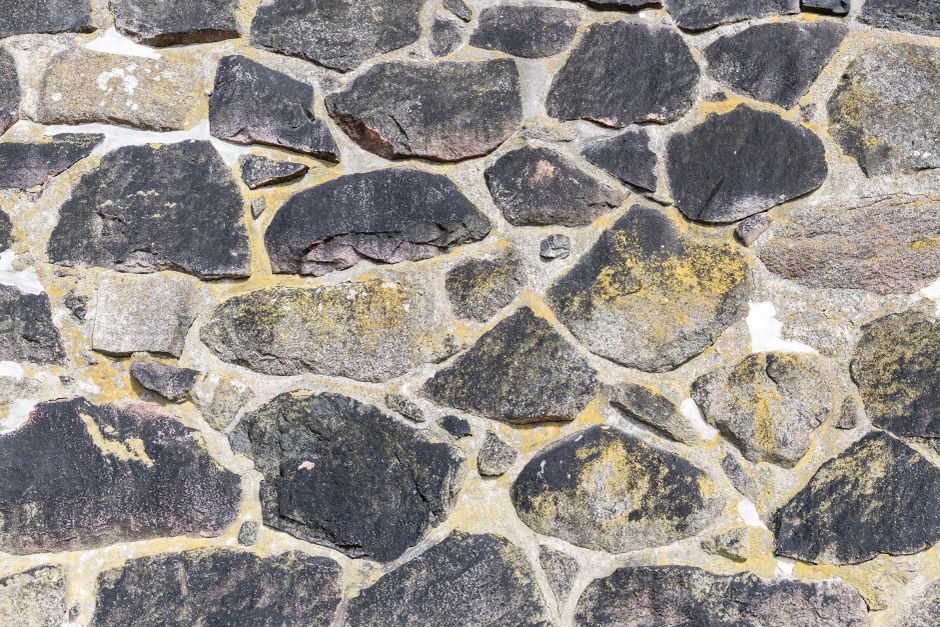
Building stone is a fragmented commodity whose final delivered cost depends less on the headline ton price than on whether you are buying flagstone rubble, dimensional veneer, full-bed wall stone or a container-load of imported travertine — and the suppliers active in 2026 reflect that split [S1][S3][S4][S5].
Three live channels dominate the 2026 market: regional U.S. quarriers selling by the ton or pallet (Carderock, Rolling Rock Building Stone), U.S. retail yards that re-sell by the piece (Fox Brick & Stone in Oklahoma), and export-oriented producers such as Vazin Stone in Iran quoting per square meter for travertine, marble, granite and onyx [S1][S3][S4][S5]. Each channel carries a different unit basis, and the unit you see on a price list is the single biggest variable when comparing quotes.
Unit of Sale: Ton, Pallet, Square Meter or Piece
Carderock's price list structures products by the ton and by the pallet, and explicitly publishes a PA Flag Price List plus selection/waiver documents — the unit basis is tonnage, not area, because the stone is sold in raw flag form [S3]. That contrasts with Vazin Stone, which prices building stones such as travertine, marble, granite, onyx and finished articles (fountains, cornices, sculptures, fireplaces) by the square meter and by the finished piece for value-added goods [S1].
Fox Brick & Stone, an Oklahoma retail yard, advertises rock, reclaimed brick, patio stone and hardscapes sold "by the piece or by the ton" to the public — a hybrid model where small-lot buyers can avoid full-pallet minimums [S4]. Rolling Rock Building Stone in Boyertown, PA sells traditional-thickness natural stone for "full bed" wall applications, again palletised rather than area-priced, reflecting the heavier mass typical of building (versus veneer) stone [S5].
The practical consequence: any 2026 cost comparison must first normalise unit basis. A ton of PA flagstone is not directly comparable to a square meter of honed travertine, and a full-bed building-stone pallet is roughly 1.5–2× the mass of a thin veneer pallet from the same quarry [S3][S5].
Stone Type and Quarry Origin as the Primary Cost Lever
Quarry origin and lithology drive the spread between low and high quotes. Iranian travertine, marble, granite and onyx form Vazin Stone's core catalogue, with onyx and white-marble grades typically commanding the upper end and unfilled travertine the lower end of the per-square-meter range [S1]. Pennsylvania flagstone from Carderock is sold as a regional dimension-stone product, with PA Flag priced separately as a quarry-direct line [S3].
Rolling Rock Building Stone focuses on natural stone for "timeless structures and landscapes" out of Boyertown, PA, and explicitly markets traditional full-bed thickness rather than thin veneer — a heavier, more structural product line with higher per-pallet stone mass [S5]. Fox Brick & Stone complements new stone with reclaimed brick, meaning its effective product mix carries a demolition-recovery cost component that domestic dimensional stone does not [S4].
For procurement, the rule of thumb supported by these suppliers is: domestic flagstone/building stone is priced by weight, imported dimensional stone is priced by area, and reclaimed/decorative pieces are priced individually — three different cost stacks for three different use cases [S1][S3][S4][S5].
Decision Criteria: Where Each Channel Fits
Specifying the wrong channel is the most common 2026 cost mistake. For landscape hardscape, patios and dry-laid walls in the U.S. Mid-Atlantic and Northeast, PA flagstone from Carderock and full-bed natural stone from Rolling Rock Building Stone are the default, priced by ton and pallet respectively and avoiding ocean freight [S3][S5].
For high-finish interior cladding, fireplace surrounds, fountains and decorative cornices, imported travertine/marble/onyx from a producer such as Vazin Stone is typically specified, priced per square meter with container-load economics rather than ton economics [S1]. For small-lot repair work or one-off pieces in the U.S. South-Central region, a retail yard like Fox Brick & Stone that sells by the piece removes the pallet minimum and gives access to reclaimed brick that fits period restoration [S4].
A simple comparison matrix for 2026 procurement decisions, drawn from active supplier practice [S1][S3][S4][S5]:
PA flagstone (Carderock): unit = ton; form = raw flag; lead-time = regional/short; typical end use = patios, walkways, walls [S3].
Full-bed building stone (Rolling Rock): unit = pallet; form = traditional-thickness natural stone; lead-time = regional; typical end use = structural walls, landscapes [S5].
Imported travertine/marble/onyx (Vazin Stone): unit = square meter + finished piece; form = slab/tile/decorative article; lead-time = export cycle; typical end use = cladding, fireplaces, fountains, cornices [S1].
Reclaimed/new retail mix (Fox Brick & Stone): unit = piece or ton; form = reclaimed brick, patio stone, rock; lead-time = in-stock; typical end use = restoration, small hardscape [S4].
Real Use Cases and the Hidden Cost Stack
A 2026 hardscape project using PA flagstone pays the quarry ton price plus pallet/crating and a regional freight leg, often delivered on standard quarry pallets with a material-selection release waiver signed at load-out [S3]. A cladding project using Iranian travertine pays the per-square-meter FOB price plus container consolidation, ocean freight, customs, crating for slabs, and — for finished goods such as fountains or cornices — a separate fabrication line item that Vazin Stone lists as a distinct product category alongside raw stone [S1].
Reclaimed-brick restoration through Fox Brick & Stone adds a sorting/cleaning premium baked into the per-piece price, and the yard explicitly notes it serves "homes or businesses" with no minimum, which lifts per-unit cost relative to a bulk quarry order but eliminates pallet-quantity constraints [S4]. For a working comparison against other industrial commodities, see the Cast Iron Buying Guide 2026 for how foundry grades are banded — the same pattern of base-material cost plus processing premium applies to building stone, where quarry base plus fabrication premium sets the final delivered number.
Sourcing Reality, Freight and the 2026 Macro Backdrop

Macroeconomic cost tracking for construction inputs is published in the UK government's Building Price and Cost Indices dataset on data.gov.uk, which records tender-price and cost movements for construction projects — a useful reference benchmark even for non-UK stone buyers tracking global construction cost inflation [S2].
For 2026 sourcing, container availability and ocean rates remain the swing variable for imported stone, while domestic stone pricing is most sensitive to quarry output and regional trucking diesel [S1][S2]. Buyers who anchor on a quarry ton price without budgeting for the pallet, the freight leg and (for imports) the customs/crating stack routinely underestimate delivered cost by a double-digit percentage. Stone specifiers reading adjacent industrial guides will recognise the same freight-and-form premium pattern documented in the Quartz Material Price & Cost Guide and the FKM Fluororubber Price and Cost Guide, where the raw-material headline number and the delivered part number sit in different bands.
Standards, Specification and Selection Discipline
Building stone specification in 2026 still rests on ASTM C615 (granite), C503 (marble), C1528 (travertine) and C568 (limestone) classification for dimension stone, with absorption, density and modulus of rupture as the typical acceptance criteria — these standard designations are the baseline reference any quarry or import quote should be checked against, even when the price list itself does not cite them. Quarry selection should be driven by the project's structural versus decorative role: full-bed building stone from Rolling Rock is dimensioned for load-bearing walls, PA flagstone from Carderock is dimensioned for horizontal hardscape, and Vazin Stone's travertine/marble/onyx line is dimensioned for finished cladding and ornamental work [S1][S3][S5].
Retail-yard reclaimed product (Fox Brick & Stone) should be specified where matching existing masonry matters more than meeting a fresh-stone absorption spec, and the yard's piece-level pricing reflects that grading approach [S4]. Two trackable signals for the second half of 2026: published updates to the data.gov.uk Building Price and Cost Indices [S2] and any revision to the PA Flag Price List on Carderock's product-price-list page [S3] — both are public documents and will move before the next major quote cycle.
For component-level specifications, see building stone, linear guide, and crossed roller guide.