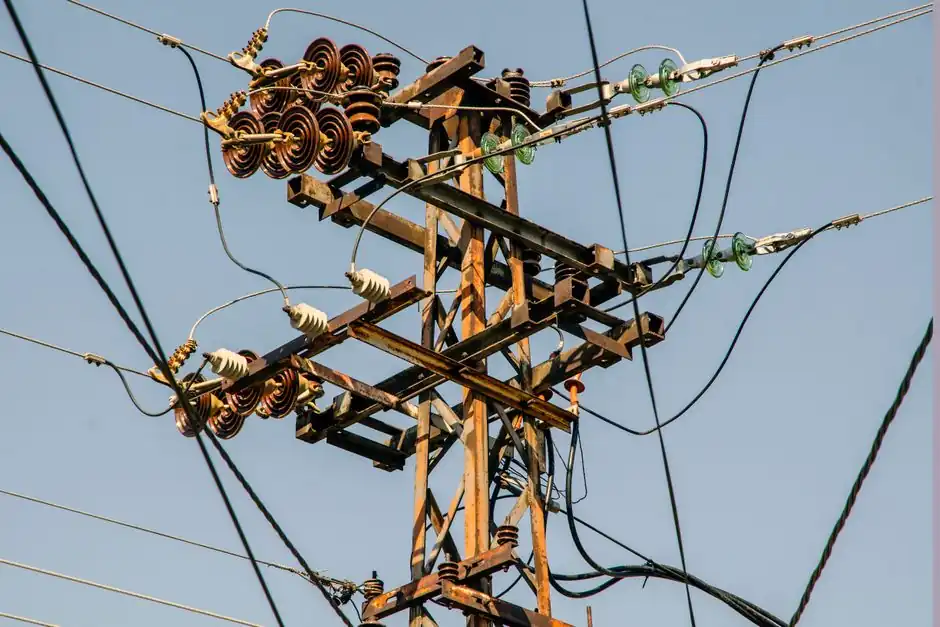
High-voltage transformer bushings carry lead times of up to 130 weeks, and on-load tap changers (OLTCs) run 80 to 90 weeks, against an order-to-receipt cycle of 30 to 36 months for the large power transformer itself and as long as 60 months in North America on the worst-case projects, according to a May 2026 DOE-funded national-laboratory supply-chain gap analysis (report TP-5700-96742) cited by trade coverage dated July 21, 2026 [S2].
Pre-pandemic, a 230 kV bushing took 40 to 52 weeks, and large power transformers were sourced in 12 to 14 months; both numbers have since roughly doubled to tripled, with U.S. LPT lead times reaching 24-60 months in some cases compared to roughly 12 months in APAC, and prices reaching 2.6 times pre-pandemic levels in real terms per the IEA's 2025 "Building the Future Transmission Grid" report [S2][S5]. The bottleneck is not the tank-and-core build; it is three external components, of which the bushing and the OLTC are the dominant schedule items.
Where the 130 Weeks Actually Lives: Bushing Construction and Voltage Class
Pre-pandemic 230 kV bushings were delivered in 40-52 weeks; today the upper bound reaches 130 weeks, and above 345 kV there is no domestic U.S. option at any lead time, with buyers forced to draw on whatever inventory the manufacturer has pre-positioned against forecast [S2]. Porcelain stock drives a 3-4 week stretch when inventory exists, but the 130-week figure is the schedule when the long-lead porcelain, resin-impregnated synthetic, or oil-impregnated synthetic insulator has to be manufactured from scratch [S1][S2].
Specialty insulator constructions stretch further still, and the report is explicit that for those builds the only procurement lever is to rely on whatever inventory exists in the manufacturer's pipeline [S2]. For procurement this means the bushing is the schedule, and the transformer insulation component subcategory now behaves as a make-to-stock item from a single bottleneck node rather than a make-to-order accessory.
OLTC Supply Concentration: One U.S. Producer, Two European Factories
On-load tap changers, the device that changes transformer turns ratio under load to regulate voltage on transmission and large industrial networks, run 80 to 90 weeks, and the U.S. has exactly one domestic producer; all other supply comes from Germany and Switzerland [S2][S3]. OLTCs are designed to operate several times per day to compensate for load shifts, and they integrate diverter switches, transition resistors, and a motor-drive unit whose maintenance interval is typically 7-10 years or a defined operations count, which means every spare is a long-cycle spare [S7][S8].
The 80-90 week figure is the order-to-receipt cycle for the OLTC as a finished subassembly; pressboard, the cellulose-based insulation used inside the transformer, has only one U.S. manufacturer and is described in the same report as a global sourcing challenge, with some regional suppliers of continuously transposed cable having exited the market entirely [S2]. For buyers, the practical rule is that the tap changer supplier's queue is now the same kind of single-point bottleneck the bushing queue is, and the two queues do not move in parallel.
The Procurement Lever: Spec Flexibility Determines Whether You Wait Two Years or Five
Domestic manufacturers cope with the bushing and OLTC scarcity by pre-ordering inventory against forecast demand and asking customers to accept alternate makes or equivalent specifications [S2]. A specification that names a single bushing manufacturer and a single type places the unit at the back of that manufacturer's 130-week queue; a specification that lists approved equivalents lets the factory pull from inventory that is already on the floor or already inbound.
The point is not to abandon standardisation: a utility that has standardised on one bushing type for 20 years has spare parts, trained crews, and known failure behaviour, and trading that away for eight months is usually the wrong trade [S2]. The lever sits in the RFQ itself, specifically in the approved-manufacturer list and the "or equivalent" clause, and a single-source RFQ writes a 130-week bushing wait into the buyer's own document without the buyer necessarily realising it. The construction machinery and equipment category is unrelated, but the same spec-flexibility logic, alternate-make acceptance and equivalent-item clauses, applies wherever a single supplier holds a 100+ week backlog.
Component-Stack Comparison: Bushing vs OLTC vs Pressboard vs GOES
Four constrained inputs now sit between the transformer OEM and the delivery date, and each behaves differently: high-voltage bushings carry the longest lead time (up to 130 weeks, no U.S. option above 345 kV), OLTCs run 80-90 weeks with one U.S. factory, pressboard has a single domestic manufacturer and is described as a global challenge, and grain-oriented electrical steel (GOES) has one U.S. supplier serving the core steel need [S2][S5]. On the schedule axis, bushing and OLTC dominate; on the geopolitical axis, GOES and bushing porcelain carry the highest import-exposure risk; on the substitution axis, pressboard has the fewest qualified alternates.
The price consequence follows the lead-time consequence: IEA 2025 data show transformer prices reaching 2.6 times pre-pandemic levels in real terms in some cases, and LPT facility utilisation averages 70% globally with projections to 80% by 2030, leaving little slack for demand spikes [S5]. For a comparison against adjacent long-cycle industrial subassemblies, the ball screw vs lead screw decision matrix shows a similar pattern where single-source precision grades stretch delivery to 26-40 weeks against 6-10 weeks for commercial grades, and the procurement mechanics (alternate-grade acceptance, equivalent-supplier clauses) are essentially the same.
What This Means for New Substation and Data-Centre Procurement
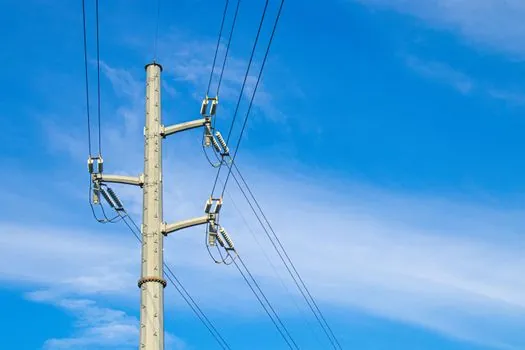
Large power transformer order-to-receipt of 30-36 months is now normal, extra-high-voltage units run as long as five years, and U.S. LPT lead times reach 24-60 months in the worst cases [S2][S5]. The procurement response is mechanical: lock the bushing and OLTC approved-manufacturer lists early, write "or approved equivalent" into the RFQ, confirm porcelain stock at the preferred bushing supplier before placing the transformer PO, and budget transformer delivery as a function of the slowest component rather than the OEM's stated factory lead time [S1][S2].
Trackable signals for the next 6-12 months: (1) the IEA 2026 update to the "Building the Future Transmission Grid" dataset, which will refresh the 2.6x price multiplier and the 70%-to-80% utilisation projection; (2) any new U.S. domestic bushing capacity announcements above the 345 kV threshold, since the report is explicit that this node currently has zero domestic supply at any lead time [S2][S5]. For context on adjacent infrastructure pressure, AI capex 2026 overbuild or underbuild traces the data-centre demand side that is now competing with utilities for the same constrained transformer slots.
Spec-level background on the components involved: holding furnace.