
Commercial and industrial battery energy storage systems (BESS) installed in 2026 reach a typical simple payback of 3-6 years at turnkey installed costs of $290-$800 per kWh, with the wide spread driven by system size, battery chemistry, and certification tier [S2][S3].
The 30% U.S. federal Investment Tax Credit (ITC) and demand-charge management dominate the ROI calculation, while lithium iron phosphate (LFP) cells at roughly $40/kWh factory-gate have pulled hardware costs down more than 60% versus 2022 levels [S3].
What Turnkey BESS Costs Look Like in 2026
Installed commercial battery storage in the U.S. market runs $290 to $700 per kWh in 2026, with smaller cabinets at the high end of the curve and multi-megawatt containerized systems at the low end [S3]. A 30kW/60kWh retail or office-backup cabinet lists at $39,000-$48,000 ($650-$800/kWh), while a 1MW/3-5MWh heavy-industrial or data-center block sits at $870,000-$1,450,000 ($290-$340/kWh) [S3]. A separate market survey puts the broader 2026 cost band at $110-$580/kWh, reflecting older quotes, hardware-only pricing, or overseas scopes [S6].
For a 500kW/1MWh factory or cold-storage install, battery cells and modules absorb 40-50% of the system price ($144,000-$225,000), followed by the power conversion system (PCS) at 12-18% ($43,000-$81,000) and installation/commissioning at another 12-18% ($43,000-$81,000) [S3]. Hardware-only pricing, where the buyer handles shipping, electrical integration, and grid interconnection, typically runs 30-40% under the turnkey figure [S3].
How the Payback Math Is Built
Simple payback in 2026 lands at 3-5 years for most U.S. commercial facilities after the 30% ITC, assuming typical utility rates and demand-charge structures, with shorter paybacks in regions carrying high demand charges or aggressive local incentives [S3][S8]. A separate analysis pegs the average near 5 years and notes that improved cycle life, smarter energy management system (EMS) software, and continued cell-price declines have meaningfully compressed historical payback windows [S2][S8].
Demand charges now account for 30-50% of commercial electricity bills during peak periods, and average commercial rates have climbed 15-25% since 2020, which is the structural reason peak-shaving storage pencils out faster than it did five years ago [S4]. Facilities with high load factors, time-of-use exposure, or on-site solar generation see the strongest returns, while low-utilization sites with minimal demand charges struggle to clear a 6-year payback without stacking grid-service revenue [S2].
LFP vs Sodium-Ion vs NMC: Chemistry Choice for C&I

LFP remains the default for stationary commercial storage in 2026, with modern systems commonly delivering 10,000+ charge-discharge cycles, 90%+ round-trip efficiency, and a 15-year design life [S2]. Independent spec data shows LFP energy density at 120-160 Wh/kg, cycle life of 4,000-6,000 cycles at 80% depth of discharge, and superior thermal stability versus NMC chemistries [S4]. Compared to NMC, LFP costs 20-30% less per kWh and lasts 6,000-10,000 cycles versus 2,000-4,000, leaving NMC relevant only where floor space is extremely constrained [S3].
Sodium-ion cells have entered the C&I market in 2026, trading energy density for a roughly 20-30% reduction in upfront CAPEX versus conventional lithium-ion, which opens storage economics to small and medium-sized businesses that previously could not clear a 5-year payback hurdle [S2]. For a deeper chemistry comparison, our LFP vs NMC cathode 2026 decision guide breaks down cost, cycle, and density trade-offs across C&I use cases.
System Cost Stack and Where the Margin Lives
For a 1MWh-class installation, the cost stack breaks down as battery cells/modules 40-50%, power conversion system 12-18%, BMS and EMS software 5-10%, enclosure and thermal management 10-15%, installation and commissioning 12-18%, and permitting/engineering/soft costs 8-12% [S3]. Battery management system (BMS) spend is small in dollar terms (5-10%, or $18,000-$45,000 at 1MWh scale) but disproportionately important: a well-tuned BMS extends pack life by years, while a low-end unit can destroy a $200,000 battery bank [S3].
Beyond batteries, businesses must budget engineering, procurement, construction, fire protection, utility interconnection fees, and local permitting separately, with interconnection complexity varying sharply by country and utility [S2]. Germany prioritizes grid-responsive ESS integration, the U.S. offers regional incentives for virtual power plant (VPP) compatible systems, and Southeast Asian deployments tend to focus on industrial load balancing and diesel displacement [S2].
Who C&I Storage Is For, and Who Should Skip It
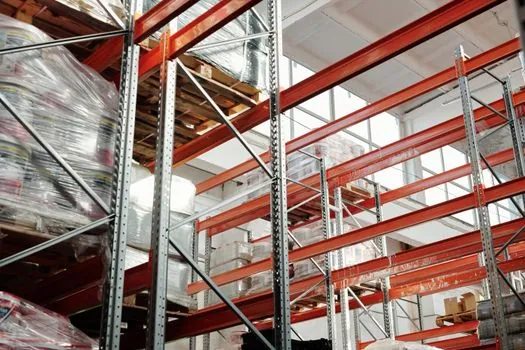
Strong-fit profiles in 2026 include manufacturing facilities, logistics warehouses, data centers, EV charging stations, commercial buildings, retail chains, industrial parks, and solar-integrated sites with high load factors or aggressive demand-charge tariffs [S2]. A facility experiencing 3-5 power disturbances per year faces outage costs of $10,000-$100,000+ per event, which is the threshold at which storage stops being a financial optimization and starts being a continuity-of-operations investment [S4].
Weak-fit profiles include small offices with flat load profiles, low-utilization retail with minimal demand charges, and sites without time-of-use exposure or demand-response program access; these buyers typically see payback stretch past 6 years and should not size storage on a pure economics basis alone [S2][S3]. Cobalt exposure from NMC cells, covered in our cobalt end-use demand 2026 piece, is a secondary risk for LFP-default buyers, since LFP cathodes do not use cobalt.
Standards, Safety, and Sizing Discipline
Modern 2026-grade LFP systems carry UL 9540 and UL 9540A listing at the cabinet or container level, with NFPA 855 spacing and fire-safety compliance handled at the site design stage; buyers should require the test report, not just a marketing claim [S3]. Thermal management is a make-or-break spec: air-cooled cabinets work up to roughly 250-500kW per enclosure, while liquid cooling is the default above 1MW to keep cell temperature delta under 5 °C and protect cycle life [S4].
Right-sizing remains the single biggest ROI lever, since oversized systems dilute dollar savings across a fixed demand-charge line item, and undersized systems leave peak-shaving savings on the table; rule-of-thumb sizing targets 60-80% of peak demand reduction, paired with 2-4 hours of duration at the rated power [S4].
What to Watch Next
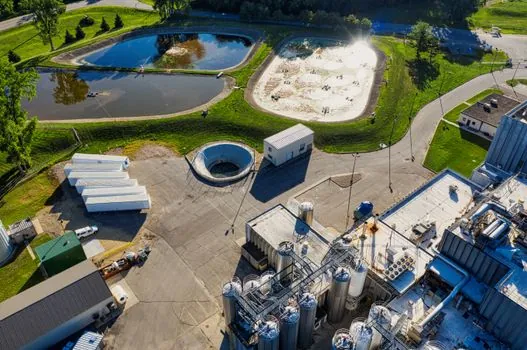
Two signals a 2026 buyer should track: (1) the U.S. EIA's annual battery storage update, which tracks large-scale capacity, ownership mix, and installation-cost trends, with the 2024 figures released on 2026-03-17 [S1]; and (2) the BloombergNEF battery price survey, which has tracked LFP cell prices from above $100/kWh in 2022 to roughly $40/kWh factory-gate in 2026, and is the cleanest leading indicator for whether payback will compress below 3 years in 2027 [S3].
The underlying component specifications are covered under storage cage, storage handling, and storage rack.