Global cobalt consumption reached 276 kt in 2025, a 13% year-on-year increase, with battery applications supplying the majority of incremental tonnes and EVs alone taking 39% of the total at 113 kt, up 25% year-on-year [S1].
U.S. Department of Energy figures indicate that 71% of 2025 cobalt demand came from EV batteries and stationary energy storage combined, a share modelled to climb to 93% by 2035 [S2], while the U.S. consumption mix itself is dominated by superalloys at roughly 51% and chemicals at about 25% [S6].
Global end-use split for 2025: batteries at three quarters, superalloys and hard metals combined near 12%
The 2025 demand stack separates cleanly into a battery-led volume story and an industrial-metals specialty story. Cobalt Institute / Benchmark Mineral Intelligence data put 2025 demand at 276 kt, with EVs at 39% (113 kt, +25% y-o-y) and portable electronics also contributing 93 kt, a 15 kt year-on-year jump as that segment recovered from a multi-year trough [S1]. The U.S. EESI fact sheet, drawing on the U.S. DOE critical-mineral assessment, gives a structurally similar global split: 43% EV batteries, 30% portable-device batteries, 8% superalloys, and 4% hard metals / cutting tools [S2]. That puts batteries near 73% of the global total in 2025 and the two industrial categories combined at roughly 12%, a ratio that matters for anyone sizing non-battery supply contracts.
The 2026-2033 forecast frame from Grand View Research values the market at USD 18.7 bn in 2025, USD 20.5 bn in 2026, and USD 27.2 bn by 2033, a 4.1% CAGR [S3]; the implied tonnage trajectory lines up with Benchmark's view that 2025 demand growth was 13% and the EV battery segment was the marginal driver [S1].
U.S. mix diverges sharply: superalloys near half of national consumption
In the United States, superalloys accounted for about 51% of cobalt consumption in 2025, with chemical applications around 25% and the balance split between batteries, hard metals, and other industrial uses [S6]. That national pattern is the inverse of the global mix because the U.S. has effectively no cell-manufacturing base to absorb cathode-grade cobalt, while it retains large aerospace, industrial-gas-turbine, and tool-steel / cemented-carbide end markets. The U.S. Geological Survey lists cobalt as a designated critical mineral, and the U.S. Department of Energy classifies it as medium-to-high importance to the clean-energy transition through 2035 [S2].
Supply-side concentration shapes how that U.S. demand gets filled. The DRC holds 52.8% of known reserves and produces around 76% of mined cobalt, with Indonesia at 9.8% and Russia at 3% [S2]. China refines 50-70% of global supply; China, Finland, and Indonesia together account for about 89% of refining capacity [S2]. The U.S. is 76% import-reliant on cobalt, with Norway, Finland, Japan, and Canada as primary sources, while domestic production is limited to the Eagle Mine in Michigan (cobalt-bearing nickel concentrate exported to Canada) and a single Ohio facility producing nickel-cobalt from scrap; the only U.S. cobalt-specific mine, in Idaho, closed in 2024 before becoming operational due to low cobalt prices [S2].
Superalloys: jet engines, industrial gas turbines, and the cobalt-grade stack

Superalloys remain the largest non-battery end use, with Cobalt Institute data reporting military demand including batteries, magnets, and superalloys at an estimated 6.8 kt in 2025 and explicitly highlighting cobalt's role in defence applications [S1]. The DOE-backed EESI breakdown puts superalloys at 8% of global 2025 demand [S2], which applied to the 276 kt headline figure [S1] gives roughly 22 kt for the segment; the U.S. superalloy slice alone, at 51% of U.S. consumption [S6], is several thousand tonnes per year when sized against reported U.S. cobalt use.
The practical alloy systems are well-defined. Wrought nickel-base superalloys (e.g. Waspaloy, Inconel 718, Inconel 738) use cobalt typically in the 0-20% range to stabilise the gamma-prime phase and raise hot-corrosion resistance; cobalt-base superalloys (e.g. Haynes 188, Stellite 6) run 40-65% Co for static and rotating gas-path components. The Berkeley / MIT resource review treats superalloys as a demand stream that is highly elastic to international air-traffic growth and to defence procurement cycles, distinct from the EV-battery demand stream that follows passenger-EV sales [S5][S7]. For specifiers, the relevant material code is not a single grade but a stack of AMS-, UNS-, and OEM-qualified specifications, with cobalt content controlled within tight bands to balance creep life, oxidation resistance, and weldability.
Hard metals and cemented carbides: WC-Co at 3-30% binder
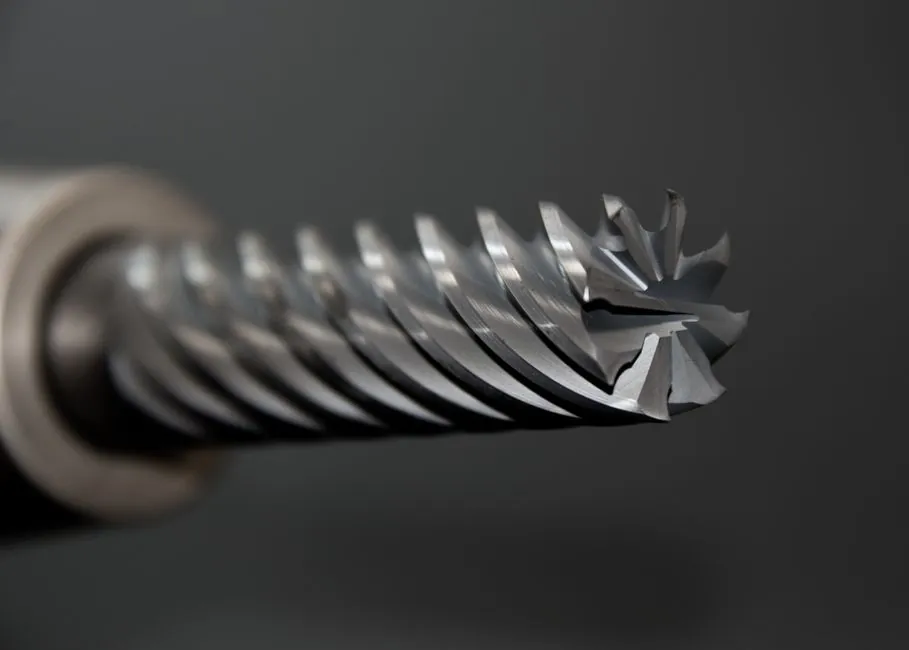
Cemented carbides (WC-Co) sit at 4% of global cobalt demand according to the 2025 EESI fact sheet [S2], a small but technically non-substitutable slice. The typical binder range is 3-30% cobalt by mass, with the lower end (3-6% Co) used for wear parts and the upper end (10-30% Co) reserved for impact-grade cutting tools, mining bits, and dies that need fracture toughness as well as wear resistance. Cobalt is preferred over alternative binders in most demanding applications because of its wetting behaviour on tungsten carbide grains, its solubility for WC, and the ductile fracture path it provides under cyclic loading.
Within hard metals, grain size of the WC phase is the second control variable, with sub-micron and nano grades commanding higher cobalt binder fractions to retain toughness. A more detailed view of how powder characteristics, including particle size distribution, morphology, and flow behaviour, map to AM and press-and-sinter feedstock is given in Metal Powder Characterization: PSD, Morphology, and Flow Tests for AM Feedstock, and a family-level comparison of low-alloy and binder compositions used in press-and-sinter parts is in Low-alloy steel powder grades for press and sinter: family comparison. These powders are the upstream of the same global cobalt binder pool, so any disruption in the DRC feed stream hits cutting-tool powder cost within weeks.
Comparison: batteries vs superalloys vs hard metals on the decision axes specifiers care about
Specifying cobalt by end use is really a comparison of four axes: price elasticity, purity grade, volume per contract, and supply-chain substitution risk. A simple matrix helps. Superalloy-grade cobalt is bought as high-purity electrolytic cobalt or as pre-alloyed melt stock, with chemistry tightly controlled for trace elements (S, P, Bi, Pb, O, N), and is procured in tens to low hundreds of tonnes per heat, with long qualification cycles. Hard-metal / WC-Co grade cobalt is finer powder (typically 1-5 micrometre Fisher sub-sieve), with controlled oxygen and carbon, and is procured in lots sized to a specific tool geometry rather than a global index price.
Substitution risk differs by segment. In EV cathodes, cobalt is being progressively reduced via high-nickel NMC and LFP (which contains no cobalt); the DOE projects the EV+storage share of cobalt demand at 93% by 2035 [S2], so while cobalt is staying in the segment its intensity per kWh is dropping. In superalloys, substitution is technically constrained because cobalt delivers gamma-prime stability that nickel-only chemistries cannot match at the temperature / stress combinations of HP and HPT blade rows, so the demand curve is closer to air-traffic and defence-procurement growth than to battery chemistry shifts [S5][S7]. Hard-metal substitution exists in the form of binderless carbides and cermets, but at the cost of toughness, so the binder share of demand is structurally sticky in mining, oil-and-gas drilling, and metal-cutting inserts.
Supply concentration and 2026 price dynamics shaping all three end uses
The 2025 price rally, driven by DRC export restrictions, lifted cobalt across all end uses rather than splitting the market [S1]. The Cobalt Institute / Benchmark report flags that the 2025 supply picture was dominated by DRC export restrictions, with prices rallying off the back of those restrictions, and that geopolitics and interventionist policy environments are now shaping cobalt and battery supply chains [S1]. Combined with the 71% 2025 EV+storage demand share and the 80% expected demand increase for clean-energy cobalt between 2025 and 2030 [S2], the price signal is being set by cathode buyers and transmitted into superalloy and hard-metal lots on the same index.
Recycling can absorb part of the volume shock: secondary recovery can reduce the need for new mines by 40% and cut greenhouse-gas emissions by 80%, and in 2024 scrap already supplied one quarter of U.S. cobalt consumption [S2]. Artisanal and small-scale mining in the DRC still accounts for 15-30% of national production, which links the cobalt price to ESG and traceability rules independent of the battery demand cycle [S2]. The Berkeley-led supply analysis through 2030 concludes that cobalt supply can be expanded as a byproduct of nickel mining and through secondary recovery, but only with sustained investment in refined capacity and recycling infrastructure, not on commodity-price signals alone [S5].
The next node to track is the 2026 demand release from the Cobalt Institute, which will give the first hard reading on whether EV demand absorbed the post-DRC-ban supply at the 13% growth pace seen in 2025 [S1]; the second is the U.S. Department of Energy's mid-cycle update on the 71%-to-93% clean-energy cobalt share trajectory through 2035 [S2].
For component-level specifications, see construction machinery and equipment, lamps and light fittings, and lighting equipment and electric lamps.