
UL Follow-Up Services require every piece of inspection, measuring and test equipment (IMTE) used to verify compliance with a UL, C-UL or ULC procedure to be calibrated and traceable to national or SI standards, with the standards used for that calibration also covered by the same traceability chain [S1]. The rule is about evidence of traceability and tolerance fit, not about where the laboratory physically sits [S1].
CE marking follows a different logic: it is triggered when a product is placed on the EU market, so a tool built for purely internal factory use falls outside the CE regime, although Union harmonisation legislation covering machinery, measuring instruments and ATEX-equipment extends the scope to own-use manufacture in specific cases [S3]. For both schemes, the practical question for a plant is whether to build an in-house calibration capability, outsource to an ISO/IEC 17025 accredited lab, or run a hybrid model, and the answer is driven by measurement risk, accreditation scope and audit evidence rather than by either mark itself [S1][S4].
What UL actually requires of the IMTE on the shop floor
UL's calibration requirement applies to all IMTE called out in a Follow-Up Services Procedure, including any appendix, Follow-Up Inspection Instruction or Standard Appendix Page, plus any equipment the manufacturer's own personnel use to verify compliance with UL requirements [S1]. Customers must select IMTE whose accuracy is capable of meeting the tolerances specified in the procedure, and the standard against which the IMTE is calibrated must itself be traceable to SI units, with NIST named as the U.S. reference [S1].
Low-precision tools such as tape measures, steel rules, protractors and radius gauges can either carry an accuracy statement from the manufacturer combined with in-service checks, or be pulled into the formal calibration system at defined intervals, giving the customer two compliant options [S1]. Timing devices such as timers, stop watches and clocks are explicitly excluded unless the Follow-Up Procedure names them [S1]. For high-risk gauges, pressure instruments, thermocouples and torque wrenches used as the final means of compliance verification, calibration must be performed by an ISO/IEC 17025 accredited provider whenever possible, with certificates that document traceability, measurement uncertainty and the standards used [S1].
CE marking trigger conditions and where calibration actually enters
CE marking is required only when a product is placed on the EU market; a unit built and kept entirely for internal factory use is not, and the regulation does not carve out a special "single-unit exception" because the directive does not apply at all in that scenario [S3]. The complication sits in the Blue Guide language: Union harmonisation legislation covering machinery, measuring instruments, ATEX equipment and civil explosives extends the scope to products manufactured for own use, so a measurement device built in-house can still need CE marking if it falls under the Measuring Instruments Directive or the Machinery Directive [S3].
Once a product is in scope, CE conformity assessment leans on EN ISO/IEC 17025-accredited test data for many of the supporting measurements (EMC, electrical safety, environmental), and the manufacturer's notified-body dossier must show traceability for every calibrated value used in the technical file. For a measurement instrument sold into the EU, the in-house calibration question therefore re-appears as: do you keep the calibration in-house under a documented ISO 9001 / ISO/IEC 17025 procedure, or do you outsource the final verification to an accredited lab, and the trade-off is lead time, cost per certificate, and how much of the test programme you control.
In-house vs internal calibration under ISO/IEC 17025 vocabulary
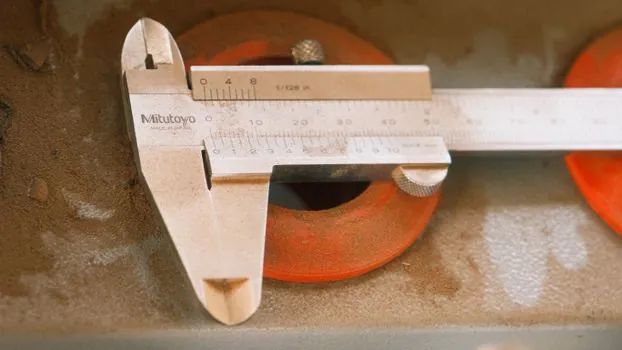
A2LA draws a sharp line: an "in-house" calibration is one performed on equipment used to support the laboratory's own testing and calibration activities, and it sits inside the lab's scope of accreditation; an "internal" calibration is one the lab performs on a piece of equipment that is not part of its accredited scope, in which case the lab must prove traceability to an external accredited provider [S4]. Both terms are still about traceability, not about laboratory ownership, and the same physical act of calibration can be either depending on how the lab is accredited [S4].
European Accreditation treats the same boundary the same way: measuring equipment shall be calibrated when the accuracy or precision affects the reported result, when the equipment is used to confirm product compliance, or when calibration is needed to establish metrological traceability of reported values, and "in-house" here just means the act is performed by the organisation itself rather than contracted out [S8]. The implication for a plant running both UL and CE work is that the calibration programme can be physically on-site, but each instrument must be tied to a documented uncertainty budget and an unbroken chain of comparisons back to a national metrology institute or an equivalent [S1][S4][S8].
Decision matrix: when an in-house lab pays off, and when it does not
For a plant that runs fewer than roughly twenty critical gauges on a defined list, and where each gauge has a 3-12 month calibration interval, outsourcing to an ISO/IEC 17025 accredited provider is normally cheaper than building a temperature-controlled lab, hiring metrology staff and maintaining reference standards traceable to NIST or a national institute [S1][S5]. The break-even shifts when the plant has more than fifty gauges, when production runs 24/7 and downtime for shipping is unacceptable, or when the work supports customer-specific tolerances that are tighter than the accredited lab's published scope [S5].
A comparison across four decision criteria, in-house lab vs accredited outsource vs hybrid, looks like this: cost per calibrated instrument is lowest at the outsource for low volumes and lowest in-house at high volumes; turnaround time is fastest in-house (same day in urgent cases) and slowest at the outsource, where shipping and queue time can stretch past two weeks; audit risk is lowest when the provider is ISO/IEC 17025 accredited regardless of location, and highest when in-house calibrations sit outside the lab's accredited scope and traceability is undocumented [S4][S5]. The hybrid pattern that most plants land on is keeping high-flow gauges (pressure gauges, RTDs, thermocouples) in-house for fast turnaround while outsourcing low-frequency or low-tolerance instruments (mass standards, optical comparators) to a NIST-traceable lab, with all certificates filed to the same retention period required by UL's Follow-Up Service Procedure [S1][S5].
Failure modes and audit traps in both regimes
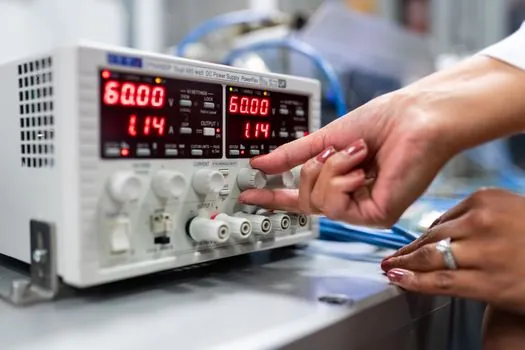
The most common audit finding under UL is an IMTE that was used to verify compliance but had no current calibration certificate, or whose certificate came from a non-accredited lab with no documented uncertainty and no traceability statement back to NIST or SI units [S1]. The corrective action is procedural: pull the equipment list, attach a calibration record to every serial number, and ensure the certificate identifies the standards used and their own traceability chain [S1].
Under CE, the recurring trap is treating "tested" and "calibrated" as the same: a unit can be bench-tested for function and still carry no calibration certificate, and a notified-body or market-surveillance auditor will treat that as a non-conformity in the technical file [S5]. For in-house built equipment that is genuinely outside the CE scope because it is for internal use only, the practical risk is that the unit is later given to a sister plant, lent to a contractor, or sold, and at that point the lack of a Declaration of Conformity becomes a regulatory issue rather than an internal paperwork gap [S3].
Sourcing, standards and what the auditor will ask for
For UL work, the working stack is ISO/IEC 17025 (calibration lab competence), NIST traceability statements on every certificate, the calibration provider's scope of accreditation, and the UL Follow-Up Service Procedure clause that names each IMTE [S1]. For CE work, the working stack is the relevant Union harmonisation legislation (Machinery Directive 2006/42/EC, Measuring Instruments Directive 2014/32/EU, ATEX 2014/34/EU, EMC 2014/30/EU, Low Voltage 2014/35/EU), EN standards harmonised under each, ISO/IEC 17025 for any lab generating supporting data, and ISO 9001 for the calibration programme itself [S3].
A reliable next signal is the 2025-08 update from MCE on in-house calibration services, which shows distributors investing in NIST-traceable certificates, same-day turnaround, and proactive calibration reminders as a service differentiator, indicating that audit-ready documentation, not the lab location, is where commercial pressure is heading [S5]. Another trackable node is the EN ISO/IEC 17025 revision process and any updates to A2LA or ANAB guidance on in-house versus internal calibration scope, since those interpretations directly decide whether an on-site lab can put its own logo on a certificate [S2][S4]. For more on how a measured value flows through production, see this practical primer on process calibration on the plant floor and the broader construction machinery and equipment reference for context on where the same IMTE rules apply outside the electronics shop.
Component reference pages worth checking: concrete batching plant.
Related analysis: Die Casting Cell Automation: Spray, Extract, and Trim Stations Compared.