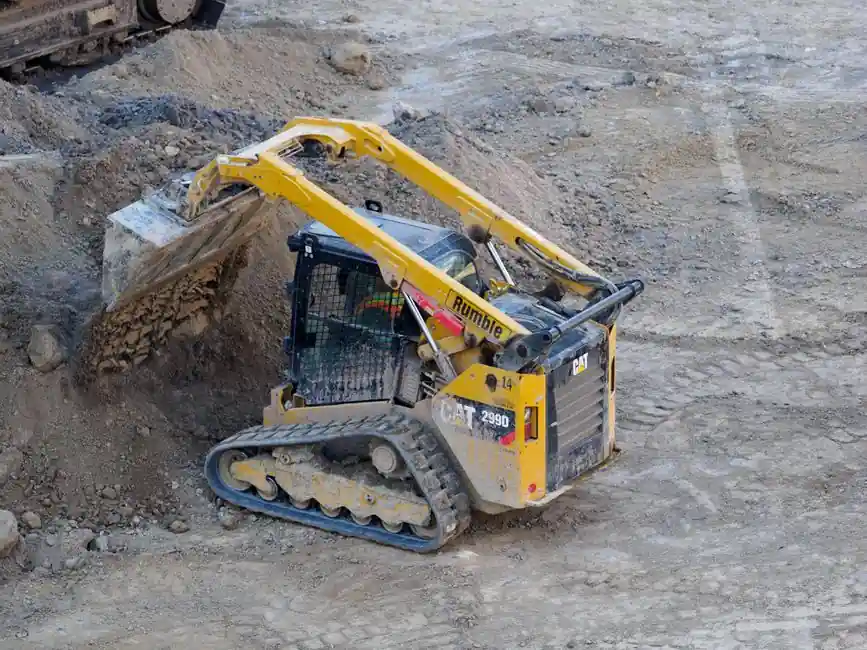
A standard crawler dozer lacks the three hardware features that make truck loading productive: a forward-mounted lift arm, a bucket with curl, and high-dump reach above the side of a haul truck box [S2][S6].
The same source notes that "loading anything is strictly out of the question" for a dozer, and that moving material "any great distance is more difficult" without a bucket [S2]. A wheel loader, by contrast, is built around a bucket that scoops, lifts, and dumps above truck-side height.
What a Bulldozer Actually Carries vs What a Payloader Carries
A bulldozer's working tool is a blade mounted on the lower front of the tractor; it pushes material along the ground, it does not lift it [S1][S3]. A wheel loader carries a bucket on two lift arms driven by hydraulic cylinders, which lets it raise a load clear of the truck box [S5].
The wheel loader's design priority is material handling: a "large bucket or scoop at the front" optimized to "scoop, lift, and transport various materials efficiently," including direct truck loading and stockpiling [S5]. The dozer's design priority is ground-engaged pushing and grading, with "powerful engine and large, robust blades" sized for bulk earthwork [S1][S5].
Why a Dozer Cannot Replace a Payloader at the Truck
Truck loading requires the bucket to be raised above the truck-box rail and curled to deposit material in a controlled stream; the dozer has neither lift height nor bucket-curl geometry, so the blade cannot reach into or over a truck body [S6].
A dozer can be used as a "push" assist, pushing piles toward a stationary loader, or pushing material into a low-side dump body, but that is a feeding role, not a loading role [S2]. One of the candidates' references to the "chinaman" work-around confirms the dozer alone cannot place material inside a standard dump truck: "a dozer can't load trucks without some sort of aid, like an old-fashioned 'chinaman'" [S2]. For operators who need reliable material movement, a bulldozer is the right tool for cut, fill, and slot-doze cycles, not for truck-spotting.
Where a Dozer Can Substitute, and Where It Cannot
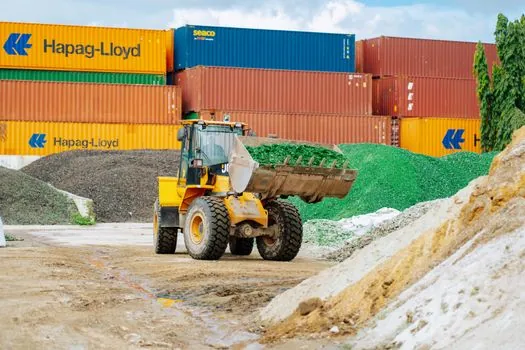
In a small site where the haul unit is a low-side dump or a scraper, the dozer can push material directly into the bowl over a short approach, but the cycle is slow and the operator is exposed to the moving truck on every pass [S2][S5]. A load cell on a payloader bucket, by contrast, can meter each pass and cut under-loading, which a dozer cannot do.
For truck loading specifically, the wheel loader "excels" because its hydraulics and bucket geometry are purpose-built for it [S5]. Dozers cover ground-based work: land clearing, rough grading, ripping, and pushing 100 yards of material in a slot [S2]. When the haul truck is the bottleneck, the dozer is the wrong category of machine, regardless of how aggressive the blade is.
Loading Pattern and Cycle-Time Math: Why Geometry Matters
The widely used Y or V loading pattern for wheel loaders positions the truck at an angle so the loader approaches, penetrates the pile, then swings and dumps in a clean arc; this depends on bucket lift height, articulated steering, and a clear dump window above the truck box [S4].
A bulldozer has none of the three inputs to that pattern: no lift, no articulated swing, no high-dump window. The dozer can only push a pile in a straight line, which is the opposite of the Y/V geometry. Even a well-ripped bulldozer slot-strip at 100 yards ends with the material on the ground, not in a truck.
Selection Criteria: When Each Machine Earns Its Slot
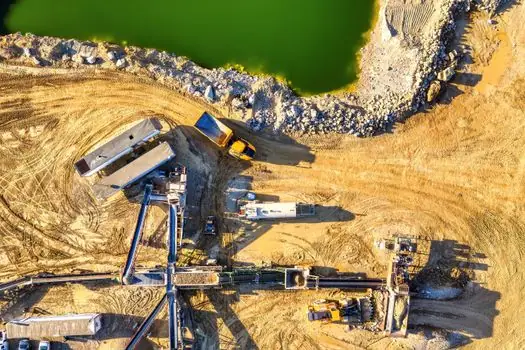
Pick the dozer when the work is bulk earthmoving: clearing, ripping, road subgrade prep, slot dozing, and waste-push. The dozer's tracks give flotation and blade-down pressure that a rubber-tired loader cannot match in soft cut conditions [S1][S3].
Pick the wheel loader when the work is material handling: feeding crushers, loading haul trucks, building stockpiles, and rehandling. The wheel loader's travel speed on tires, articulated frame, and quick-coupler attachment options (forks, grapples, buckets from 1 m^3 to 10+ m^3) are what the job is paying for [S3][S5].
Worked Example: One Machine, Two Jobs
Consider a 20 m x 20 m building pad that needs 800 m^3 of cut-to-fill plus 400 m^3 of exported material hauled off in 20-tonne trucks. The dozer is the right tool for the cut, spread, and compaction prep; the loader is the right tool for loading the trucks that take the export off site [S1][S4].
Trying to load those 20 trucks with the dozer alone means rigging a "chinaman" or pulling material up a ramp with the blade, both of which the equipment community describes as non-standard and slow [S2]. If the truck is a side-dump, the dozer can winch-assist the box up and push, but again, that is not the wheel loader's role; it is a custom cycle.
Decision Map: Dozer, Loader, or Both
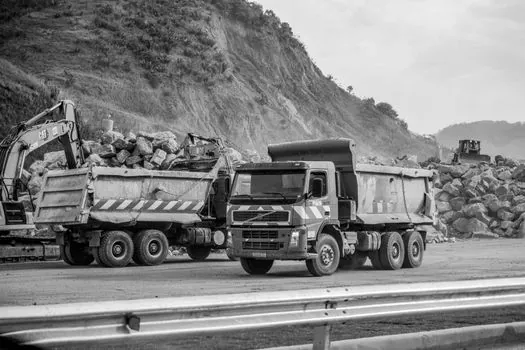
Use a dozer only when the dominant work is ground-engaged: pushing, ripping, grading, and clearing. Use a wheel loader only when the dominant work is above-ground handling: truck loading, stockpile build, and feed. Use both on a site where bulk earthwork and truck loading run in parallel; the dozer feeds the loader's stockpile, the loader feeds the truck [S4][S5].
For a deeper look at how payload capacity and machine weight are measured across this class, the load cell module reference covers the weighing hardware used on loader buckets and truck scales. For sites where switching between machines is the question, a load switch governs which control circuit is hot when the operator steps out of the cab.
Limitations, Failure Modes, and Safety Notes
Pushing a dozer blade into a truck body to load is a documented misuse pattern: the dozer can climb the pile, tip, or strike the truck box, and the operator's visibility is poor with the blade down at truck-rail height [S2].
Wheel loaders also have their own failure mode: articulated loaders with overloaded buckets stress the front axle and tire sidewalls, which is why a pressure transmitter on the lift circuit is often plumbed to a load meter for over-pressure cutout. For electronic load testing of the loader's electrical and hydraulic auxiliaries, an electronic load on the bench is the right tool, not the dozer's 24 V system.
Standards and Sourcing Notes
Machine classification across dozers and loaders is set by categories such as operating weight, engine power, and bucket capacity; these are vendor-published per model. No single IEC or ISO standard re-defines "bulldozer" vs "wheel loader," so the comparison stays at the functional level [S1][S3][S5].
Operator competency for either machine typically follows the equipment's rated operating capacity and the site's lift-and-carry cycle plan; heavy-equipment forums consistently flag the loader as the more versatile tool when only one machine can be bought [S2]. Two recent (2025-2026) buying guides echo that the wheel loader is "typically the job of a wheel loader" for precise truck loading [S6].
The next node to track is whether rental houses in your region stock both classes, because owning a single machine forces the dozer-or-loader choice on a contractor; a fleet buyer can run both. For a related spec read on truck selection when the loader is the loader, see Cab-Over vs Conventional Cab Dump Truck: Spec Decision Map. For the upstream earthwork side, see Print Spacing and Blow Counts in Dynamic Compaction: 2026 Design Read.