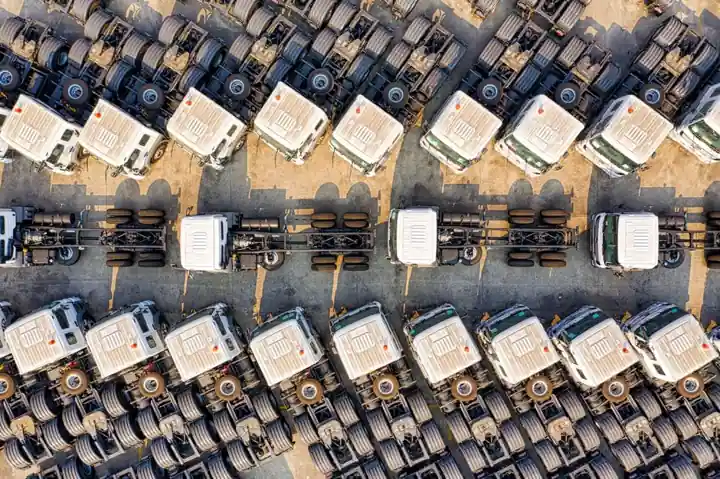
A truck scale can be relocated, but the move is not a simple equipment shift: an above-ground scale generally needs about 20 feet of approach on both ends, while an in-ground scale requires a prepared concrete foundation and drainage provision [S1][S3].
Relocation can reuse the deck, load cells, wiring, and indicator, reducing equipment cost and procurement lead time, but the new installation must be surveyed, rebuilt, tested, calibrated, and approved before legal-for-trade use [S2].
Relocation Feasibility by Scale Type
The scale type determines whether relocation is practical. A surface-mounted or above-ground scale needs approach space, ramps, vehicle clearance, and usually no concrete foundation, whereas a pit-mounted scale needs a foundation sized for the existing installation [S3][S5].
For an above-ground installation, provide approximately 20 feet of approach on both sides so trucks can align safely and accurately on the weighing surface [S1][S3]. An in-ground installation uses less site area and eliminates ramps, but it shifts the burden to civil work, pit preparation, drainage, and service access [S3][S5].
The practical decision is not simply whether the scale can travel. It is whether the existing design can be installed without changing its structural, electrical, drainage, and weighing performance requirements. The truck scale should therefore be surveyed as an entire system rather than treated as a deck with loose accessories.
New-Site Survey and Foundation Acceptance
A relocation survey must identify the new foundation or prepared surface, electrical service, water, gas, sewage, overhead obstructions, and access routes before removal begins [S1][S3][S5].
An in-ground scale cannot be reinstalled onto an unprepared site. The new location should be surveyed, and the foundation should be prepared by removing remaining hardware or obstructions and smoothing and cleaning its surfaces for proper clearance [S1][S2][S3]. Existing foundation work can reduce civil cost, but old anchor bolts, embedded hardware, obstructions, and dimensional conflicts must still be removed or corrected [S2].
Before reinstallation, verify the foundation dimensions, load-cell stand locations, anchor-bolt pattern, deck clearances, and scale gaps. A documented relocation example required cleaning and smoothing of the foundation and checking gap tolerances and measurements to prevent deck rubbing and loss of weighing accuracy [S2]. If the original foundation drawings or anchor template are unavailable, the installer should establish dimensions from the physical scale and manufacturer information before concrete work proceeds.
Removal, Transport, and Component Condition

The expected relocation work includes disconnecting power and isolating the scale from traffic, removing load cells and wiring, loading the deck for transport, and reinstalling stands, cells, conduit, junction boxes, grounding straps, and surge protection [S1][S2].
Electrical isolation must be verified immediately before handling, and the weighing area should be closed with pylons, caution tape, or signs so drivers do not enter during removal [S1][S3]. Corroded fasteners, sediment-filled conduits, and seized anchor hardware are realistic failure points and can change the removal method, including cutting anchor bolts [S2].
Complete a pre-transport inspection that covers indicators, load cells, connectors, cables, platform level, surrounding area, and a test with weight standards [S1][S3]. Record the results before the scale leaves its original site. That baseline establishes whether a later fault was pre-existing or caused by removal, transport, or reinstallation. Structural damage, water ingress, severely corroded load cells, or damaged cables should trigger replacement planning rather than reuse on faith.
Reinstallation, Calibration, and Legal-for-Trade Release
Reinstallation is complete only after all components are in their correct positions, moving suspension parts are lubricated, wiring is pulled and terminated, and grounding and surge protection are installed [S1][S2].
The completed system requires calibration using suitable test weights or a calibrated test vehicle. Recalibration is mandatory after installation because load distribution, wiring, geometry, and foundation interaction can change the signal and zero relationship [S1][S3].
Legal-for-trade operation also requires formal placement into service by the competent weights-and-measures authority. The exact approval procedure depends on the jurisdiction, but relocation should not be treated as complete at mechanical reinstallation.
Failure Modes, Limits, and Repair Decisions
The corrective sequence is mechanical inspection first, then electrical continuity and connection checks, followed by alignment, calibration, and an authorized test. Do not adjust calibration to compensate for a mechanical defect. If the deck rubs, a load cell is damaged, an anchor pattern does not match, or foundation dimensions are wrong, repair or replace the affected component before repeating calibration.
Water accumulation creates a second failure mode because it can interfere with the pit, promote corrosion, and prevent gravity drainage. The site must provide a gravity drain or a powered sump arrangement, and the installation should be checked for standing water and sediment before closure [S1][S3]. Corrosion at the deck, load cells, stands, cable shields, and fasteners is another escalation trigger because cosmetic surface rust may conceal loss of section or compromised threads.
Relocation versus New Purchase
Relocation is generally justified when the deck and weighing components are structurally reusable, the new site can reproduce the required foundation and approach geometry, and the installation can receive fresh calibration and certification [S1][S2].
A new purchase may be more defensible when corrosion or impact damage compromises the deck, load cells, wiring, or structural members; when the old foundation cannot be replicated accurately; or when the reused design no longer satisfies the revised traffic, capacity, software, or legal-for-trade requirements. Reuse can save equipment cost and reduce procurement lead time, but it does not remove the cost of civil work, transport, specialist labor, calibration, or approval [S2].
For a detailed comparison of deck and foundation configurations, see Pit vs Pitless Truck Scale Foundation. The decision should be based on a documented condition assessment and a new-site design, not on an assumption that a scale approved at one address remains approved after relocation.
Next, obtain a relocation survey, identify the scale model and component serial numbers, request the foundation and anchor drawings, and obtain a written removal, reinstallation, calibration, and legal-for-trade scope with acceptance criteria.