
The 2026 industrial capacitive sensor catalog on DirectIndustry lists 30 manufacturers and 101 product entries, with quoted measuring ranges running from 2 mm (KCB/KCN series) to 40 mm (cylindrical M30-class heads) [S1]. That range spread is the first number a buyer should pin to the wall, because overspec'd range is the single most common reason capacitive proximity switches fail in tank-wall or bulk-solid level applications.
Capacitive sensors detect metals, plastics, liquids, powders, and viscous media through an alternating electric field at the active face, and unlike inductive sensors they are not restricted to ferrous or non-ferrous targets [S1]. The buyer-relevant consequences are: housing geometry, IP rating, and IO-Link versus discrete PNP/NPN output carry more weight than the headline sensing distance printed on the data sheet.
How a capacitive proximity switch actually triggers
Like inductive sensors, capacitive devices use an LC oscillator whose capacitance shifts when a target enters the field; the frequency or amplitude change is then rectified into a switching threshold, per the technology overview on the DirectIndustry buying guide [S1]. The dielectric constant of the target — water at ~80, most plastics at 2-4, bulk grain at 3-5 — sets the effective sensing distance for any given nominal range, and a 1-3 mm reduction versus the rated figure is normal for low-dielectric media.
Two practical consequences follow. First, mounting distance behind a non-metallic vessel wall is forgiving: ifm's KI/KG/KQ family is documented as reliable for level detection through non-metallic walls, with sensitivity adjustable via pushbutton or IO-Link [S1]. Second, the same device cannot be tuned to ignore a wall and still detect low-dielectric product reliably — that is the core engineering trade-off, not a manufacturer quirk.
Sensing range and housing geometry: the 2026 catalog spread
Across the 101-model 2026 listing, cylindrical M18/M30 bodies dominate at 8-40 mm range, while rectangular Q5/Q6-series heads sit at 12 mm and the KCB/KCN miniature block form factors cover 2-13.5 mm in a 61-82 mm length envelope [S1]. BERNSTEIN's Ø 20 mm and Ø 34 mm cylindrical AC/DC parts carry IP 65 encapsulation in metal or plastic, with short-circuit-proof outputs and operating temperatures from -25 °C to +70 °C on the rectangular DC plastic line [S1].
For buyers, the geometry-to-range ratio matters more than the headline number: a 12 mm rectangular Q-series head will not retro-fit into a 30 mm M30 mounting hole, even if its electrical spec looks equivalent. ifm's KG5067 and KG5069 semiconductor-industry parts are explicitly 8 mm range with automatic PNP/NPN load detection, illustrating that low-range, application-specific heads remain a distinct sub-segment from the 40 mm general-purpose cylinders [S1].
Output protocol: discrete PNP/NPN, IO-Link, or analog

IO-Link is now table stakes for new European machinery builds, and the ifm KI/KG/KQ family lists it alongside normally-open and normally-closed discrete outputs on the same datasheet [S1]. Discrete-only PNP/NPN variants remain the budget default, typically 10-30 V DC with short-circuit and reverse-polarity protection, and they are sufficient for PLC digital-input cards that do not need parameter reflection.
Buyers who need trend logging should spec IO-Link or analog from the start, not retrofit a discrete switch later.
Selection criteria: dielectric, IP rating, and mounting
Three decision criteria separate a working install from a callback. (1) Target dielectric constant — water-based liquids (εr ~80) are easy; dry plastic pellets (εr 2-4) cut effective range to roughly 50-70 % of nominal and need a 1.5-2× range overspec. (2) IP rating — IP 65 is the default for BERNSTEIN Ø 20/34 mm housings, while IP 67/IP 69K is required for food-and-beverage washdown; buyers who skip this step eat failures within 12 months [S1]. (3) Mounting — non-metallic vessel walls up to 4 mm thick are transparent to the field; metal housings or thicker walls require flush-mountable or shielded-barrel variants, otherwise the sensor sees the wall instead of the product.
Temperature window is a fourth, often-overlooked criterion: the BERNSTEIN rectangular DC line is rated -25 °C to +70 °C, which covers most factory floors but excludes cold-chain and boiler-tubeside applications above 100 °C [S1]. For high-temperature duty, a remote-mounted capacitive amplifier with a high-temperature probe is the standard workaround, not a higher-rated proximity switch.
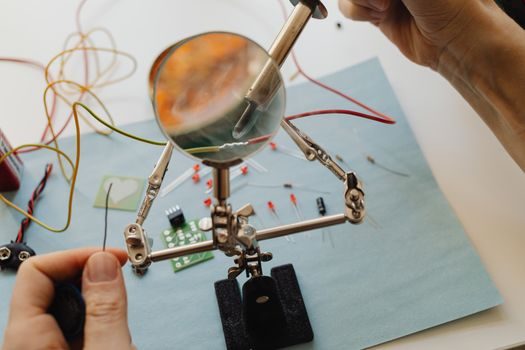
Lining the four most-specified variants against three decision criteria, the 2026 catalog supports the following shortlist: (a) M30 cylindrical, 8-40 mm range, IP 65/IP 67, IO-Link — best general-purpose fit for tank level through plastic walls; (b) M12/M18 miniature cylinder, 2-8 mm range, discrete PNP — best fit for pick-and-place part-present detection on small fixtures; (c) Q5/Q6 rectangular block, 12 mm range, IO-Link, automatic PNP/NPN detection — best fit where M30 holes are not available and panel space is tight; (d) KG5067/KG5069 semiconductor-grade, 8 mm, pushbutton-set, IO-Link — best fit for cleanroom and wafer-handling where stray fields and ESD matter [S1].
Cost-wise, miniature M12/M18 discrete PNP parts are the lowest unit price and shortest lead time; IO-Link and semiconductor-graded variants carry a 20-60 % premium but remove the most common commissioning complaints. Buyers who anchor on the cheapest discrete PNP for a tank-wall level job typically replace it within 18 months with an IO-Link KI/KG-series part — that cycle is well documented in field reports and is the reason ifm lists the KI/KG/KQ family as their tank-level default [S1].
Who should NOT pick the mainstream 40 mm M30 cylinder
The 40 mm M30 capacitive cylinder is the default catalog answer, but it is wrong for at least three duty cycles. (1) High-temperature boiler tubesides above 100 °C — the oscillator drifts and the housing seal fails, and a remote amplifier with a separate probe is the correct architecture. (2) Conductive foam, wet paper, or high-humidity bulk solids where the material itself behaves like a grounded electrode — these targets shift the calibration continuously and need a shielded, grounded-barrel design rather than the generic unshielded M30. [S1]
Buyers who ignore these duty-fit limits and spec the M30 default end up with a sensor that triggers on the wrong thing — typically the build-up of condensate, the static of a plastic web, or the metal of the mounting bracket. The 2026 DirectIndustry catalog lists 101 models for a reason: 30 manufacturers have segmented the application space, and the M30 40 mm is one slice, not the whole pie [S1].
Integration with the wider measurement stack
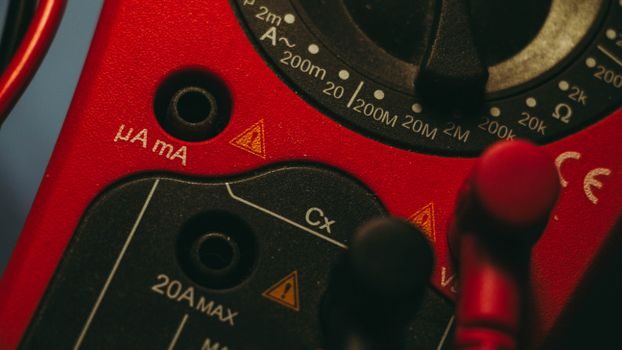
A 12 mm rectangular Q-series capacitive switch is a digital "wet/dry" output; a 0-10 V analog capacitive probe is a continuous-level transmitter; a sub-micron capacitive displacement sensor is a metrology instrument. Mixing them on the same I/O card produces a working system on the bench and intermittent faults on the line. [S1]
For vibration and turbomachinery applications, the analogous decision map is laid out in the vibration sensor selection guide and the proximity probe versus accelerometer comparison; both build on the same point-versus-continuous logic that governs capacitive selection. Buyers writing a multi-discipline instrumentation spec should treat the four article types as one coherent decision tree, not four separate purchases.
Sourcing and supply signals to track in late 2026
Two trackable signals stand out for the second half of 2026. First, the DirectIndustry listing was refreshed on 2026-06-04, with 30 manufacturers and 101 products — any drop in the count below 90, or a wave of new semiconductor-graded entries above 110, will indicate where the catalog is moving [S1]. Second, IO-Link adoption: ifm, BERNSTEIN, and SICK all list IO-Link variants in this refresh, and any new EN 61131-9 profile rollouts will show up first on the semiconductor-grade KG/KQ product lines before they migrate to general-purpose cylinders [S1].
Buyers building a 2026 Q3-Q4 procurement schedule should lock in the IO-Link tank-level family (KI/KG/KQ) now, and hold off on the M30 40 mm general-purpose parts only if a dielectric-specific application (conductive foam, high-humidity bulk solids) is in scope. The catalog depth in mid-2026 is enough to support either decision without engineering risk.