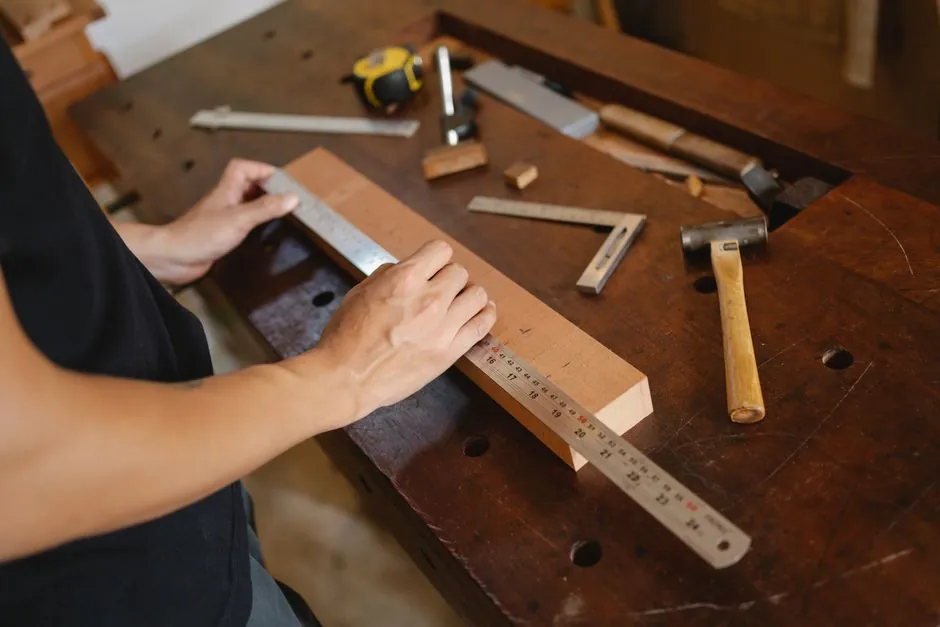
Carbide-tipped scribers are the stock fitment on current Mitutoyo and M-Sure digital height gauges, with tungsten-carbide tips now showing up on replacements for legacy Rabone Chesterman and similar imperial units [S3][S4]. Hardened O-1 tool steel, ground to a small radius on the scribing face, remains a legitimate, lower-cost, resharpenable alternative for hobby and low-volume work [S1].
Both styles perform the same job: a fine, repeatable datum line off a surface plate or height-gauge beam, used in place of, or as a sanity check on, height gauge measurements before machining. The choice is driven by how hard the workpiece is, how often you scribe, and whether you have a way to resharpen the tip in-house.
What the two tip materials actually are
Hardened-steel height-gauge scriber blanks are typically O-1 oil-hardening tool steel, ground to a small radius across the scribing edge so the tip scribes on its full width rather than on two corners, which dulls fast [S1]. A well-known budget product is the Grizzly 6 inch height gauge with a carbide-tipped scriber, listed at $62.95 plus $12 shipping in 2013, illustrating the long-standing price gap between the two options at retail [S5].
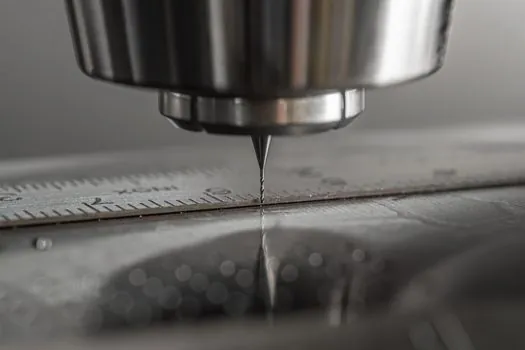
Carbide-tipped scriber inserts are sintered tungsten carbide brazed or mechanically clamped to a steel or carbide shaft; OEM and aftermarket offerings from Mitutoyo are described as 1/4 in wide by 0.500 in high on the tip, with a separate clamp of 1.000 in capacity to suit modern height-gauge beams [S4]. Specialty hand scribers sold as "carbide scribe or etching scribe" tools use a similarly hard pointed tip to scratch a fine layout line, as opposed to a rotary engraver [S6].
Wear behaviour and tip life on real work
Forum engineers consistently report that hardened tool-steel tips "scribe on the corners and get dull easily" if the edge is left square, which is why a radiused ground edge is the recurring recommendation for O-1 blanks [S1]. Once the radius is in place, O-1 holds up adequately on mild steel, aluminium, brass, and cast iron when used with light pressure, which is the typical layout regime for a hobby or model-engineering shop [S3].
Carbide tips, by contrast, hold their line on harder stock, including hardened tool steel and stainless, where a hardened-steel point would skate, crumble, or need frequent re-profiling [S2][S6]. Mitutoyo replacement tips on imperial-sized height gauges are explicitly sold as tungsten-carbide-tipped items, with corner-relief geometry on the tip to suit the OEM clamp aperture [S4]. The trade is tip life versus field serviceability: carbide is much harder to resharpen once it does finally chip or wear, which pushes users toward replacement rather than re-grinding [S1][S2].
Selection criteria: when each tip is the right call
For a hobby or small-shop user scribing mild steel, aluminium, brass, and cast iron a few times a month, a hardened O-1 tip ground to a small radius is the pragmatic pick: low cost, easy to re-profile on a bench grinder, and fully resharpenable with the tooling already in the shop [S1][S3]. A retired machinist rebuilding scribers from old files, needle-scaling-gun quills, or O-1 stock illustrates the typical resharpen-and-reuse path for steel tips [S1].
For production layout on hardened tool steel, stainless, or repetitive scribing where line consistency matters more than tip-replace cost, specify a carbide-tipped scriber from the OEM (Mitutoyo, M-Sure, or equivalent) and treat the tip as a consumable rather than a regrind [S3][S4][S6]. Where a hardened-steel or carbide force gauge is also part of the layout station, keep scribing pressure light; a 1-2 N lateral load is enough to mark most engineering steels and avoids tip fracture on either material.
Geometry, fit, and the clamp problem
Height-gauge scriber geometry is not standardised across manufacturers, and that is where most retrofit pain shows up. A legacy Rabone Chesterman imperial scriber stub is 1/4 in wide by 0.600 in high, which forces a clamp with roughly 1.100 in capacity to clear the beam plus the tip body [S4]. The nearest Mitutoyo carbide-tipped replacement is 1/4 in wide by 0.500 in high, so the OEM Mitutoyo clamp at 1.000 in capacity will not close over the Rabone beam, and the user is left making a custom clamp with a precisely rectangular 1/4 in aperture [S4].
This dimensional mismatch is the single biggest practical reason a shop ends up buying a new height gauge rather than retrofitting a scriber. A 12 in digital height gauge such as the M-Sure, listed at about £130 in 2021, ships with its own carbide-tipped scriber and matching clamp geometry, removing the retrofit problem entirely [S3]. For users on a budget who already own a legacy beam, hardened-steel blanks can be hand-ground to suit a non-standard clamp aperture, which is the only situation where a steel tip still has a fitment advantage over a fixed carbide replacement [S1].
Cost, replacement, and the resharpen equation
Hardened-steel scribers are the cheapest path by a wide margin: blanks from O-1 stock or salvaged files are effectively free against labour, and a properly radiused O-1 tip can be re-profiled in minutes on a small abrasive wheel without ruining the hardness if heat is kept under control [S1]. Production OEM carbide-tipped scribers sit in the $40-70 retail range for aftermarket replacements, with Mitutoyo imperial tips and clamps sold as separate line items [S1][S4].
For a workshop laying out hundreds of parts a month on A2 or D2 tool steel, carbide tip replacement cost is amortised across line-quality gains and the elimination of re-sharpen downtime. For a hobbyist scribing a layout line once a week on mild steel, that same carbide premium is hard to justify when an O-1 blank does the job for a fraction of the cost and stays resharpenable indefinitely [S1][S2][S5]. This cost-versus-life trade-off is the same shape as the one engineers face when selecting silicon carbide abrasive versus aluminium-oxide for a grinding wheel: harder, longer-lived, less forgiving to dress.
Failure modes and operating limits
Carbide tip failure is almost always a chip or a fracture, not gradual wear: a sideways impact on a workpiece edge, a dropped scriber, or excessive tip pressure on a hard surface will crack a brazed carbide insert, and the only repair is replacement [S2][S4]. Hardened O-1 tips fail by slow radius growth and corner rounding, which shows up as a wider, fainter scribe line and is corrected by re-grinding the radius on a fine wheel [S1].
Operating-pressure discipline matters more than tip material in practice. Mitutoyo and similar carbide-tipped scribers are designed for light lateral loads; a heavy hand will chip either a carbide or a hardened-steel tip, and on the steel side can also draw the temper locally if the tip is being reground without coolant [S1][S3]. A simple shop rule is to scribe only on a clean, de-burred surface, with the beam locked and the scriber held at a consistent shallow angle to the workpiece.
Decision matrix: pick by workload, not brand
For mild steel, aluminium, brass, and cast iron at hobby cadence, hardened O-1 with a ground radius is the right call: cheapest, resharpenable, adequate line quality. For tool steel, stainless, and production cadence, carbide-tipped OEM (Mitutoyo, M-Sure, or equivalent) is the right call: longer-lived line, replaceable tip, no resharpen path needed. For a legacy height-gauge beam with a non-standard scriber-stub size, custom-grind an O-1 blank to the existing clamp rather than retrofit a carbide tip that will not seat. [S3]
For engineers cross-referencing scribing accuracy against other measurement work, a worn tip of either material shows up first as a fuzzy rather than crisp line under a 10x loupe, well before it shows up as a dimensional drift on the gauge block stack used to verify beam accuracy. Treat the scriber as a consumable that is replaced on condition, not on a calendar, and the choice between carbide and hardened steel becomes a workload decision rather than a brand-loyalty decision.
Trackable signals for the next six to twelve months: continued OEM migration to carbide-tipped scriber fitments on entry-level digital height gauges such as the M-Sure 12 in, ongoing aftermarket availability of Mitutoyo imperial 1/4 in by 0.500 in carbide replacement tips and 1.000 in capacity clamps, and any new universal-fit scriber clamps that close over both the 0.500 in and 0.600 in legacy stub heights without a custom-machined aperture [S3][S4].
Related analysis: Equal-Wheel vs Unequal-Wheel Backhoe Loader: Selection Spec Map.