Linear bearing installation is a sequencing job, not a tightening job: rail flatness under 0.02 mm/m, bolt grade matched to housing material, and lubrication matched to raceway geometry are the three variables that decide whether the bearing runs the rated L10 life or fails in the first 1,000 hours [S1][S2].
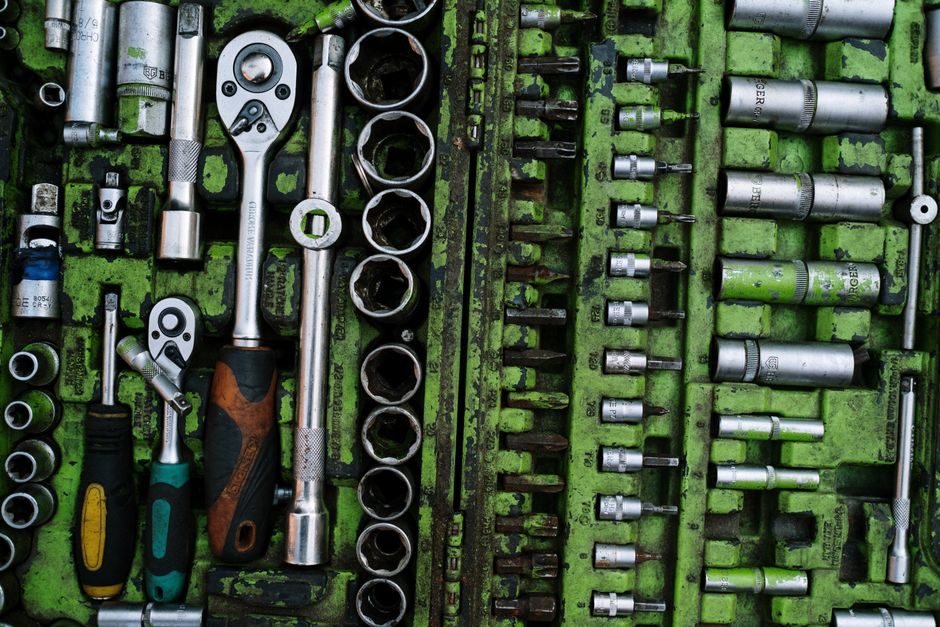
The most common failure modes — brinelling on the rail, premature carriage lock-up, and lubricant washout — trace back to installer shortcuts in steps one, three, and four rather than to the bearing itself [S1][S3]. A working spec map for a linear bearing installation therefore lives on a flat surface plate, with a torque wrench in the top drawer and a feeler gauge in the bottom drawer, not in a vendor catalogue.
Step 1 — Confirm Bearing Type and Duty Class Before Mounting
Ball-bearing linear guides such as the Reliance Precision miniature series and the NB SEB series are rated for rail widths from 3 mm to 15 mm and rail lengths up to 870 mm, with carriages using a 45° contact angle and gothic profile to deliver equal load capacity in all directions [S1]. The NB SEB profile uses a two-row, four-point contact design with a low overall height, and integrated ball retainers let the block be removed from the rail for service — a feature that drives a specific installation order [S3]. Plain-bearing square systems such as the PBC Linear SB24 use Frelon® J liners in 316 stainless steel pads and run self-lubricating from -400°F (-240°C) to +400°F (+204°C), which removes the grease step but adds a pad-replacement step on a 6- to 12-month interval [S2].
Selection logic before the wrench comes out: specify recirculating ball bearings for high-speed, high-cycle, precision-stroke duties; specify plain Frelon-lined bearings for dirty, washdown, or wide-temperature environments where grease would wash out; specify crossed-roller guides for short-stroke, high-rigidity, low-deflection applications such as optical tooling [S2]. Each type lands a different installation procedure, and mixing the lubrication regime of one with the mounting hardware of another is the most common path to early failure.
Step 2 — Rail Squaring and Surface Preparation
Rail squaring sets the parallelism baseline: a 0.02 mm/m straightness on the mounting surface is the working target, verified with a dial indicator on a granite plate before any bolt is started [S1]. Reliance Precision rails accept tapped or counter-bored mounting holes in standard or cut-to-length configurations, and cut-to-length is a real option for prototype rails under 870 mm with a shorter lead time than catalog standards [S1]. A mounting surface that has been milled but not scraped will bow the rail under bolt preload, and a bowed rail will brinell the first set of balls within 50 hours of cyclic loading.
Surface prep sequence on a retrofit is solvent wipe, abrasive pad (Scotch-Brite or equivalent, not sandpaper), second solvent wipe, then dry air blow — the goal is to remove machining swarf and coolant residue, not to polish the surface. Bolt-hole edges should be deburred, because a swarf chip that lodges between the rail and the datum face will lift the rail by 0.05 mm to 0.10 mm and re-introduce the parallelism error the installer just dialed out.
Step 3 — Bolt Torquing Sequence and Grade Matching
Bolt torquing on a linear bearing rail is a two-stage cross-pattern sequence: first pass at 50% of final torque starting from the centre of the rail outward, second pass at 100% with the same cross pattern [S1]. For a 15 mm rail with M4 mounting bolts on a Reliance carriage, that lands in the 2.5–3.5 N·m range depending on bolt property class; the spec sheet must be checked against the actual bolt grade, not against the generic number on the drawing [S1]. The PBC SB24 square bearing uses eight 1/4-20 tapped mounting holes per face and ships with anodized aluminum housings — pushing grade-8 bolt torque against an aluminum housing will strip the threads before the bearing sees preload [S2].
Acceptance criterion at the end of step 3: a 0.01 mm feeler gauge should not pass between the rail base and the mounting surface anywhere along the rail length after final torque. If the gauge slides under any section, the bolt at the adjacent hole is either under-torqued or the surface was contaminated at install; the fix is to back out, re-clean, and re-torque, not to add a shim, because shimming re-introduces the bow the squaring step just removed.
Step 4 — Lubrication Matched to Raceway Type
Recirculating ball carriages with built-in lubrication reservoirs and integral seals are designed for low-maintenance duty, but the reservoir must be charged at install with the grease specified on the data sheet — typically a lithium-based EP-2 or a synthetic PAO grease for miniature sizes, applied through the carriage grease nipple until a small bead appears at the seal lip [S1]. Over-greasing a sealed carriage lifts internal pressure, blows the seal, and contaminates the rail with the very lubricant meant to protect it; under-greasing starves the contact zone and accelerates brinelling on the gothic-profile raceway [S1].
Plain Frelon J liners are self-lubricating by design and do not accept grease — adding grease to a Frelon pad attracts dirt, scores the liner, and raises the coefficient of friction above the dry-running baseline [S2]. For wet or food-grade installations, the Frelon liner is the correct choice over a sealed ball carriage, because the lubricant film is generated by the transfer of liner material to the shaft, and any external grease disrupts that transfer mechanism. A working engineer's mnemonic: ball-raceway bearings are starved by lack of grease and killed by too much; plain-liner bearings are killed by any grease at all.
Step 5 — Break-In Run and Acceptance Test
The break-in run is the acceptance test and the most-skipped step in the field: a no-load pass of 10 to 20 full strokes at 50% of rated speed before any production load is applied [S3]. The NB SEB design explicitly enables block removal via integrated ball retainers, which means the first 10 strokes should include a visual check at each end of travel for ball-cage alignment — a cage that rides crooked is the first indicator of a contaminated rail or a mis-torqued bolt [S3]. After break-in, the acceptance criteria are: smooth motion with no detectable stick-slip by hand-feel against the carriage, no grease purge at the seals, and a measured runout of the carriage against a dial indicator of under 0.01 mm over the full stroke [S1].
When to stop the install and call the OEM rather than push through: any metallic noise in the first 5 strokes, any measurable carriage runout above 0.02 mm, or any visible ball-track wear on the rail after the break-in run. These are not installer-fixable problems; they are bearing-defect or rail-defect signatures, and re-torquing or re-lubricating will not change them. At that point the rail and carriage go back to the supplier with the install data sheet attached — a step the maintenance crew will skip if the install record was not kept in step 1.
Linear Bearing vs Plain Bearing vs Crossed-Roller: Spec Comparison
For the maintenance buyer comparing the three main linear bearing types against the same four criteria, the matrix is straightforward and grounded in the catalog data on hand [S1][S2][S3]:
Recirculating ball guides (Reliance miniature, NB SEB): load capacity medium-to-high, speed capability high, temperature range -20°C to +80°C typical for sealed miniature units, lubrication required (grease, periodic), typical cost band €80–€400 per carriage [S1][S3].
Plain Frelon J square bearings (PBC SB24): load capacity medium, speed capability low-to-medium, temperature range -240°C to +204°C, lubrication not required (self-lubricating liner), typical cost band around €160 per bearing with replaceable 316 stainless steel plugs [S2].
Crossed-roller guides (referenced via the crossed-roller guide family): load capacity high in a compact envelope, speed capability medium, temperature range limited by the rolling-element steel grade, lubrication required, typical cost band higher than ball equivalents because of the precision-ground raceways.
Selection by duty: a pick-and-place axis with 50 mm stroke and 100 cycles/min points to recirculating ball; a washdown food conveyor with 1 m stroke and 5 cycles/min points to plain Frelon; an optical inspection stage with 25 mm stroke and 1 cycle/min under a 50 N side load points to crossed-roller. The general linear bearing category covers all three, and the linear guide family is the broader category that includes profiled-rail and round-rail variants — useful to keep straight in the BOM line.
Sourcing and Lead-Time Map as of July 2026

On the buyer side, made-in-China supplier listings for LM25UU 25×40×59 mm linear motion ball bearings cluster in the US$1 to US$10 per set range with 1-set MOQ as of late June 2026, with Huhai Bearing among the listed suppliers [S4]. Broader linear-guide bearing sourcing pages show Chinese suppliers indexing product families under "Industrial Equipment & Components" with quotation-on-request rather than fixed pricing [S5]. European OEM channels such as PBC Linear have closed their online shop for order-taking and now route through direct inquiry forms, which lengthens the lead-time quote step but preserves the engineered-product spec conversation [S6].
Specialty catalogues such as the Tianjin Fon-rz offerings position linear guide rail, linear module, and ball spline as a single product family sourced under one quote, which simplifies the BOM but ties the buyer to a single vendor's lead-time [S7]. For a maintenance crew spec'ing a 2026 retrofit, the practical path is: confirm bearing type from the matrix above, request a sealed miniature ball carriage with cut-to-length rail from the OEM if the stroke is under 870 mm, and route the order through the OEM inquiry channel rather than the closed online shop [S1][S6]. Trackable signals to watch: IMTS 2026 (14–19 Sep 2026, Chicago) where PBC Linear (Stand 236067) and NB (Stand 236149) will both exhibit, providing a face-to-face channel for spec confirmation and lead-time negotiation [S2][S3].
This topic is covered further in Dynamic Compactor Installation: Five-Phase Spec Map for Site Crews.