
A standard-modulus (33 Msi) balanced 0/90° carbon fiber laminate hits roughly 70 GPa tensile modulus and 600 MPa tensile strength, while raw carbon fiber feedstock has dropped to 15-20 USD/kg, reshaping general-fabrication economics [S1][S3].
For most non-aerospace shops, the selection question is no longer "carbon or aluminum," but which combination of fiber grade, tow size, weave, and resin matrix survives the actual service envelope at acceptable cost [S6].
Fiber Modulus Class Sets the Baseline
Standard-modulus PAN fiber at 227 GPa (33 Msi) is the workhorse grade for general fabrication, intermediate-modulus fiber at 289 GPa (42 Msi) is offered on select made-to-order layups, and high-modulus 393 GPa (57 Msi) plus ultra-high-modulus 758 GPa (110 Msi) are reserved for stiffness-driven parts where strength trade-off is acceptable [S3]. A balanced 0/90° laminate built from 33 Msi fiber lands near 70 GPa / 600 MPa, roughly equal to aluminum in stiffness and 43% above structural steel (420 MPa) in strength at less than one-fifth the density of steel [S3]. Stepping up to a 0° unidirectional layup, or to a 57 Msi grade, raises laminate modulus along the load axis but does not change the rule that fiber choice is a system trade, not a free upgrade [S3]. For a primer on the underlying material, see the carbon fiber encyclopedia entry.
Tow Size, Weave, and Cosmetic Trade-offs
Tow size drives both processability and surface look: 3K tow (3,000 filaments per roving) is the general-fabrication default for motorcycle, drone, and consumer parts where a fine cosmetic weave matters, while 12K tow cuts material cost per kg and lays up faster on large panels but prints a coarser pattern [S7]. Plain weave, twill 2x2, and unidirectional cloth are the three common fabric formats; unidirectional cloth maximizes on-axis stiffness and strength, twill drapes better on double-curvature molds, and plain weave gives the most balanced off-axis behavior for general-purpose panels [S7][S3]. Pairing 3K twill with a room-temperature-cure epoxy is the typical entry-level stack, and the weave/resin pairing is what determines both cosmetic and mechanical outcome more than the carbon fiber cost line item itself [S7].
Matrix Choice: Epoxy, Polyester, and Beyond
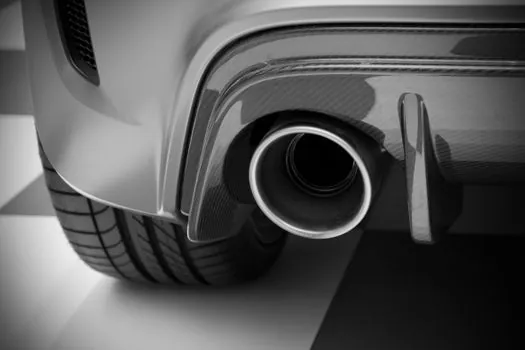
Epoxy is the dominant matrix for general-fabrication carbon parts because of its adhesion to the fiber, low shrinkage, and mechanical performance, with polyester and vinyl ester showing up mainly where cost per kg outweighs ultimate strength [S2]. A 2026 review of carbon fiber reinforced epoxy (CFRE) composites frames the laminate as a multiphase system where the epoxy transfers load between fibers, prevents fiber buckling, and protects against moisture; the fiber carries the majority of the load [S5]. Curing path matters as much as resin type: room-temperature-cure systems are accessible to small shops but cap service temperature, while 120-180°C post-cured epoxies push continuous service temperature higher and improve glass-transition margin, at the cost of an oven and longer cycle time [S4][S5]. Where the application allows, a prepreg layup with a matched epoxy system gives more consistent fiber-volume fraction than wet layup, which directly controls void content and laminate strength [S1].
Comparing Carbon, Fiberglass, Aluminum, and Steel
On a cost-vs-property basis, carbon fiber composites sit above aluminum and fiberglass in specific strength and specific stiffness, with an extremely low coefficient of thermal expansion and X-ray transparency, while steel still wins on raw impact tolerance and cost per kg for heavy sections [S1][S3]. The break-even point for converting a metal part to carbon fiber is now in sporting goods, performance marine, motorsport, and selective industrial machinery, with 15-20 USD/kg raw fiber and falling conversion costs making aluminum-replacement economic on a part-count basis [S1]. Compared with glass fiber laminates, carbon fiber laminates deliver higher specific stiffness and lower CTE but are stiffer and more brittle in impact, and compared with steel, carbon wins on weight and corrosion but loses on ductility and field reparability [S1][S3].
Selection Workflow for General Fabrication
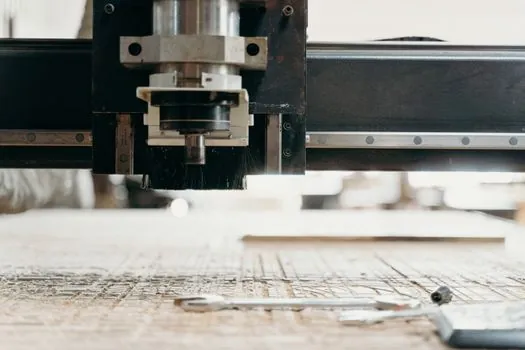
Start the selection with four filters: required specific stiffness, required specific strength, operating temperature and chemical exposure, and annual part volume, then map those to a fiber grade, tow, weave, and matrix combination rather than chasing the highest-modulus fiber available [S6]. For sub-100 piece annual volume and cosmetic requirements, 3K twill + room-cure epoxy on a standard-modulus 33 Msi fabric is the conservative default, while higher volumes justify unidirectional prepreg and 12K tow on matched metal tooling [S7][S1]. Chemical and thermal screening of the resin system is the step that most often gets skipped, and it is the step that determines whether a part survives 80°C engine-bay service or 60°C under-hood electronics exposure [S6]. For parts that need EMI shielding or electrical conductivity, the carbon/epoxy stack must be designed for that property too, since the default laminate is conductive but the surface resistance still depends on the resin-rich skin and any gelcoat [S2].
Limits, Failure Modes, and When Not to Use Carbon
Carbon fiber composites are not a universal substitute for metals: they have lower ductility, poor impact tolerance relative to aluminum, and the part is sensitive to layup errors, with delamination and fiber washout the most common shop-floor failure modes [S3][S1]. The design complexity also rises, because the part and the material are designed at the same time, and a small change in ply orientation or ply count shifts both stiffness and strength non-intuitively [S2]. Where a structure needs field-repair by welding, where impact loads dominate, or where budgets cannot support the tooling and layup discipline carbon fiber requires, carbon steel or aluminum still wins on cost-per-part and on field serviceability, and that is the realistic floor for "carbon or not" decisions [S3][S1]. For a sector-specific deep-dive on harsher service envelopes, the oil and gas carbon fiber selection map and the electronics carbon fiber selection map extend the same four-filter workflow into those regulated spaces.