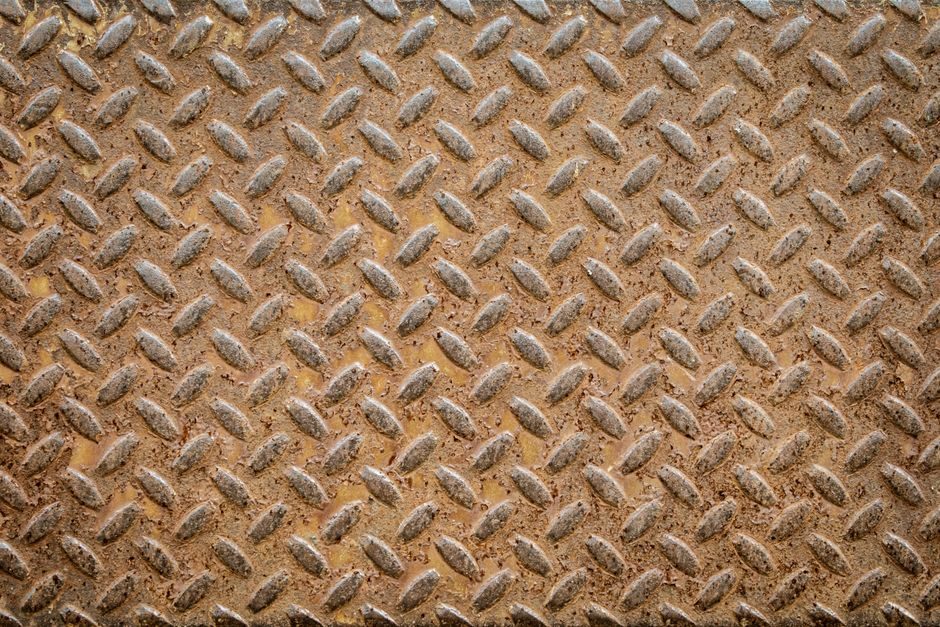
Carbon steel plate and steel section are two different finished forms of the same family of carbon-manganese steels, and confusing them at the PO stage costs fabricators time and re-cutting fees. Plate is flat-rolled, cut to rectangular dimension; section is hot-rolled into a profiled shape (I, H, U, channel, angle) for load-bearing framing [S1][S2].
Both are governed by the same grade families — ASTM A36, ASTM A516 Gr. 70, EN 10025-2 S355J2, JIS SS400, IS 2062 E250/E350 — but the dimensional envelope, tolerance class, and downstream forming differ sharply, so the selection starts with the geometry, not the chemistry [S2][S3].
Definition and Dimensional Envelope
Carbon steel plate is a flat-rolled product supplied in thicknesses from roughly 3 mm up to 500 mm, widths 1500–4500 mm, and lengths 3000–27000 mm per Unitedsteel's published plate envelope [S2]. India's Steel Plate Factory stocks 3–350 mm thickness in a standard 2.5 m × 12 m plate, with grades covering ASTM A36, A572 Gr. 50/55, A285 Gr.A–C, A515 Gr.55–70, and A516 Gr.55–70 [S3]. Plate is the canonical feedstock for pressure vessels, boilers, and offshore platforms where flat surface area and through-thickness certification matter.
A steel section is a hot-rolled long product with a permanent cross-sectional profile — universal beams (UB), universal columns (UC), channels (PFC), equal/unequal angles (L), and hollow sections (CHS/RHS/SHS) — produced continuously and cut to length, typically 6–12 m for stock and 12–18 m for project mill orders. Plate feeds plate-work (shells, heads, saddles); sections feed structural framing (girders, columns, bracing, purlins).
Grade Mapping Across Standards
Plate grades and section grades overlap because both come off integrated mills, but the test regime is calibrated to the product form. EN 10025-2 S355J2 is supplied as plate at 5–500 mm thick and as hot-rolled sections of equivalent grade, with -20 °C Charpy V-notch impact at 27 J minimum [S2]. ASTM A36 is the common structural grade for both plate and section in North America; A516 Gr. 70 is plate-only and specified for unfired pressure vessels per ASME BPVC Section II [S3].
The European plate stockist Unitedsteel lists S235JR, S275JR, S275J2, S355JR, S355J0, S355J2, S355J2G2, S355J2G3, S355K2, and S355K4 to EN 10025-2, with stock of approximately 30,000 tonnes of S355J2-family plate on the ground at the time of writing [S2]. The Indian plate distributor cross-references IS 2062 E250/E350, S355 J2+N, and ASTM A516 Gr. 70 against A/SA 516 grades 60, 65, and 70 to NACE MR0175 / MR0103 for sour-service applications [S3]. The cross-grade matrix is dense; the trap is specifying a section-friendly grade (e.g. S275JR) where the duty demands a pressure-vessel plate grade (A516 Gr. 70).
Selection Criteria: Plate or Section
Use plate when the load case requires a flat membrane — shells, dished heads, stiffener rings, base plates, wear liners, or cut-and-bent plate-work. Use a section when the load case is bending or axial compression in a known direction — primary beams, columns, rafters, crane rails, and bracing. Mixing them is engineering, not marketing: a built-up plate girder uses plate for the web and flanges plus a section as a stiffener, and the call-out then cites two separate specifications. [S1]
Tolerance and surface condition differ. Plate ordered to ASTM A6 / A6M comes with a mill tolerance on thickness, flatness, and edge condition; structural sections ordered to the same standard ship with a separate dimensional envelope and may not be supplied with the same surface finish. For a corrosion-resistant duty, both plate and section can be hot-dip galvanized post-fabrication, but the bath sizing for sections is a real project constraint because the zinc kettle must accept the full profile length.
Comparison: Plate vs Section on Decision Criteria
On four criteria, plate and section diverge clearly. Lead time plate is typically 25–30 days for cut-to-size plate from Unitedsteel, with thicknesses to 400 mm available on stock; structural sections from major mills are commonly 4–8 weeks for standard UB/UC and 10–14 weeks for non-standard or heavy sections [S2].
Geometry: plate is rectangular, isotropic in bending within the plane, easy to nest for cutting; section has a fixed second moment of area that the designer selects, not fabricates. Inspection regime plate is heavier for pressure-vessel work: through-thickness ultrasonic testing to EN 10160 S2/E2 or ASTM A578, Charpy tests at mid-thickness, and NACE MR0175 compliance for sour service [S3]. Sections are typically tested for chemistry, tensile, and Charpy, with UT generally not required unless the project spec upgrades it.
Fabrication and Welding Notes

Plate-fabricated assemblies rely on butt welds with full penetration and post-weld heat treatment for thicker pressure-vessel duties. Sections are joined with fillet welds at the flange/web interface or via end-plate and fin-plate connections. Carbon equivalent (CEV) governs both, but plate to ASTM A516 Gr. 70 is typically supplied with CEV ≤ 0.45 % for thicknesses above 50 mm, while structural sections to ASTM A992 or EN 10025-2 S355J0 carry their own CEV class. [S3]
For sour service (NACE MR0175 / MR0103), specify plate to A/SA 516 Gr. 60, 65, or 70 with explicit NACE call-out; sections used in the same unit are usually A36 or A992 with separate sour-service qualification. The [S3] stockist already groups these in a single inventory lot, which is why buyers working on HIC-resistant or sour-service projects buy from a plate-focused mill rather than a structural-section distributor.
Common Failure Modes and Constraints
Plate misapplied as section: a thick plate cut into a strip is not a beam; it has no defined second moment and buckles laterally under load. Section misapplied as plate: an I-beam cannot be rolled into a head or a cone, and the web/flange geometry rejects that forming path. Plate through-thickness lamination is a real risk above 50 mm in certain steelmaking routes, so UT to EN 10160 or ASTM A578 is non-negotiable for thick plate in pressure equipment. [S1]
Section availability is the soft constraint: rolling a non-standard UB/UC requires a mill minimum order quantity and a 10–14 week lead, so designers should size to standard section catalogues before reaching for plate-work. Plate works the other way: cut-to-size plate at 5–500 mm thick and 1500–4500 mm wide is widely stocked and can be water-jet, flame, or CNC bevel-cut in 25–30 days [S2].
Standards and Sourcing Map

Reference plate standards: ASTM A36, A516 Gr. 60/65/70, A572 Gr. 50, A283 Gr. C, A285 Gr. A–C, A515 Gr. 55–70; EN 10025-2 S235JR, S275JR/J2, S355JR/J0/J2/K2; IS 2062 E250/E350; JIS SS400. Reference section standards: ASTM A36, A992, A572; EN 10025-2 (sections covered by the same grade family as plate); JIS G3101 SS400 for general structural sections. For sour or offshore service, layer NACE MR0175 and NACE MR0103 onto the plate call-out [S3].
Sourcing signal for July 2026: Unitedsteel's published plate envelope is 5–500 mm × 1500–4500 mm × 3000–27000 mm with 30,000 t of S355J2 family on stock and 25–30 day cut-to-size delivery [S2]. The Indian plate stockist carries 10,000+ t ex-stock across ASTM A36, A516 Gr. 70, IS 2062 E250/E350, and S355 J2+N with thicknesses 3–350 mm and the boiler/pressure-vessel grades to NACE MR0175 [S3]. Track these two envelopes as the Q3 2026 plate-supply reference; a structural section shortage in EU mills would push buyers back to plate-girder fabrication, and the plate lead-time data above is the lever to monitor.
For the relevant spec sheets and selection criteria, see steel section, carbon steel, and steel plate.
See also our earlier report, Sound Level Meter vs Anemometer: Spec-First Selection Map.