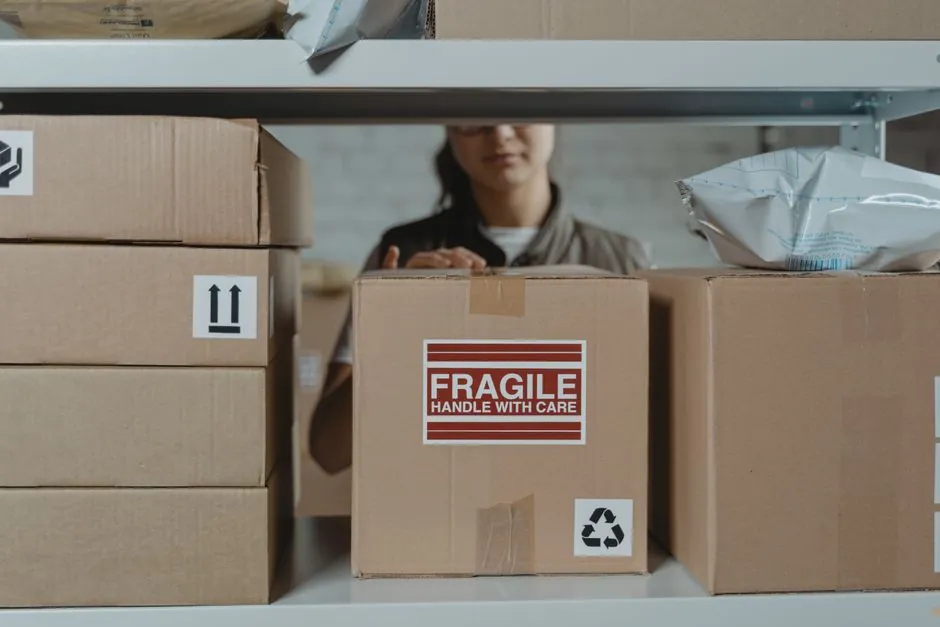
Carton selection in an automated warehouse is no longer a picker's judgment call; it is an algorithm in the WMS that ingests SKU cube, SKU weight, and carrier DIM-weight rules, then outputs the smallest right-sized carton for each order, with on-demand case erectors forming that exact blank at the pack station [S1][S2].
The three controls that actually move the needle are: (1) maintained cubic data for every active SKU, (2) maintained dimensional data for every outbound carton in the active pool, and (3) an automated case erector sized to the throughput of the line. Cut any one of those three and the cartonization engine degrades into guesswork [S3].
What "cartonization" means inside a modern WMS
Cartonization is the WMS-resident algorithm that selects the optimal carton and packing arrangement for a given order, factoring item size/weight/fragility, packing rules for hazmat or fragile goods, the smallest box that fits, carrier weight and size limits, and real-time stock visibility [S2]. A typical WMS pick instruction reads, for example, "Order #12345: Use Medium Box #3 (16″×12″×8″). Estimated fill rate: 92%," surfaced on a handheld scanner, pack-station monitor, or printed pick ticket [S2].
Cartonization in this sense is a software function, not a piece of hardware. It is commonly deployed as a WMS module, and it presupposes that the WMS holds clean cubic-dimensional data for every SKU and every active carton SKU, which is widely cited as the single hardest maintenance burden in a cartonization rollout [S3]. For broader context on how the carton itself fits into a wider warehouse system, see the carton box reference page.
The three automation levels: manual, semi-auto, fully auto
Cartonization is also used in a second, process-level sense to describe the physical packing line, and it splits into three tiers [S4]:
Manual cartonization is reserved for small batches or awkward items where operators assemble the box and place the product by hand. Semi-automatic cartonization uses a machine to form and assemble the box, but operators place the product inside. Automatic cartonization runs the full sequence, from blank forming through product insertion to final sealing, and is standard in high-volume food, pharmaceutical, and consumer goods lines [S4]. A fully automated packaging line typically pairs an automated carton erecting machine with conveyors, a laser box dimensioner, and a weigh-in-motion scale, in that order, so carton forming happens first, then dimensional verification, then weight capture [S3][S5].
For operations where SKU variability is high and a fixed carton rack would balloon to dozens of SKUs, an on-demand packaging system builds custom corrugated blanks to the order's exact cube, eliminating the fixed carton inventory problem at the cost of slower per-box throughput versus a dedicated erector [S1].
Selection criteria: what to specify before you buy
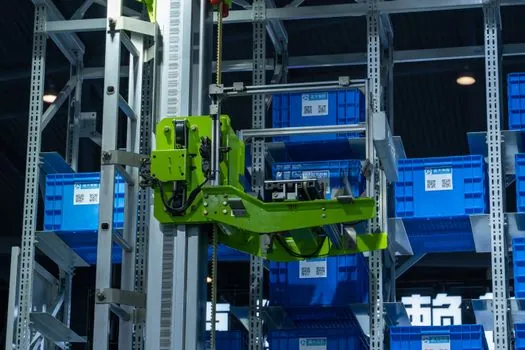
Throughput threshold: industry guidance is that even operations shipping 1,500 to 2,000 parcels per day can justify a phased shipping-automation build, with cartonization and box dimensioning usually going in first [S3]. Below that, the ROI math gets thin unless labour is the binding constraint.
Carton data quality: every active SKU needs a maintained L×W×H (in mm or inches, consistent throughout) and a maintained weight. Every active carton SKU needs the same. Without both, the algorithm has no real inputs and will default to the largest available carton, which defeats the point [S3].
Carrier rule coverage: the WMS cartonization rule set must mirror the carrier's DIM-weight divisor and any oversize-banding thresholds, otherwise the selected carton is technically right but commercially wrong, because dimensional weight charges scale with box volume, not actual weight [S1][S2].
Integration points: a packaging line that does not sit on the same WMS/WCS as picking and sortation will be a bottleneck, since cartonization is most effective when the order data, inventory data, and carton data all resolve in one system before the pack station receives an instruction [S1].
Options compared: WMS cartonization vs on-demand box vs fixed-SKU rack
Three approaches dominate carton box selection in 2026 automated warehouses. The comparison below lines them up against the four criteria that matter most in selection: [S1]
WMS cartonization with a fixed carton rack. Best fit for stable SKU profiles shipping into carriers with predictable DIM rules. Lowest per-box cost, fastest pack-station cycle, but the worst fit on SKU variability, because every new size or shape means adding another carton to the rack and re-measuring it. Dim-weight savings are real but bounded by how tight the existing carton rack already is [S2][S3].
On-demand box erector (right-sized blank). Best fit for high-SKU-variability operations where a fixed rack would explode to 40+ SKUs. Cubic match per order is the tightest of the three options, and corrugated SKU count collapses to one blank family. Throughput per box is lower than a dedicated erector, so it is usually paired with WMS cartonization for the high-volume core SKUs [S1][S7].
This is the configuration most often recommended for 3PLs and large ecommerce shippers, because it keeps the high-speed line moving while preventing the carton rack from creeping back into double-digit SKUs. It also keeps the turnover box and reusable-container workflows out of the disposables stream, since those are tracked on a different returnable loop entirely [S2][S3].
Use cases and the productivity numbers to anchor a business case

For a 3PL or ecommerce fulfillment operation, the headline numbers are: cartonization combined with voice picking or pick-to-light has been shown to lift picking productivity 35 to 50% and to improve packing efficiency by similar margins [S6]. Those gains are not free, because they depend on maintained SKU master data, which is the most common reason cartonization projects under-deliver [S3].
For a food, pharmaceutical, or consumer-goods plant line, the win is upstream: fully automatic cartonization, paired with sensors and cameras for seal and label verification, runs at the line speed set by the case erector, and removes operator variability from the forming and sealing steps, which is where most manual-line damage originates [S4]. A typical line of this kind also has to coexist with ESD-protective workflows on the electronics side; for that, the warehouse anti-static equipment spec map covers the parallel selection problem.
For high-variability ecommerce, an on-demand packaging system is the only one of the three approaches that keeps the corrugated SKU count flat as order profiles shift seasonally, which is why most mid-to-large fulfillment operations add it as a second line rather than replacing the fixed rack outright [S1][S7]. Adjacent downstream decisions, like stretch film gauge and roll width for the palletized outbound stage, are covered in the stretch film spec map.
Limitations, failure modes, and what the spec cannot fix
Bad SKU data is the most common failure mode: if the WMS holds a 30 cm cube for a SKU that actually ships at 32 cm, the algorithm will consistently under-pack, the box will bulge, and the downstream laser dimensioner will flag it, which routes the parcel to a rework lane and erases the throughput gain the line was supposed to deliver [S3]. A second failure mode is mismatched carrier rules: a cartonization rule set that has not been updated for the current DIM-weight divisor will pick cartons that are physically correct but financially wrong, with the surcharge landing on the shipper rather than the customer [S1][S2].
On-demand box erectors trade per-box throughput for SKU flexibility, so they are the wrong choice as a single-line solution for a high-velocity core SKU; they are the right choice as a complement to a dedicated erector on the long tail [S1][S7]. Manual cartonization still has a place for low-volume, awkward, or high-value items where the cost of an automatic jam is higher than the cost of an operator, and forcing those SKUs through an automatic line is a common, avoidable source of downtime [S4].
Sources, standards, and the trackable signals to watch next

The cartonization engine itself is a WMS software function rather than a governed standard; the binding constraints are carrier-specific DIM-weight rules (which change annually per carrier) and the line's own EHS rules for manual handling. Where cartonization touches ESD-protected zones, the relevant spec is the IEC 61340 family for electrostatic discharge protection; where it touches food or pharma lines, the binding rules are the usual HACCP/GMP line-integrity requirements, but the carton-formation equipment itself is not governed by a single IEC or ISO number, and vendors package that compliance at the line level rather than the machine level [S1][S2].
Trackable signals over the next 6 to 12 months: (1) WMS vendors exposing cartonization APIs for direct on-demand erector hand-off, which removes the manual pick-ticket step and is the next leg of the labour-reduction case; (2) carrier DIM-weight divisor revisions, which reset the ROI math on right-sized packaging every time they move; (3) the spread of 3D bin-packing libraries into mid-market WMS tiers, since that is the engine that converts SKU cube data into the actual "smallest box that fits" output [S2][S3][S8].