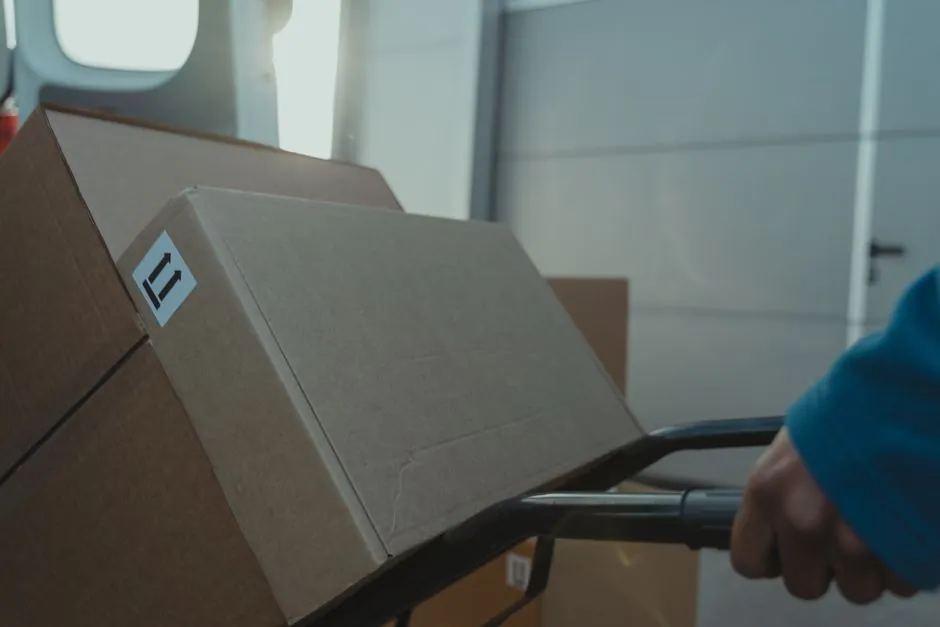
Plastic turnover boxes account for over 60% of the global logistics turnover box market, driven by a balance of weight, durability, and cost that corrugated and wood formats struggle to match across repeated retail cycles [S2]. The broader Global Turnover Box Market was valued at USD 3.87 billion in 2025, advancing to USD 4.07 billion in 2026 at a 5.2% CAGR through 2030 [S5].
Retail distribution is no longer a single-channel exercise: in 2026 it spans brick-and-mortar, e-commerce, wholesale, marketplace fulfillment, direct-to-consumer, B2B, and omnichannel, with 3PL operators such as Buske Logistics supporting complex multi-channel flows [S4]. That breadth is exactly why the right turnover box selection is a strategic decision, not a packaging afterthought.
Definition and Scope: What a Retail-Grade Turnover Box Must Do
A turnover box for retail is a reusable, rigid container used for storage, internal transport, and shelf-ready delivery of food, agricultural products, industrial parts, and consumer goods, with value derived from durability, cleanability, stackability, and moisture resistance versus single-use formats [S1]. In retail distribution specifically, the box must tolerate repeated handling between manufacturer, DC, store back-room, and shop floor, while protecting product integrity, supporting labeling for compliance, and surviving return-loop washing and inspection [S1].
Logistics turnover boxes are segmented by material (plastic, metal, wood, others), by application (automotive, electronics, food and beverage, pharmaceuticals, retail, others), and by end-user (manufacturing, warehousing, distribution, others), with retail now an explicit application bucket rather than a side note [S2]. The retail segment shares a power-distribution-box-style decision logic in that selection is driven by standardized utility, not by application-specific customization.
Material Comparison: Plastic vs Metal vs Wood for Retail
Plastic dominates with over 60% market share, favored for its light weight, durability, and cost-effectiveness across repeated handling cycles [S2]. Within plastic, calcium plastic turnover boxes are sized at USD 665.27 million in 2025, expanding to USD 715.69 million in 2026 at a 9.80% CAGR to USD 1,280.27 million by 2032, outpacing the broader 5.2% market CAGR on the strength of food-contact, agricultural, and retail returnable programs [S1].
Metal turnover boxes carry higher unit cost and weight, which penalizes freight economics in retail where high SKU counts and frequent deliveries are the norm; wood is cheaper upfront but absorbs moisture, harbors contamination, and fails retailer hygiene audits in fresh and chilled categories [S1]. A working comparison for retail specifiers looks like this:
Plastic (including HDPE, PP, and calcium-plastic compounds): over 60% share, lowest cost per cycle, washable to food-contact standards, typically 15-30 kg static load per box, 2-5 year service life under retail DC conditions [S2]. Metal (galvanized steel, aluminum): highest mechanical durability, used where fire resistance or extreme stacking loads are mandatory, but 3-5x the tare weight of plastic, pushing outbound freight costs up [S2]. Wood (plywood, solid timber): lowest capex, shortest life under washing, common in one-way agricultural distribution but increasingly rejected by retailer compliance programs that require documented wash cycles and pest-control records [S1].
Selection Criteria: Load, Stack, Wash, Trace
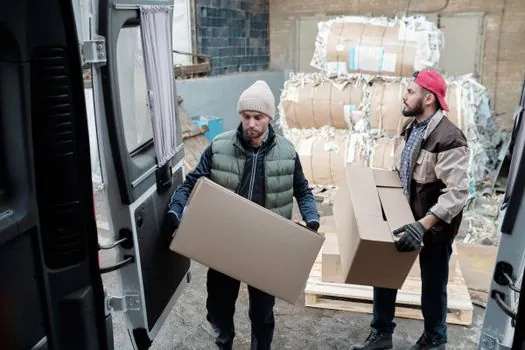
Buyers now evaluate turnover box performance across the full handling cycle: load protection, nesting or stacking behavior, cleaning requirements, repairability, and end-of-life recovery, not just unit price [S1]. For retail DC operations, four criteria carry the most weight in 2026:
Stacking and static load: standard retail tote footprints (600x400 mm, 400x300 mm) must stack 6-10 high in a typical 2.4 m DC rack without buckling; collapsible designs are gaining share where reverse logistics density matters [S5]. Wash temperature tolerance: food-contact and grocery retail demand 80-90°C wash cycles for sanitizer efficacy, which rules out lower-grade plastics and most wood formats [S1]. Traceability: RFID and IoT integration are now a key differentiator, with automated identification linking box movements to inventory and sanitation records, supporting real-time visibility into transit and shelf-ready status [S2][S5]. Repairability and pooling economics: reusable value only materializes when return routes are reliable and the cost of collection, washing, inspection, and redistribution is amortized over enough cycles, typically 50+ rotations for plastic formats [S1].
Retail Channel Fit: Big-Box, Grocery, E-Commerce
Big-box retailers operate on tight schedules and high-volume demands, requiring partners that can deliver on time and in optimal condition, which translates to box specs that survive yard handling, fork-truck drops, and automated storage without failure [S3]. A standard rigid plastic tote is the default for big-box grocery and general merchandise DC-to-store flows, with retailer-specific footprints (Walmart, Costco, Tesco, Carrefour all publish approved container lists) often overriding generic ISO dimensions.
Grocery and fresh produce require food-contact compliance and documented wash protocols, which is where calcium-plastic and high-grade HDPE boxes earn their premium over commodity PP [S1]. E-commerce fulfillment centers, in contrast, lean toward collapsible or nestable boxes to reduce reverse logistics cube when empty totes return to the FC, with anti-static and custom-insert variants specified for electronics and pharmaceuticals sub-segments [S5]. Across all three channels, modular and stackable distribution-cabinet-style logic applies: a single footprint family simplifies fleet pooling, washing, and slotting across stores, DCs, and returns.
Standards, Compliance, and Sourcing Discipline
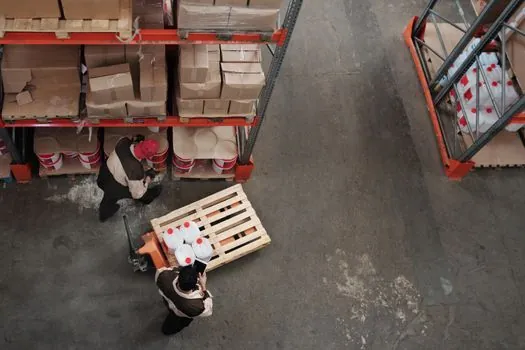
Retail compliance in 2026 covers label accuracy, on-time delivery, packaging condition, and increasingly sustainability metrics; big-box buyers weigh documented material specifications, wash-cycle records, and end-of-life recovery commitments as part of vendor scoring [S3][S4]. Food-contact and grocery retail flow into FDA, EU 1935/2004, and equivalent national food-safety frameworks, which set migration, odor, and cleanability thresholds for plastic turnover boxes; pharmaceutical retail adds GMP-grade traceability requirements that further justify RFID/IoT integration [S2].
Asia-Pacific is the fastest-growing region at a 6.5% CAGR through 2033, led by China and India, while Europe and North America prioritize standardized, durable returnable formats supported by pooling systems and circular-economy regulation [S2]. For multi-region retailers, the safest sourcing rule in 2026 is to specify the highest regional standard in the SKU family and let the box ship to lower-regulation DCs unchanged, rather than maintaining parallel fleets.
Limitations and Failure Modes
Reusable turnover box economics collapse when return flows are unreliable: long distances and fragmented reverse logistics in North America, and patchy sanitation infrastructure in parts of Africa, materially reduce actual rotation counts and erode the cost-per-cycle advantage over corrugated [S1]. AI-driven pooling, computer-vision inspection, and demand planning help, but they do not substitute for clean operational data, interoperable tracking, and human oversight, nor for robust box design and physical asset management [S1].
Plastic turnover boxes also face end-of-life pressure: regulations and sustainability commitments are pushing designs toward mono-material constructions, recyclable polymers, and documented recovery streams, while retailer scorecards increasingly weight carbon footprint alongside cost [S2][S5]. For buyers specifying today, the practical risks are over-specifying metal (freight cost blowout), under-specifying plastic grade (wash-cycle failure, food-contact non-compliance), and skipping RFID/IoT (loss of pool visibility and compliance evidence).
2026 Selection Workflow and Trackable Signals

A defensible 2026 selection workflow runs: (1) lock channel mix and required box footprint per retailer compliance list, (2) match material to wash-temperature and food-contact regime (calcium plastic or HDPE for grocery, PP for dry goods, metal only for fire-rated or extreme-load cases), (3) specify stack height, static load, and RFID/IoT integration in the RFQ, (4) require documented wash-cycle, repair, and end-of-life recovery evidence from the supplier, and (5) pilot with rotation-count tracking before fleet rollout [S1][S2][S5].
Two signals worth tracking through the next two quarters: the calcium-plastic sub-segment's 9.80% CAGR versus the broader 5.2% market CAGR, indicating where food-contact and retail demand is pulling premium share [S1][S5], and the continued Asia-Pacific 6.5% growth rate, which signals where new DC buildouts and pooling investments will concentrate [S2]. Buyers who anchor their spec to those two curves, rather than to legacy wood or generic PP defaults, will land closer to the 2030 USD 5.52 billion turnover box market at the right cost-per-cycle [S5]. For related selection logic in adjacent warehouse categories, see the aluminum veneer panel spec map and the insulated tools spec map.