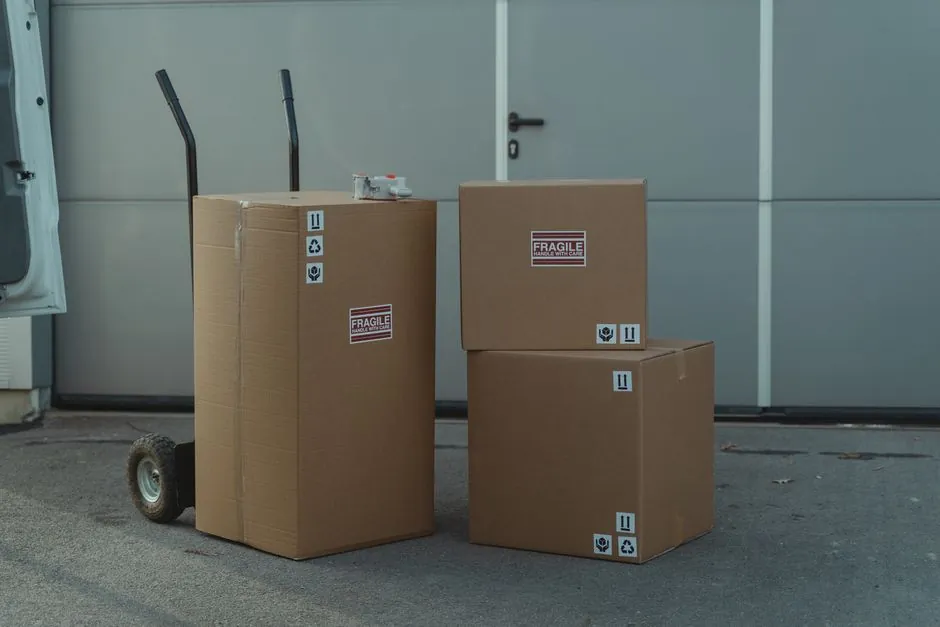
Electronics-grade corrugated cartons are engineered around four variables: wall construction (single 58% share, double-wall the fastest-growing tier), flute profile, anti-static or ESD coating (60% of 2025 shipments [S3]), and a verifiable strength rating (ECT or Mullen burst) tied to product mass and pallet stack height.
Selection sits inside a market sized at USD 13.34 billion in 2026, forecast to reach USD 23.77 billion by 2035 at a 6.63% CAGR, with consumer electronics taking a 46% share of demand and direct-to-OEM distribution at 65% [S3].
Wall Construction and Flute Profile
Single-wall corrugated, two liners plus one fluted medium, held a 58% revenue share in 2025 and is the default for sub-20 kg consumer devices, mobile phones, headphones, and small accessories [S3][S2]. Double-wall (two fluted mediums, three liners) is specified when pallet stack height exceeds roughly 1.5 m or unit mass passes 20 kg, the same band commonly used for server hardware and household appliances [S2][S3].
Flute choice drives the cushioning and print surface: B-flute (~3 mm) gives a smooth face for retail graphics and reasonable puncture resistance, C-flute (~4 mm) is the workhorse for shipping cartons, and E-flute (~1.5 mm) suits small consumer-electronics retail packs where thin walls matter. Triple-wall, with ECT ratings typically above 75 ECT, is reserved for heavy industrial or export crating rather than the electronics mainstream [S1].
Strength Rating: ECT vs Mullen Burst
Two test methods dominate the spec sheet. The Mullen burst test reports puncture resistance in pounds per square inch and historically governed the carrier rules (e.g. the old 200# ECT-32 single-wall minimums). ECT, edge crush test, measures stacking strength in lb/in and is now the dominant North American rating, with 32 ECT single-wall and 44 ECT double-wall as common baselines for parcel shipments [S1].
For a typical 10-15 kg monitor carton on a two-high pallet, 32 ECT single-wall is borderline; a 44 ECT double-wall is the safer call. Bump, compression, and humidity exposure during export shipments also degrade ECT performance, so derate the published rating by at least 10-15% if the lane includes container ocean transit or unrefrigerated truck legs in humid months [S1].
Anti-Static and ESD-Safe Coatings
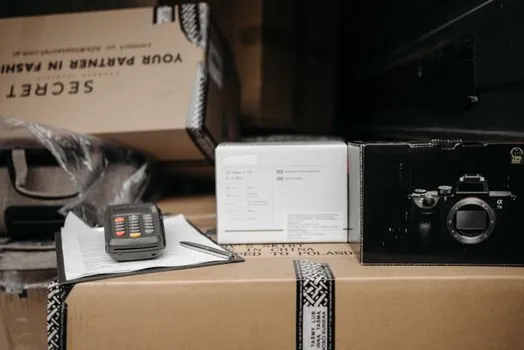
Anti-static coated boxes dominated the add-on features segment at a 60% share in 2025, with ESD-safe packaging called out as the fastest-growing tier through the forecast window [S3]. Surface treatments neutralize static buildup on the flute surface, which matters whenever the load includes populated PCBs, bare chips, or processor modules handled without a grounded ESD floor at the pack station [S2].
Coatings sit on top of, not instead of, the corrugated structure. Static decay measured per standard methods (typically MIL-STD-3010 TM 4046 or equivalent IEC 61340-5-1 test conditions) is the number to track on the supplier datasheet, alongside surface resistivity in ohms. Pair the coated box with a pink anti-static bag or closed-cell ESD foam insert for bare-board shipments; the carton alone does not form a Faraday cage [S2].
Box Style: RSC vs Die-Cut vs Partition
Regular slotted containers (RSC), four flaps meeting at the top, captured a 52% share in 2025 and remain the default for line-side and parcel shipments because they run on any carton erecting machine and accept uniform-case tape or glue closure [S3].
Die-cut corrugated, with custom-cut openings, retail hangers, or fit-to-product cavities, is the fastest-growing style and is preferred for multicomponent kits where inserts secure circuit boards and sub-assemblies against in-box movement [S2][S3]. For tray-packed small parts, corrugated partitions (cell dividers) add crush resistance to the stack and prevent face-to-face contact between polished housings or display glass.
If your operation cycles the same outer repeatedly between cell and line, consider a turnover box for heavier sub-assemblies, and reserve single-use corrugated RSCs for the consumer-goods outbound lane. A carton box decision is rarely a one-style answer: the die-cut fits the kit, the RSC fits the parcel.
Cushioning, Inserts, and Humidity

The fluted mid-layer acts as a built-in shock absorber; liners and inserts convert that geometry into a controlled-compression package [S1][S2]. For monitors, server rails, and printer modules, scored corrugated pads, honeycomb corner blocks, or molded pulp trays reduce transmitted peak acceleration to the 25-40 g range typical of last-mile parcel handling.
Humidity is the silent failure mode: corrugated loses a meaningful fraction of its published ECT above 80% RH and at fiber moisture contents above ~10%. Wax or PE-coated liners, or a laminated moisture barrier, are required for cold-chain or sea-freight lanes [S1].
Sustainability and Recyclability Constraints
Recyclability is part of the spec, not a marketing line: repulpable water-based inks, starch-based adhesives, and unbleached kraft liners are the default in consumer-electronics retail packs, and most large OEMs now publish minimum recycled-content thresholds on the packaging BOM [S1]. Anti-static coatings are the main recyclability friction point, since some conductive carbon-loaded coatings require specialized repulping; confirm with the supplier that the coating is repulpable under standardPAP 21/22 or equivalent municipal paper-mill streams [S2][S3].
Comparison: Single-Wall RSC vs Double-Wall RSC vs Die-Cut

Against the decision axes that drive a real electronics spec, single-wall RSC wins on cost, runnability, and printed retail surface; double-wall RSC wins on stacking strength and humidity margin; die-cut wins on fit-to-product and insert integration for multicomponent kits. Anti-static coating and ECT 32 / 44 ratings are independent add-ons applicable to any of the three. The trade is cost and recyclability versus crush strength, not style versus protection [S3][S1].
Who It Is For and Who It Is Not
This selection applies to OEM and contract-manufacturer outbound shipments of consumer electronics, industrial and automotive electronics modules, and small server or networking hardware in unit masses up to roughly 40 kg. [S3]
Closing Trackable Signals
Track two numbers in the next 12 months: the share of double-wall and die-cut tiers (the two fastest-growing segments in the 2026-2035 window [S3]), and the spread between 32 ECT and 44 ECT liner pricing in your region. A widening spread usually precedes a Mullen-vs-ECT rule change in the carrier tariff books, which is the moment to re-validate your standard carton spec. For a related spec-first map on a different but adjacent format, see the turnover box selection for warehouse automation reference.