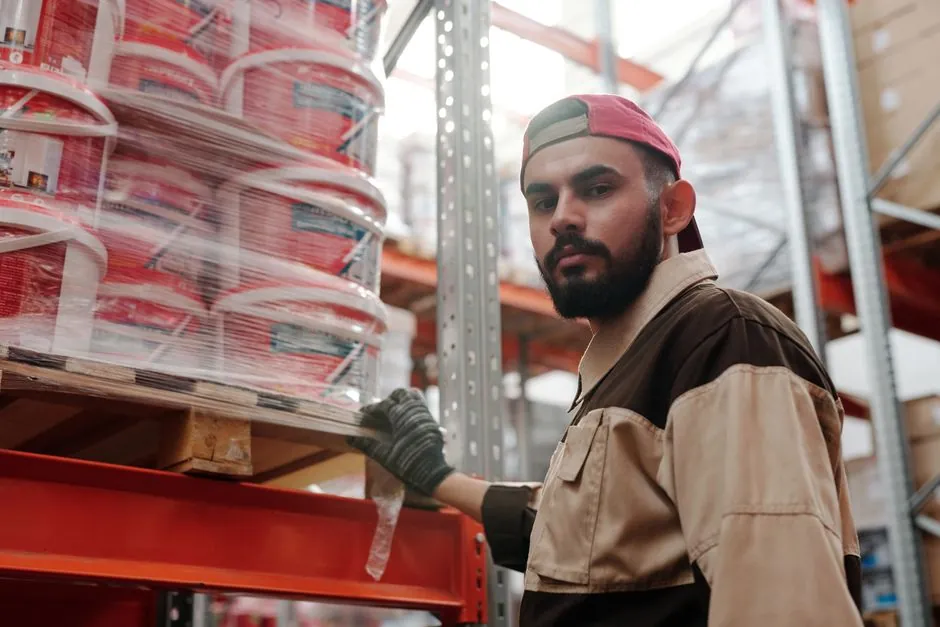
Carton flow shelves installed inside pallet rack bays on a 3 to 5 percent gravity incline deliver 2 to 3 times the pick velocity of static shelving, with separate load and pick aisles that let replenishment and order picking run simultaneously [S2][S4].
Each shelf typically carries 4 to 6 lanes, with one SKU per lane and a per-face pick height band of 40 to 54 inches so operators never reach above shoulder or below the knee in the fast-moving zone [S2][S3].
What Carton Flow Is, and What It Is Not
Carton flow is a FIFO, gravity-driven dynamic storage medium sized for cases, cartons, totes, and bins, not full pallets; it is loaded from the rear, picked from the front, and uses steel rollers or plastic skate wheels on inclined tracks to move product [S1][S2][S5]. Full-pallet SKUs belong on a pallet rack or pallet flow system, not on a carton flow lane, and case weights above 100 lb usually need a heavy-duty track spec or an alternative pick medium [S2][S9]. The system is also called flow rack, gravity flow, case flow, or span track, and is built around modular starter and add-on uprights so rows can be extended bay by bay without redesign [S3][S4].
Shelf Type, Frame Type, and Track Selection
Three shelf geometries cover roughly the full picking task space: straight shelves for full-case picking of uniform SKUs, knuckled shelves as the second most common type for picking individual items out of open cartons, and weld-in trays for low-profile or small-parts applications [S3]. Frame choice pairs with the shelf: square-front frames suit full-case picking of canned goods, liquor, and parts, while layback frames open up the middle and lower shelves, which is where the highest-turnover SKUs are usually placed for faster pick access [S3]. The two track media are steel rollers and plastic skate wheels, both pitched at 3 to 5 percent slope, with a front lip that arrests the lead carton at the pick face; track width is selected per SKU footprint and the lanes are isolated per SKU for instant visual stock control [S2][S4].
Retrofitting Pallet Rack Bays to Carton Flow
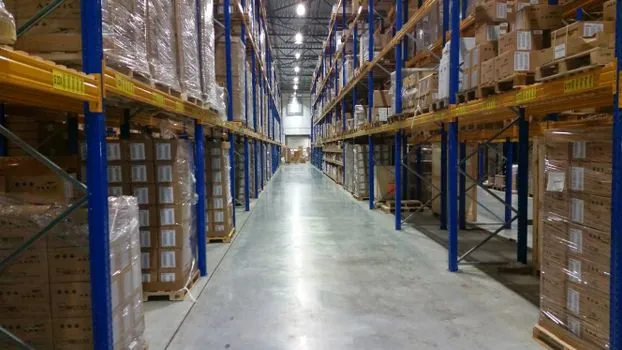
Carton flow rails drop directly into existing pallet rack bays using universal hanger clips, so a static selective rack can be converted to a dynamic pick face without replacing the uprights; when storage above the flow zone is needed, 3 in. by 3 in. posts replace 1.5 in. flow rack posts and heavy beams replace the sway braces to carry the added load [S3][S4][S7]. This retrofit path is the standard route when an existing storage rack aisle has a fast-moving case-pick zone and a slower-moving pallet reserve above it, and it is the cheapest way to reclaim pick velocity without a full rack replacement [S7][S8].
Integration With Pick Logic and Packaging Equipment
Carton flow bays are the native home of pick-to-light and put-to-light indicators, WMS zone picking, and takeaway conveyor; the entire pick line is typically laid out around the flow face so pick waves do not stall for restock [S2]. Downstream of the pick face, case packing machine cells, carton erecting machine lines, and pallet stacker infeeds handle the outbound side, while the upstream carton box supply feeds the replenishment aisle on the back side of the same rack [S1][S2]. This split-aisle layout is what gives carton flow its structural advantage: pickers stay on the front face, replenishment stays on the back, and the two flows never collide [S1][S4].
Selection Criteria and Operating Envelope

Carton flow is the right call when a zone picks cases or totes at high per-picker velocity, when replenishment disruption is a measurable labor cost, when pick-to-light or WMS zone picking is already in use, and when SKU count runs into the hundreds-to-thousands per zone with high velocity variance; it is the wrong call for full-pallet picking, for SKU counts that static shelving already serves fast enough, and for cases that routinely exceed 100 lb without a heavy-duty track upgrade [S2]. Documented operating gains include up to 50 percent better space utilization versus static shelving and labor savings reported at up to 75 percent versus static storage in case-pick applications, both figures cited by integrators and not independently audited [S4][S8]. Track pitch stays in the 3 to 5 percent window for both roller and skate-wheel beds, and pick-face height is held in the 40 to 54 in. ergonomic band for the highest-velocity SKUs [S2].
Common Failure Modes and Design Pitfalls
The three most common carton flow failures are wrong slope, wrong track pitch for the case, and picking the wrong shelf geometry. Too little pitch stalls cases partway and forces the picker to drag product; too much pitch overruns the front stop and either damages the carton or fails to present a stable pick face, so a 3 to 5 percent slope is the published design band [S2]. Mixing full-case and open-case SKUs on the same straight-shelf lane causes jams and slow pick recovery, which is the standard reason to spec knuckled shelves for piece-pick zones and straight shelves for full-case zones [S3]. Finally, retrofitting flow tracks into pallet rack bays that were not sized for the added dynamic load is a documented structural risk; the published mitigation is to upgrade to 3 in. by 3 in. posts and heavy beams when storage is added above the flow zone, rather than relying on the original sway-brace frame [S3].
Sourcing, Standards, and Comparable Long-Bay Storage
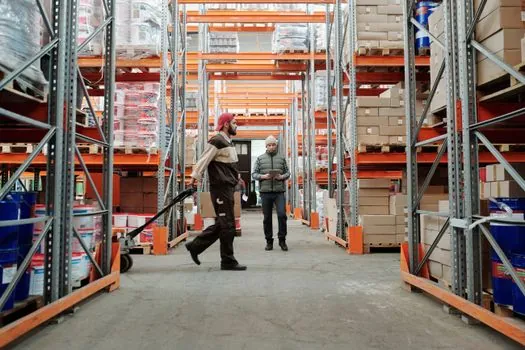
Carton flow components are sourced as starter units (two uprights plus 4 to 6 shelves, roller guides, tracks, and sway braces), add-on units (one upright for extending a row), or individual replacement parts; major OEM names include Interlake Mecalux, Mallard Manufacturing, UNEX, UNARCO, Engineered Products, Keneco, Advance, Rack Builders, and 3D Storage Systems [S3][S4]. For long and awkward loads that do not fit a carton flow lane, selective vs cantilever rack is the typical alternative spec. No single industry standard governs carton flow track geometry; rack structures typically follow RMI/ANSI MH16.1 for the pallet rack frame, and pick-face integration follows the integrator's WMS and pick-to-light spec rather than a public standard, so verify the rack frame spec separately from the flow track spec [S4].
Trackable next signals: integrator publications of 2026 retrofit case studies converting selective rack bays to carton flow, and any 2026 release notes from the major OEMs (Interlake Mecalux, Mallard, UNEX) on heavy-duty track ratings above the 100 lb-per-case threshold that is the current published ceiling for standard skate-wheel and roller beds [S2][S4].