
Carton sealing machine choice is driven by three hard specs — drive layout, carton L×W×H envelope, and continuous-duty cycles per minute — and the wrong match on any one of them produces skewed tape, crushed flaps, or jammed belts on day one [S2][S5].
Buyers running mixed-SKU e-commerce or contract-pack lines should default to a semi-auto unit with manual flap-folding and an adjustable width-height frame, while dedicated single-SKU FMCG lines running 8+ hours per shift gain the most from a fully automatic random-size sealer with pneumatic top-folding [S2][S3].
Drive Layout: Left-Right Belts vs Up-Down Belts vs Side-Drive
Up-down drive semi-auto sealers like the FXJ-6050 hold the carton between a top and bottom belt pair, completing upper and lower sealing in a single pass and suiting standard RSC carton box dimensions on pipeline operations [S2].
Left-right drive units such as the FXJ-5050 grip the carton from both vertical sides, which improves stability for tall or narrow packs that an up-down belt cannot keep aligned; side-drive variants like the FXJ-4060 push this further with twin side belts, stabilizing cartons in the 40-60 mm width range used in beverages, tiles, and small-box appliance kits [S2].
For longer folding cartons, automatic random-size sealers (FXJ-5050E) add a pneumatic folding top-cover mechanism plus trapezoidal-screw width/height adjustment, replacing manual flap-folding and removing one operator from the cell [S2].
Carton Size Envelope and Adjustment Mechanism
Standard FXJ-series semi-auto sealers cover roughly 200-500 mm in length and 150-500 mm in width/height, with manual hand-wheel or screw adjustment taking 30-90 seconds per size change — acceptable for 5-10 SKU changeovers per shift but uneconomic for true random-size e-commerce flows above 30 SKUs per hour [S2][S5].
Random-size automatic sealers detect incoming carton dimensions via photo-eye or encoder and adjust on the fly, hitting the 20-30 cpm band that high-volume 3PL and FMCG lines require; this is the same throughput band that an upstream carton erecting machine must also sustain to avoid starvelines [S2][S3].
Cartons with side openings — common in beverage four-pack carriers and large-format tile boxes — need a dedicated side-seal architecture like the FXJ-423, where the belts drive the carton through a vertical I-seam rather than a top-and-bottom H-seam [S2].
Throughput Bands: Semi-Auto vs Automatic Random-Size vs Edge-Corner
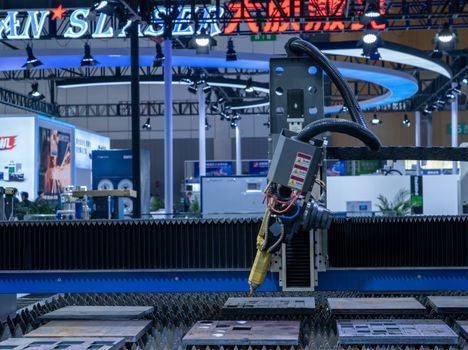
Semi-auto up-down drive sealers typically rate 15-20 cpm with one operator folding flaps and feeding; fully automatic random-size sealers push 25-40 cpm with no operator on sealing, limited by incoming conveyor spacing and tape-head cycle time [S2][S3].
Continuous heavy-duty lines — three-shift FMCG, beverage, or pharmaceutical — should specify pneumatic folding, dual belt drive, and a high-strength structural frame; the FXJ-AT5050 combines all three and is rated for continuous production-line duty, not intermittent batch work [S2].
Edge-corner four-side units (FXJ-P5050) are a different machine class: they seal the four vertical edges of an already-erected tray-top box for export-grade dust protection, running at 8-15 cpm and adding a secondary process step after a standard top-and-bottom capping sealing machine-style pass [S2].
Selection Criteria: Tape Type, Operator Count, and Integration
Tape choice is fixed by the spec: BOPP pressure-sensitive tape 48-72 mm wide is the industry default, applied via a constant-tension head that trims and presses in one stroke — printing tape is a drop-in upgrade used as a tamper-evident and brand-impression carrier, with no machine change required [S2][S5].
Operator count separates the categories cleanly: semi-auto needs one operator to fold and feed; random-size auto needs zero operators at the sealer but one upstream to erect and load; edge-corner four-side needs one operator for manual size adjustment before each run [S2][S3].
Integration points matter more than the sealer spec sheet suggests — matching the sealer height to the discharge of the coding machine or inkjet printer, the conveyor speed to the upstream case erector cycle, and the reject lane to downstream pallet wrapping all determine whether the line runs at nameplate cpm or stalls at 60% of it [S3][S4].
Manufacturer Vetting and After-Sales Support
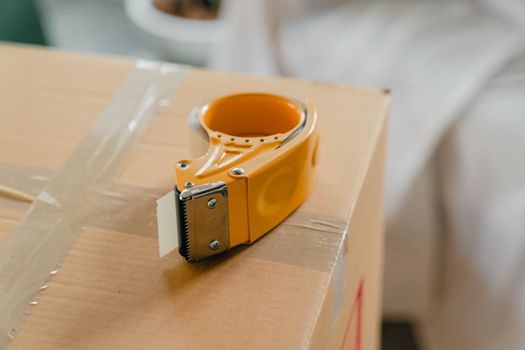
Carton sealers have a high failure mode around belt tracking, tape-head spring fatigue, and width-adjustment screw wear — a 2-3 year service interval is typical, so proximity of the manufacturer and availability of spare parts are practical selection criteria, not just procurement convenience [S1].
One B2B case from 2026 illustrates the risk: a buyer who sourced through an unnamed intermediary could not get repair service when the unit failed, because the intermediary had no technical staff and the actual OEM was unreachable — direct-from-factory sourcing with a documented customer reference list is the simplest mitigation [S1].
On-site factory audits should verify: belt-drive motor power (typically 90-180 W per side for semi-auto units), pneumatic pressure requirement (0.5-0.7 MPa for random-size auto), frame weld quality at the height-adjustment slide, and a stocked spare-parts list including tape heads, drive belts, and pressure springs [S1][S2].
Who Should NOT Pick the Mainstream Semi-Auto
Buyers running true random-size e-commerce at 30+ SKUs per hour waste money on a semi-auto FXJ-5050: the manual flap-fold step caps throughput near 20 cpm regardless of belt speed, and the manual width adjustment adds 30-90 seconds per SKU change that random-size automation removes [S2][S3].
Buyers shipping export-grade tray-top boxes should not specify a standard H-seam sealer: the open vertical edges will pass dust and water ingress tests, and the only fix is an edge-corner four-side unit like the FXJ-P5050 or a hot-melt glue case erector paired with a side-seal [S2][S3].
Buyers with no upstream case erector should not specify a random-size auto sealer expecting it to compensate — a random-size sealer needs pre-erected, square, dimensionally consistent cartons at its infeed, and a flap that arrives folded at 30 degrees off-plane will jam the tape head within minutes [S3][S7].
Comparison: Four Realistic Configurations on Decision Criteria
Sourced from the FXJ-series catalog data and adjacent carton erecting machine integration specs, four configurations line up against throughput, operator count, SKU flexibility, and integration complexity [S2][S3]:
1) FXJ-6050 semi-auto up-down drive — 15-20 cpm, 1 operator, low SKU flexibility, simple integration. Fits: small workshops, low-volume RSC lines.
2) FXJ-5050 semi-auto left-right drive — 15-20 cpm, 1 operator, low SKU flexibility, simple integration. Fits: tall/narrow cartons where up-down belts slip.
3) FXJ-5050E automatic random-size with pneumatic top-folding — 25-35 cpm, 0 operators at sealer, high SKU flexibility, requires upstream erector. Fits: FMCG, 3PL, mixed-SKU.
4) FXJ-AT5050 heavy-duty auto with high-strength frame — 30-40 cpm continuous, 0 operators, medium SKU flexibility, requires erector plus stable power. Fits: three-shift FMCG, beverage, pharmaceutical.
Limitations, Standards, and Sourcing Constraints
Carton sealer spec sheets are not governed by a single IEC/ISO machinery standard in the way that pressure equipment is — buyers should treat nameplate cpm as best-case under continuous incoming square cartons, not as a guaranteed field rate, and derate by 20-30% for mixed-SKU real conditions [S2][S3].
Tape overlap length, leg length across the carton seam, and pull-tape tension are the three field-measurable quality checks; a properly adjusted BOPP sealer produces 50-70 mm leg length on each side of the center seam with full adhesive contact and no fish-eye gaps, and any deviation points to worn tape-head springs or mis-set tape guides [S2].
Trackable signals for shortlisting: confirm the OEM publishes a stocked spare-parts price list (tape head, drive belt, adjustment screw, pressure spring), confirm at least three customer references in the same product class, and verify on-site acceptance test at nameplate cpm for 30 minutes continuous before final payment — this mirrors the audit guidance in the Stretch Wrapping Machine vs Vacuum Packaging Machine spec-first decision map and is the same acceptance protocol buyers apply across packaging lines [S1][S2].
Buyers comparing sealer investments to upstream case erector spend should weight the sealer at roughly 1.0-1.5x the case erector price for a matched semi-auto pair, and 0.8-1.2x for an auto pair — a 2026 pricing cross-check on the Qingdao Ausense YUPACK catalog and Made-in-China multi-supplier listings puts the FXJ-5050 semi-auto in the lower band with auto random-size units scaling with frame size and tape-head count [S2][S4].